Welcome to the Saskatchewan Disease Risk and Environmental Heatmaps, developed through a partnership between Saskatchewan Pulse Growers and Ukko Agro Inc.
These maps provide weather-based insights to support producers and agronomists across Saskatchewan, with a focus on forecasted risk assessments of lentil Anthracnose and chickpea Ascochyta, alongside key environmental and climate conditions. Using data from a 20 km grid of virtual weather stations with hourly inputs (sourced from IBM/The Weather Company), the system generates regularly updated maps that evaluate how recent and forecasted weather conditions influence disease development and environmental risk factors.
Disease risk maps are designed to identify areas where environmental conditions are conducive to disease development, based on factors such as temperature, humidity, and precipitation. It is important to note that these maps reflect weather-driven risk only—they do not account for crop stage, pathogen presence, host susceptibility, or field-specific conditions such as irrigation, which may create localized microclimates and alter risk levels.
Environmental and climate heatmaps are provided in parallel to support broader agronomic decisions and general crop management under variable weather conditions.
Click each image to view full-screen.
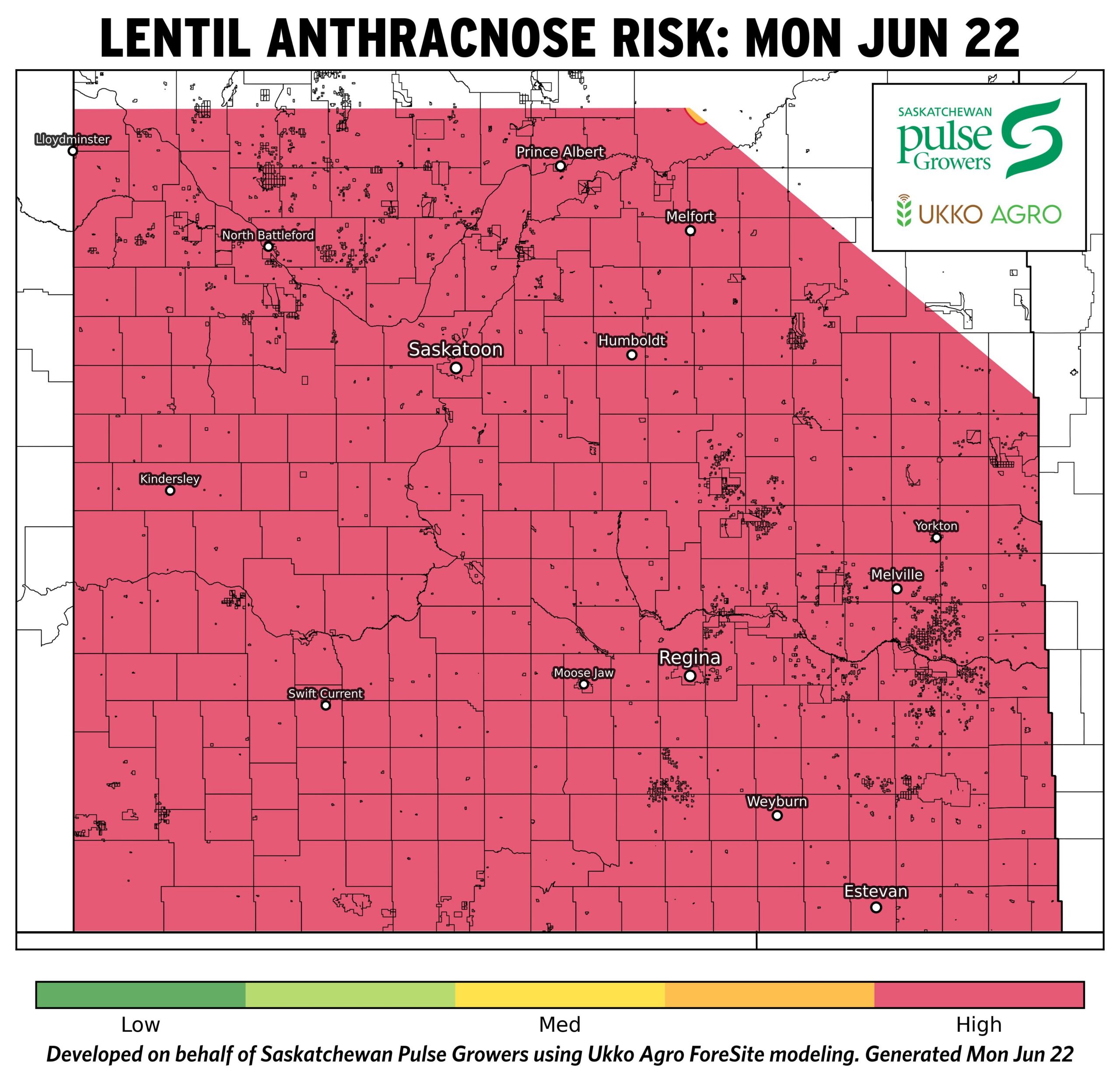
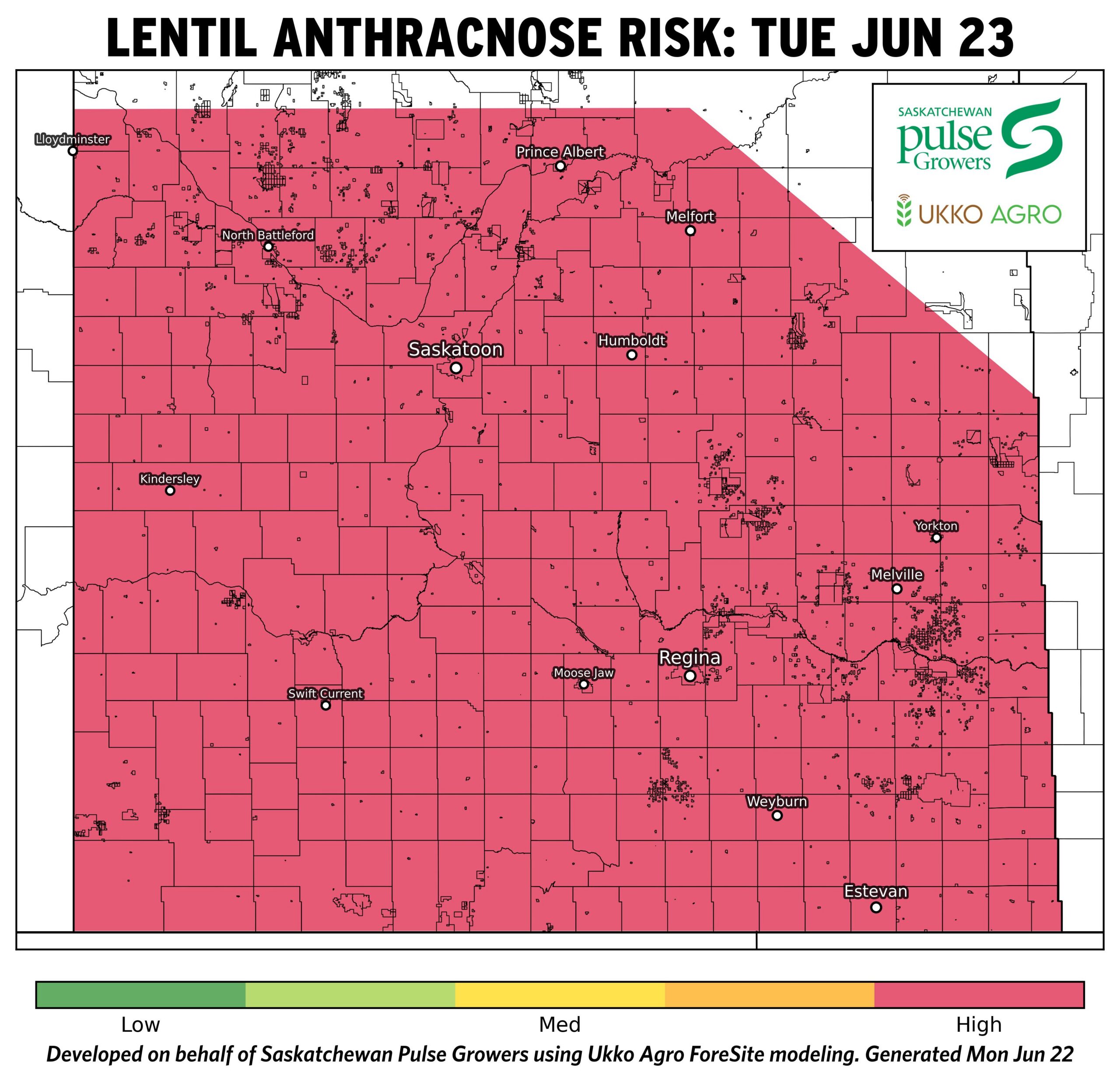
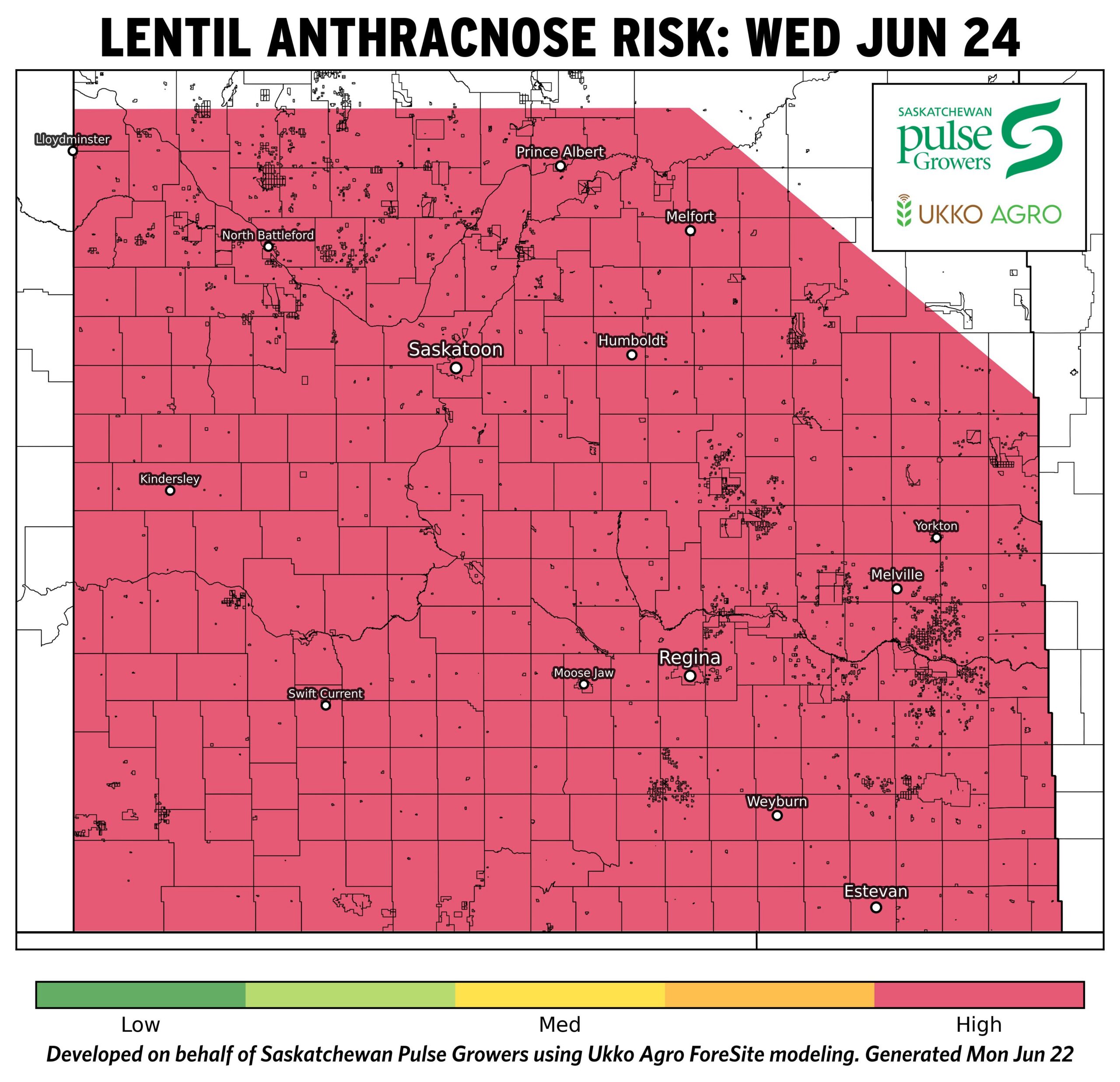
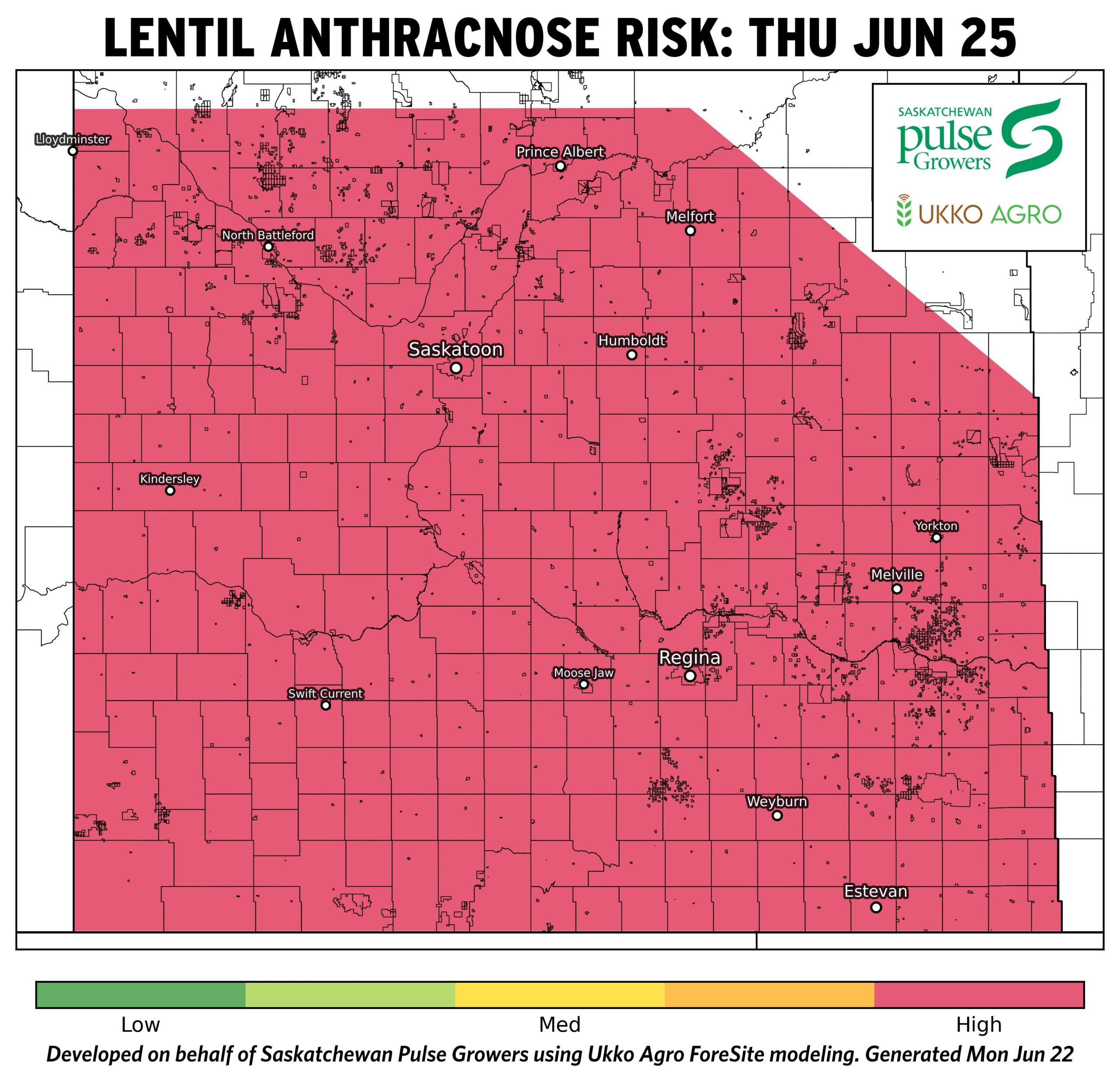
Lentil Anthracnose Risk Maps: Agronomist Notes
- As of June 22, lentil Anthracnose risk is high across all of the province due to steady moisture throughout the season so far.
- Anthracnose risk remains high throughout the week across Saskatchewan,
- Significant rain this week will continue to increase the risk of Anthracnose.
Chickpea Ascochyta Risk Maps: Agronomist Notes
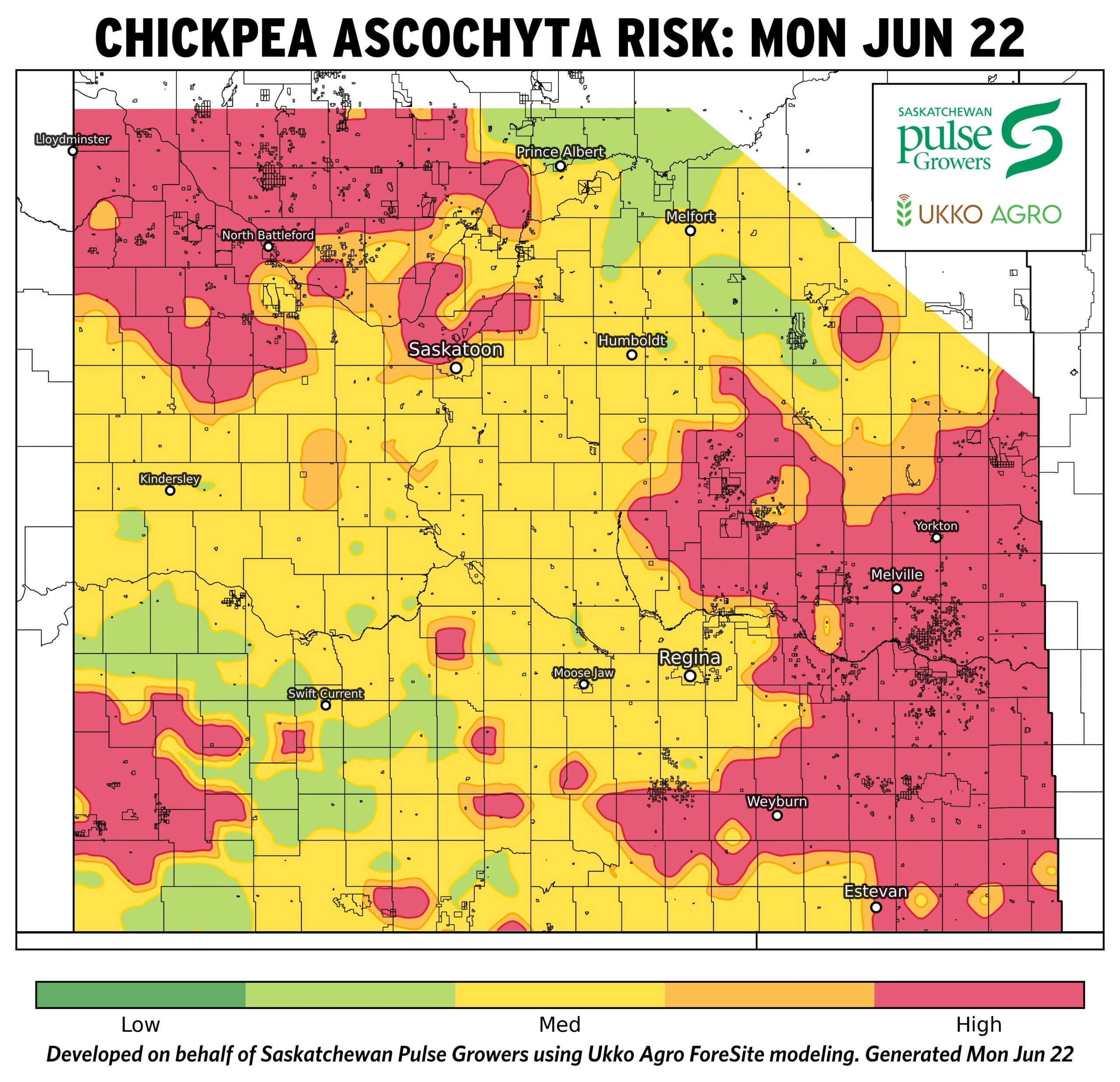
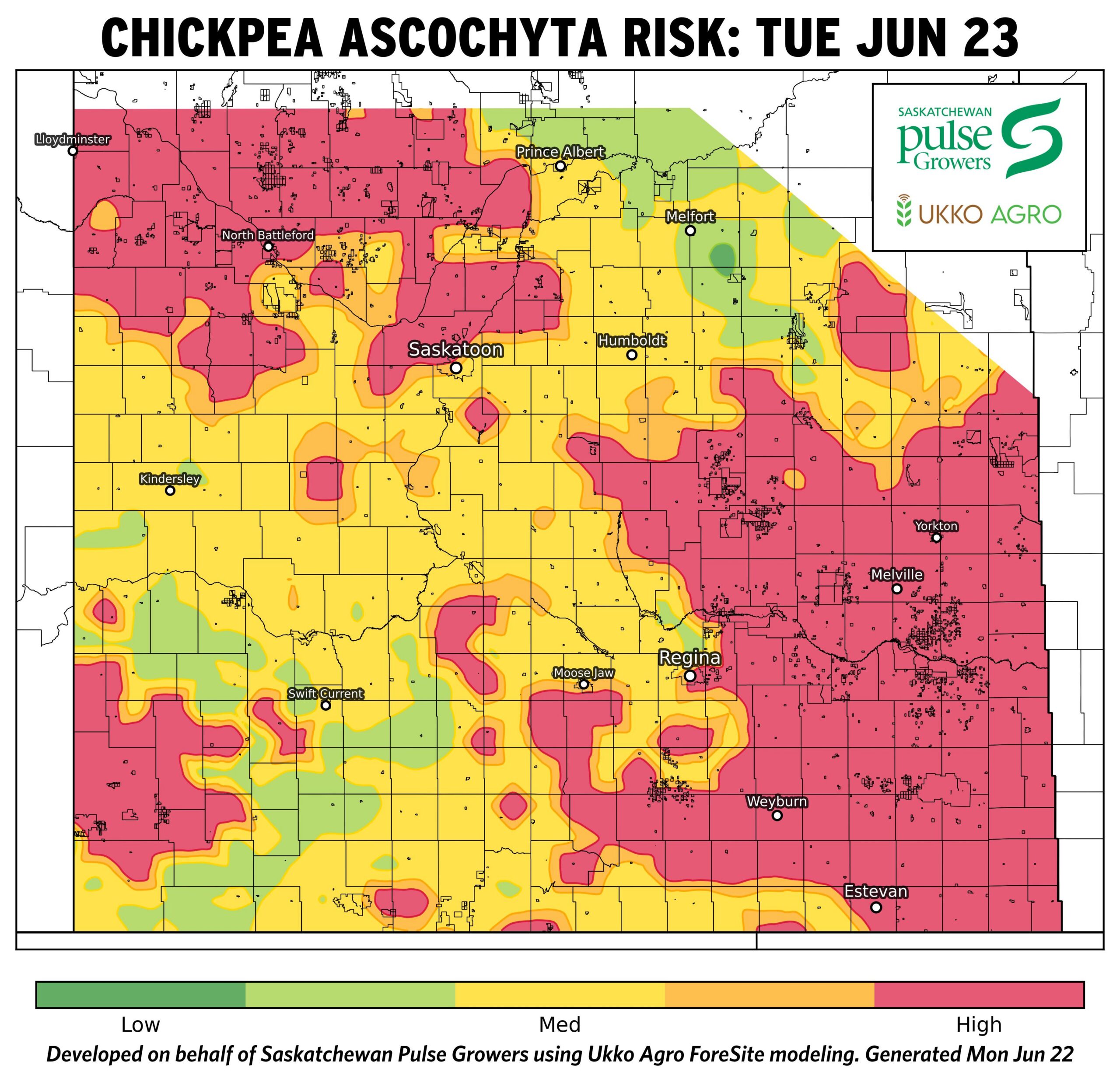
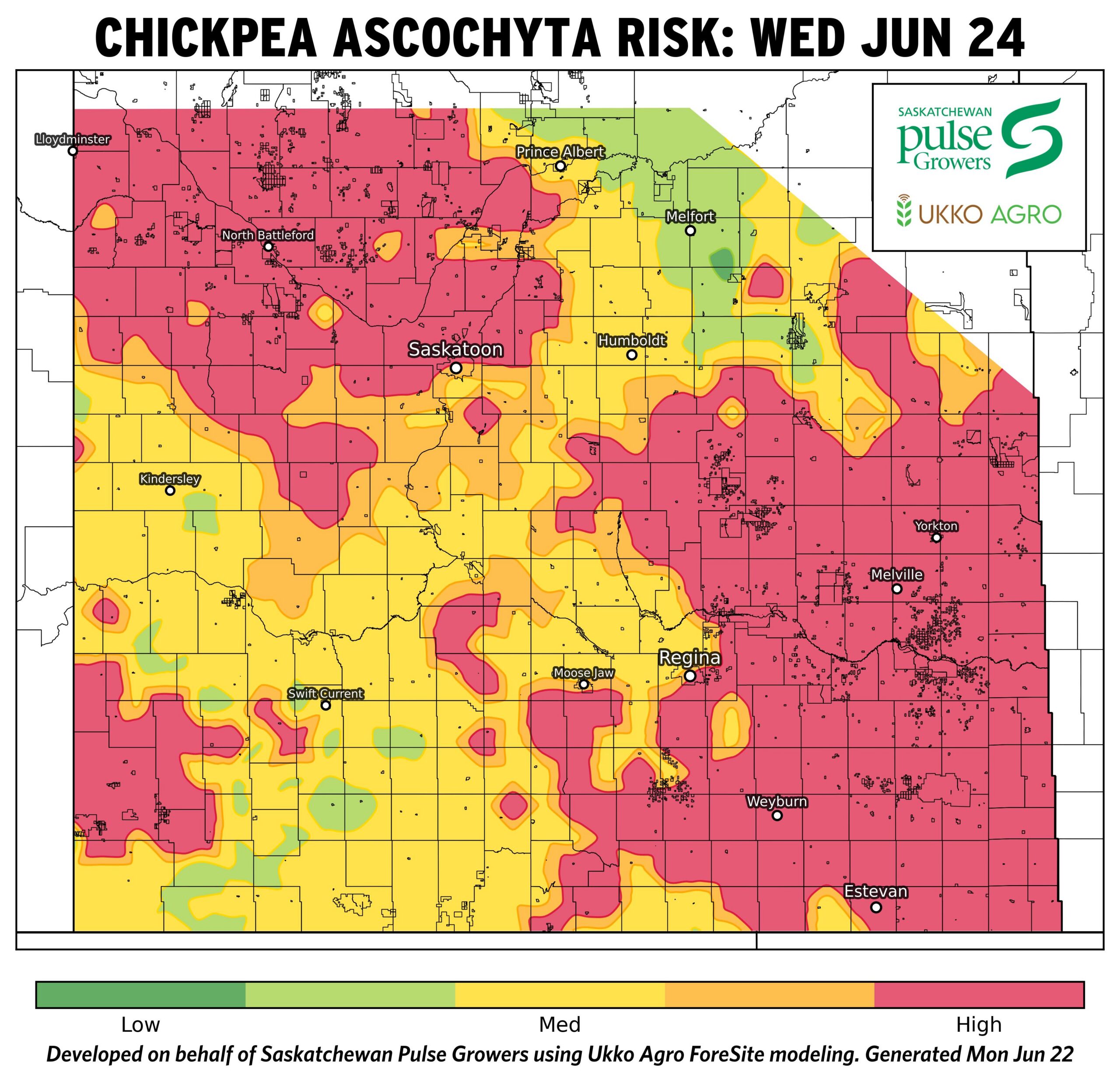
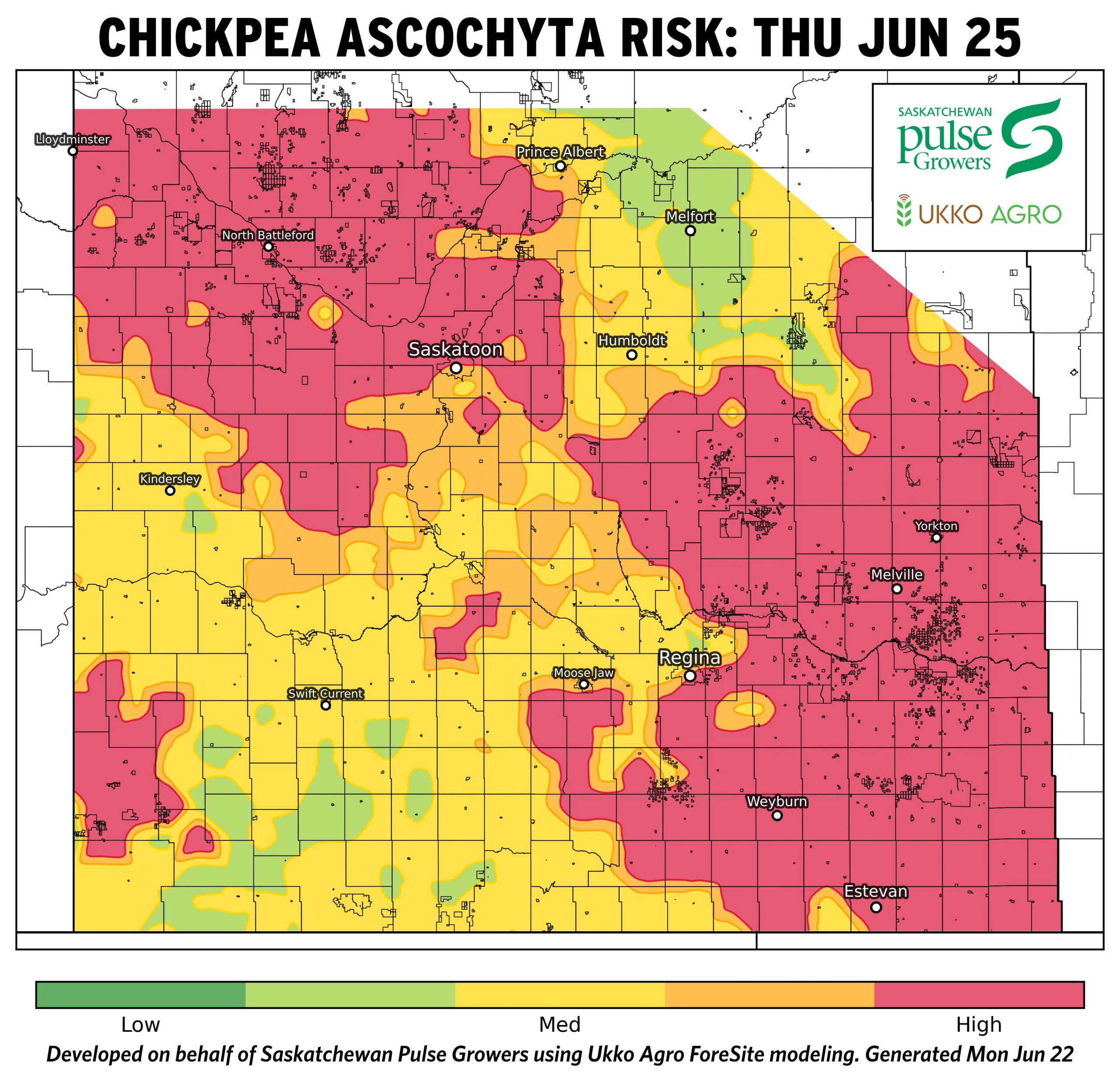
- As of June 22, chickpea Ascochyta risk is medium to high across much of the province.
- There are a few pockets with lower risk in the northeast and southwest regions of the province.
- The high risk area increases throughout the week, particularly in the northwest and eastern regions, as precipitation is anticipated across much of the province.
Temperature Maps: Agronomist Notes
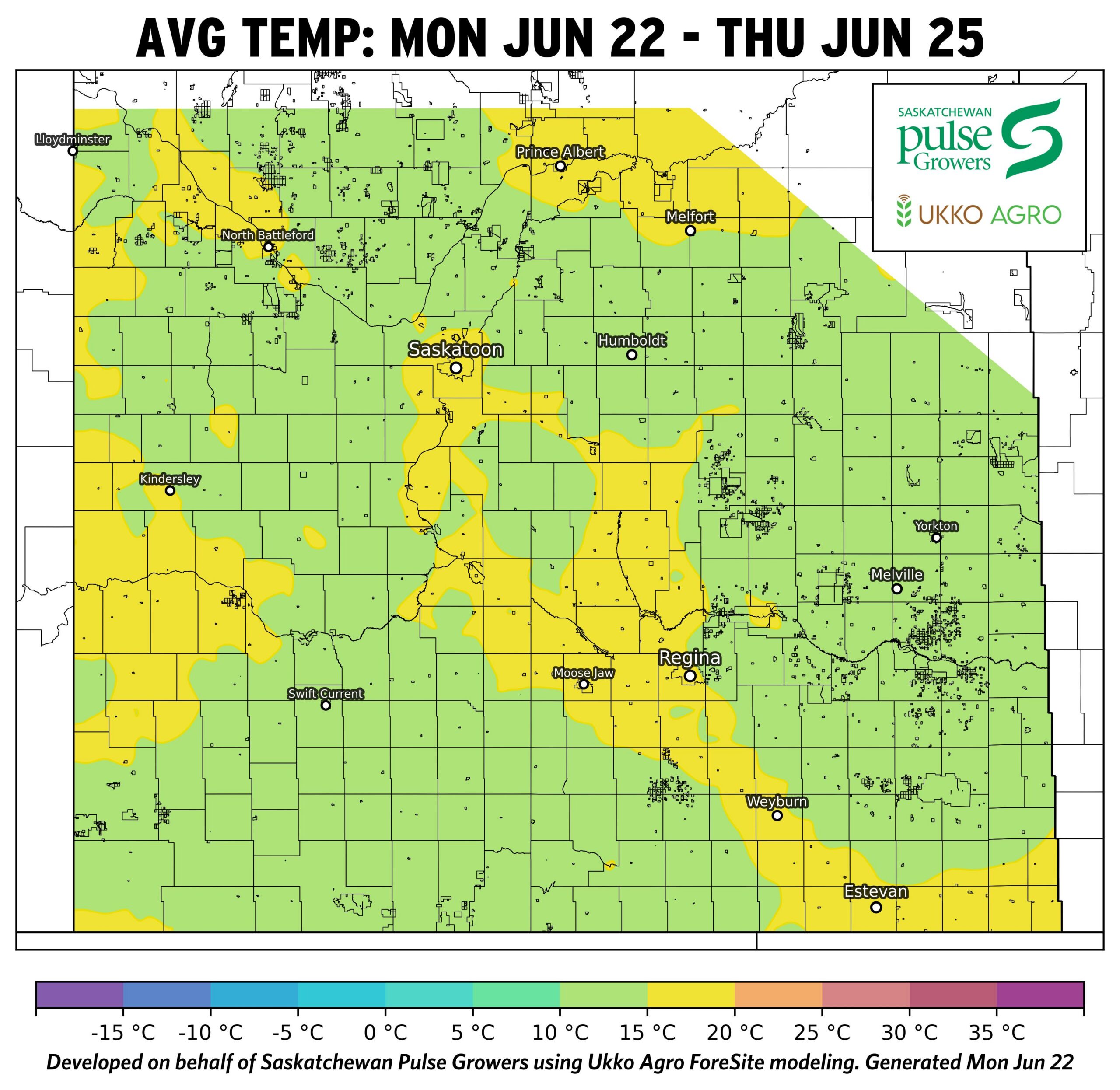
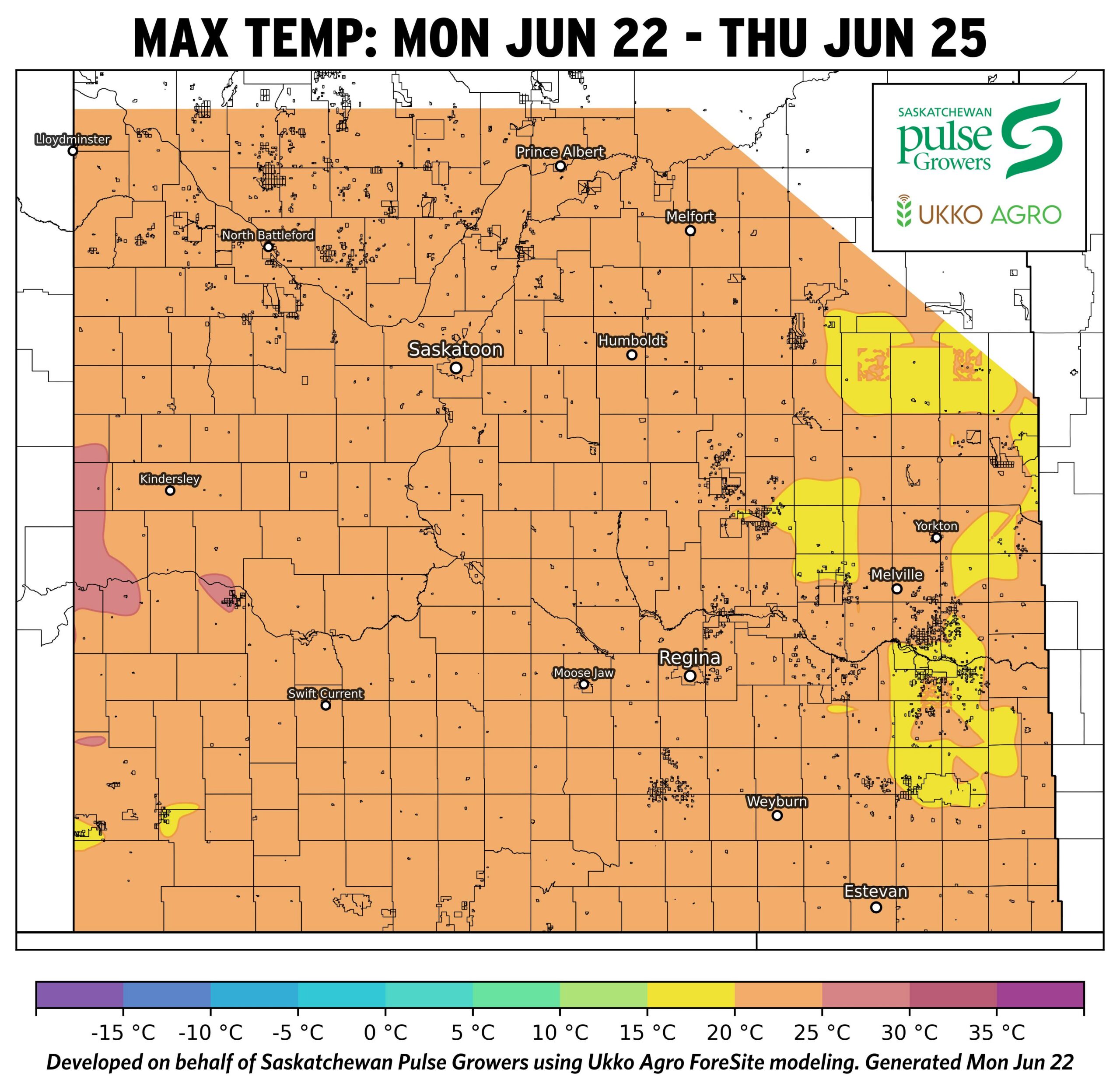
- Cool temperatures across Saskatchewan (max ~20–25°C for most of the province, avg ~10–15°C) will slow crop development.
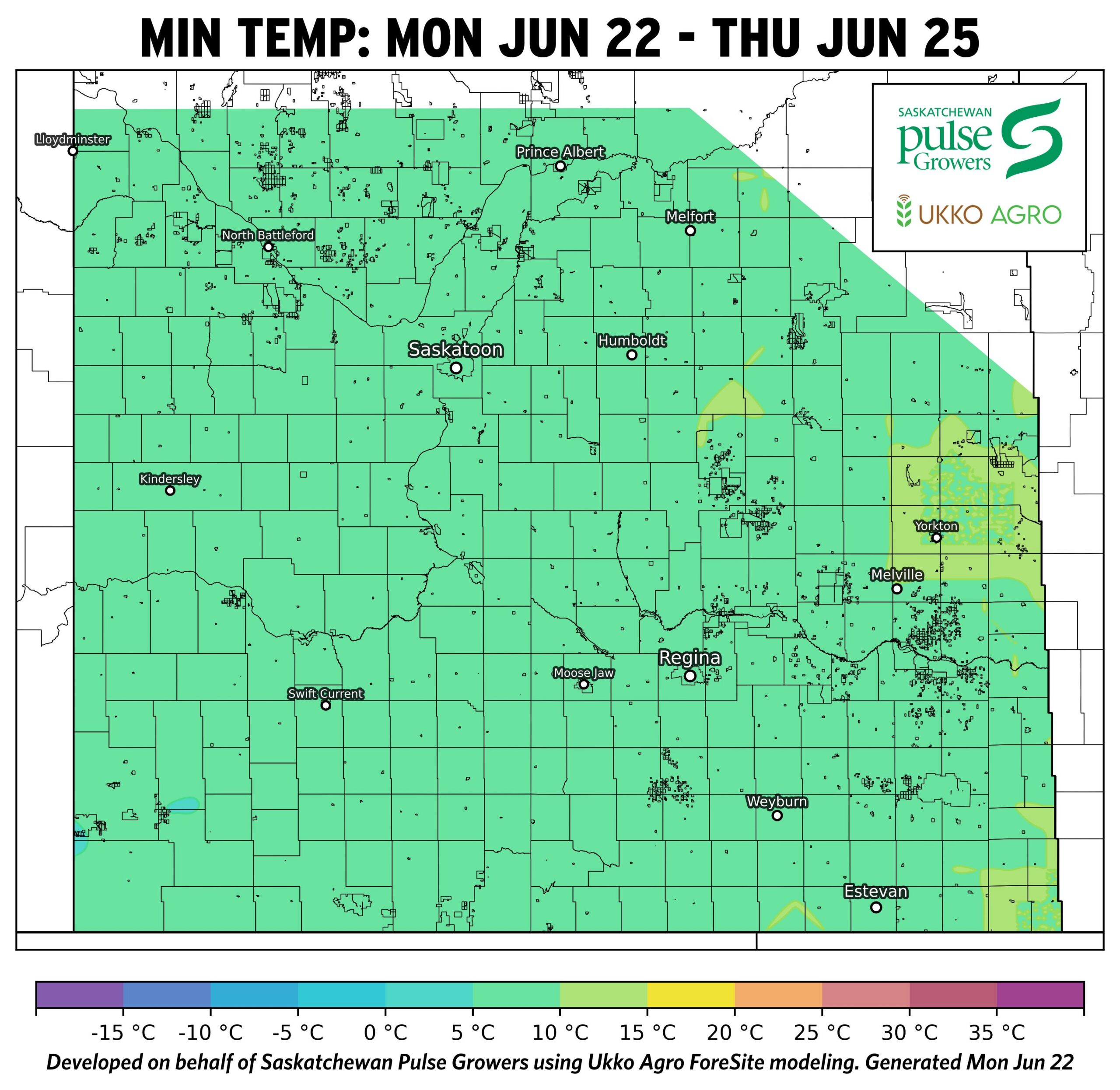
- Minimum temperatures of ~5–10°C for most of the province this week.
- No widespread heat stress risk.
Precipitation Map: Agronomist Notes
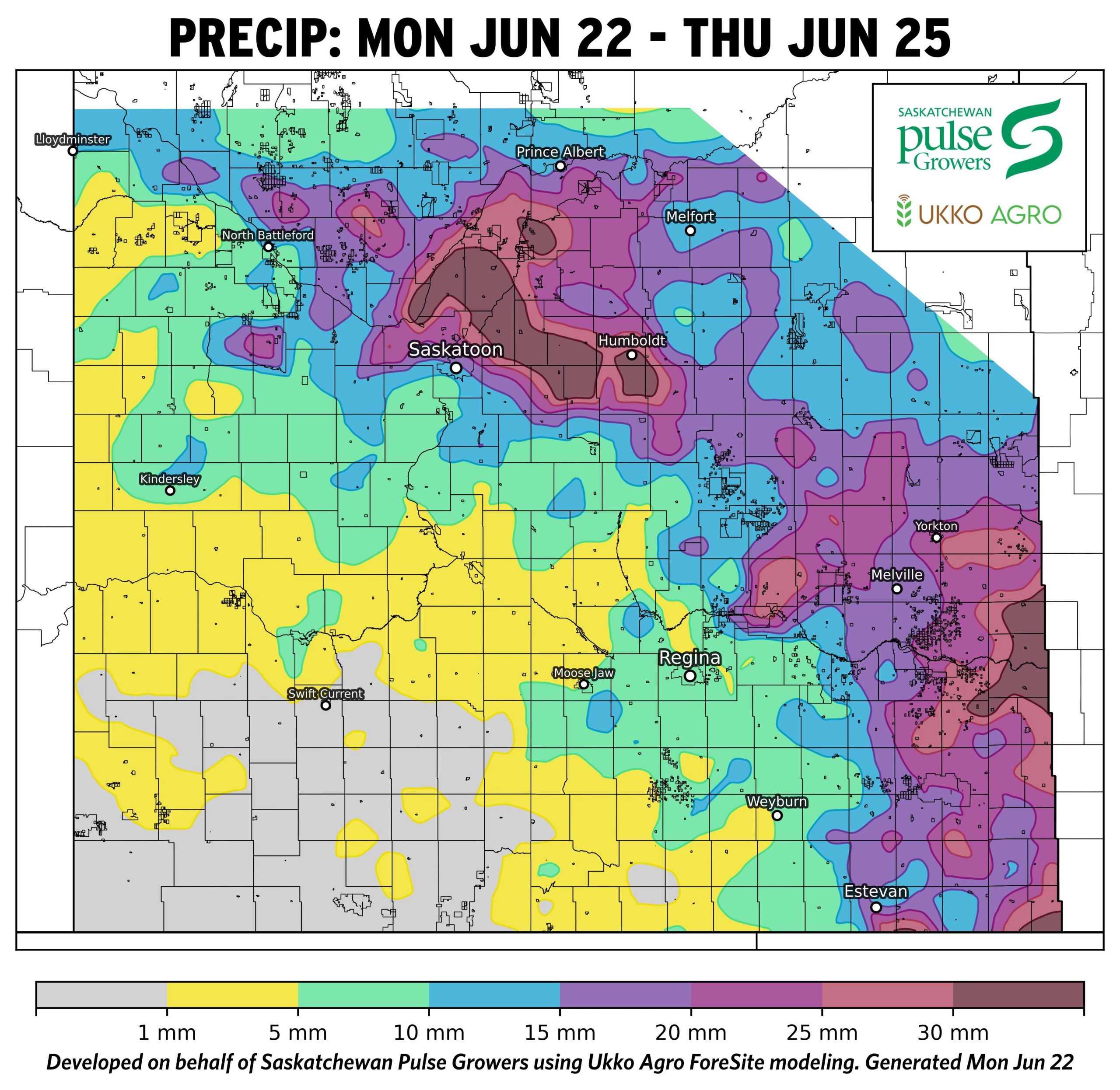
- Precipitation varies across the province, with amounts varying from 0 to 35 mm.
- Areas north and southeast of Saskatoon have the highest predicted precipitation, with 15-35 mm expected. This elevates the risk of root rot and foliar diseases.
- The southeast region of the province can expect 0-10 mm of precipitation.
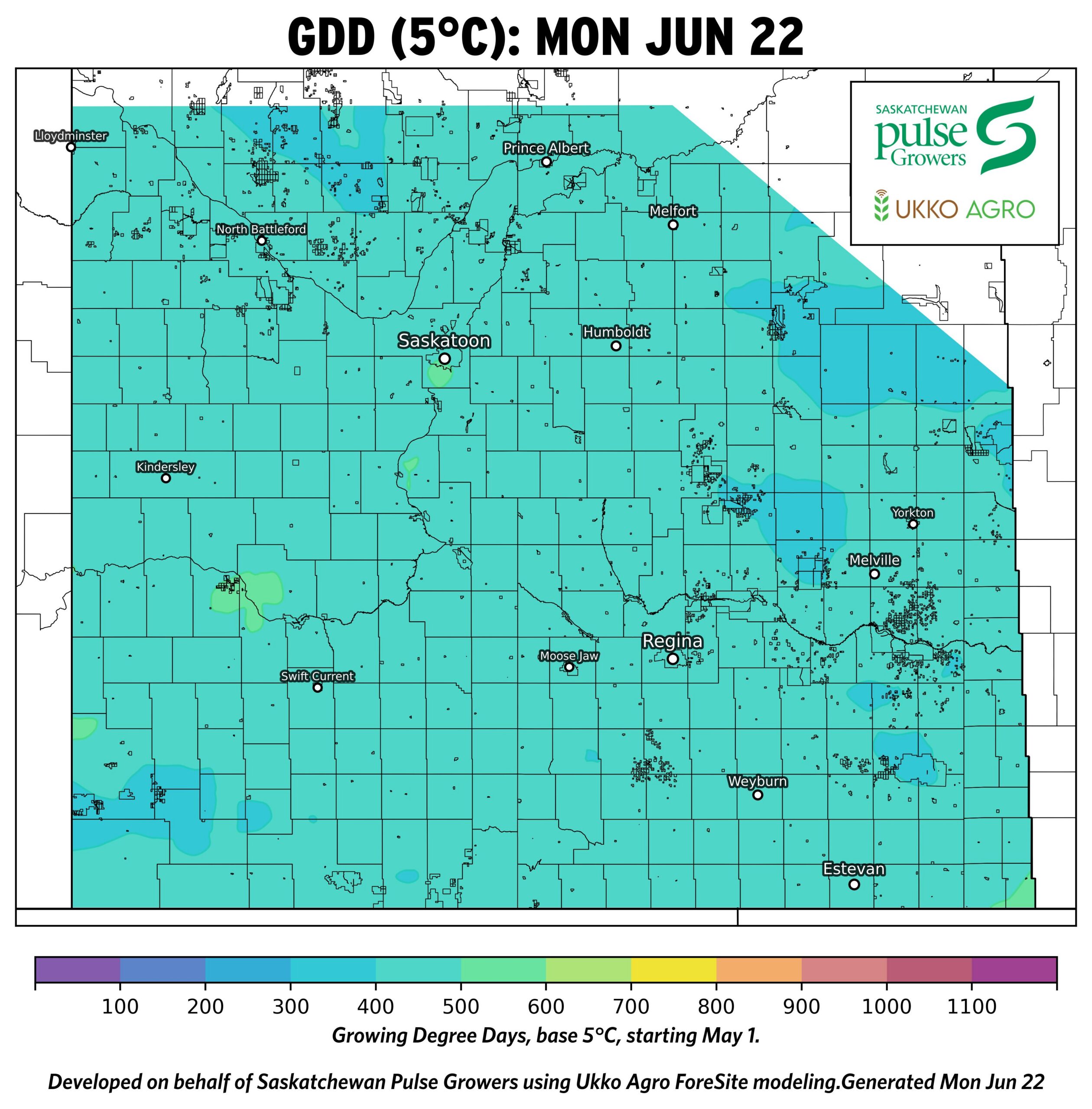
Growing Degree Days Map: Agronomist Notes
- Most of Saskatchewan is at ~400-500 GDD since May 1, supporting steady early-season growth.
- There are a few pockets at ~300-400 GDD which may slow development,
- Overall GDD accumulation remains moderate, keeping crops in early vegetative stages where moisture availability and disease pressure can cause yield impacts.
While every effort has been made to ensure the accuracy of these maps, weather-driven models are inherently uncertain, and forecasts may not be 100% precise. All outputs are based on conditions at the time of modeling and are subject to change as weather patterns evolve.
These maps are intended to serve as general decision-support tools only. They should not be relied upon as the sole basis for disease management, spray decisions, or other operational actions. Disease development and crop outcomes may be influenced by local environmental conditions, crop management practices, varietal susceptibility, and other factors not captured in the models. Users are strongly encouraged to verify risk through field scouting, on-site observations, and consultation with qualified agronomic advisors. For disease-specific decisions, refer to additional resources such as fungicide decision support tools and field-level risk assessments.
Information provided through these disease risk and environmental maps are OFFERED TO THE PUBLIC FOR INFORMATIONAL PURPOSES ONLY. The map creators and collaborating organizations assume no liability for decisions made or actions taken based on the use of this information.