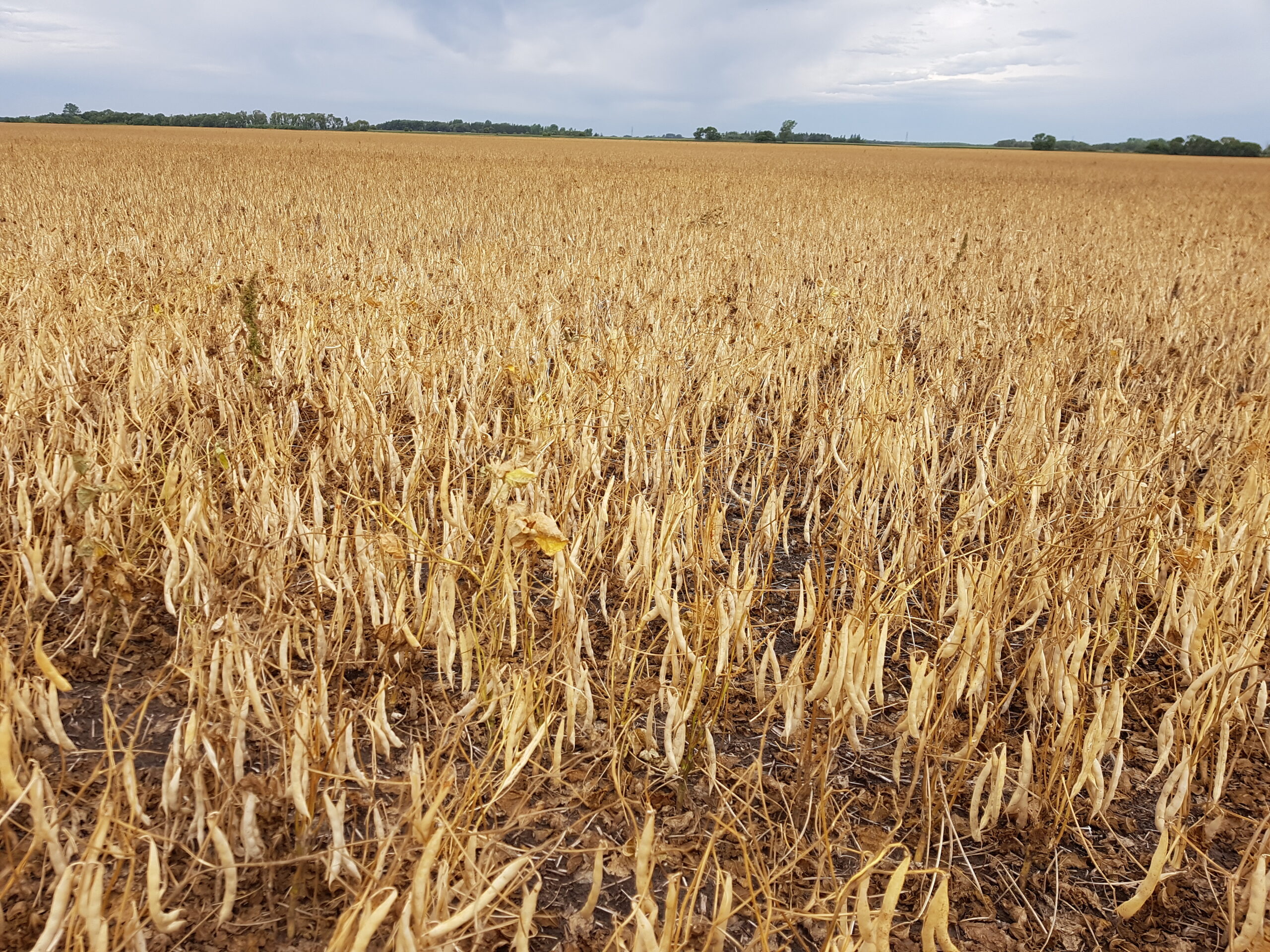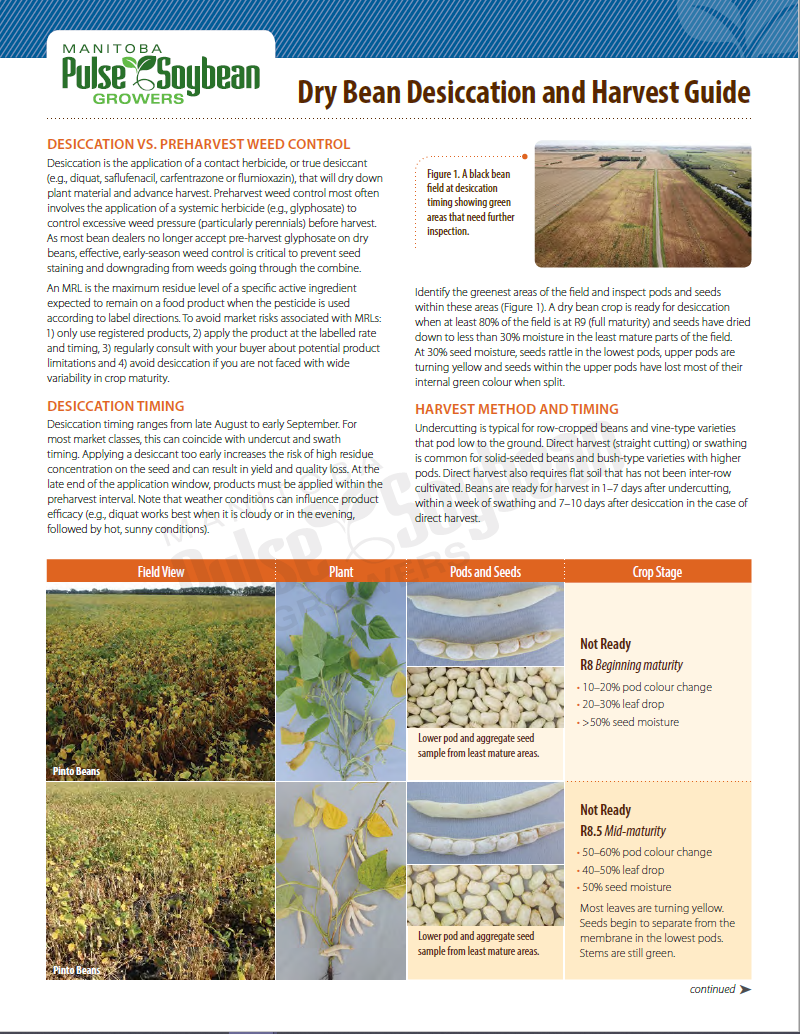
Dry bean harvest should begin when the seed moisture is between 16% and 22%. Harvesting at low seed moisture levels (<14%) can increase the risk of cracking and reduce seed quality. If harvest is late or not done with appropriate equipment settings, pod shattering can result in losses of up to 40%. Earth-tag (soil stains on the seeds) and splitting also reduce seed quality.
The timing of dry bean harvest depends on the harvest technique. Dry beans may be pulled (undercut), swathed or straight-combined (straight-cut). The “buckskin stage” refers to when beans are close to maturity. At this stage, the beans have turned yellow, but the pods are still flexible. Depending on the harvest technique, the optimal pod stage at harvest will vary.
If beans are grown as row-crops, they may be pulled (undercut) before combining. Pulling beans involves cutting the plants about 1 inch below the soil surface with a fixed-blade, rotary-disc, or rod-weeder. Pulling should start when the bottom pods are dry, and most of the pods are yellow. Some immature pods will dry down in the row after being cut, but the risk of moulding increases the longer they are laid out. Dry beans typically require 7 to 10 days of drying. If beans are mature, pulling may be done just before combining to allow the soil on the roots to dry. Six to 12 rows are then windrowed together to make a swath for combines to pick up. This is usually done shortly before combining to limit wind damage to the swaths. Windrowing in the early morning or evening, when the plants are slightly damp, can help reduce shattering losses. Indeterminate vine-type beans grown in 28–36 inch rows are best suited for this process.
Solid-seeded beans are often swathed before combining. Swathing occurs at a similar stage to pulling: when 50–70% of the pods are in the buckskin stage. Most of the leaves will have dropped off the plant at this stage. A few leaves left on the plant will help limit shatter losses, but excessive green material may interfere with harvest. Vine lifters and pickup reels can help reduce losses by capturing lower pods. As with pulling, swaths are susceptible to both wind damage and rotting.
Dry beans may also be straight-cut when 75% of the pods are dry, and the remaining pods are in the buckskin stage. Straight cutting is more common for navy and black beans. Vine lifters or flex headers maximize the ability to capture low pods. Straight cutting works best if the crop is uniform and free of green weedy material. Desiccants may be used in dry beans to achieve this. It is critical to ensure that the chosen product is registered for use in dry beans and is compatible with the intended crop rotation and marketing plan. Some products should not be used when crops are grown for seed.
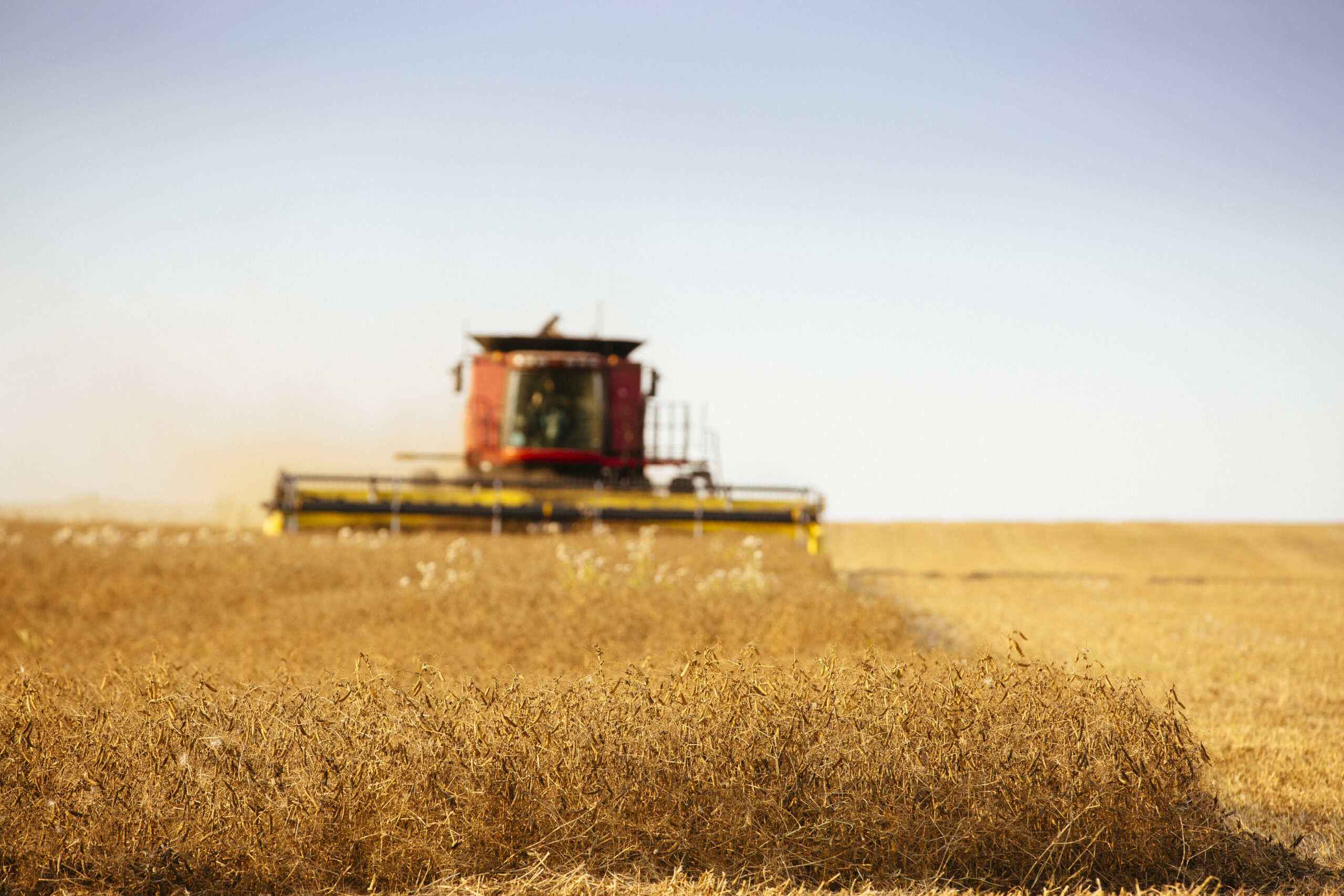
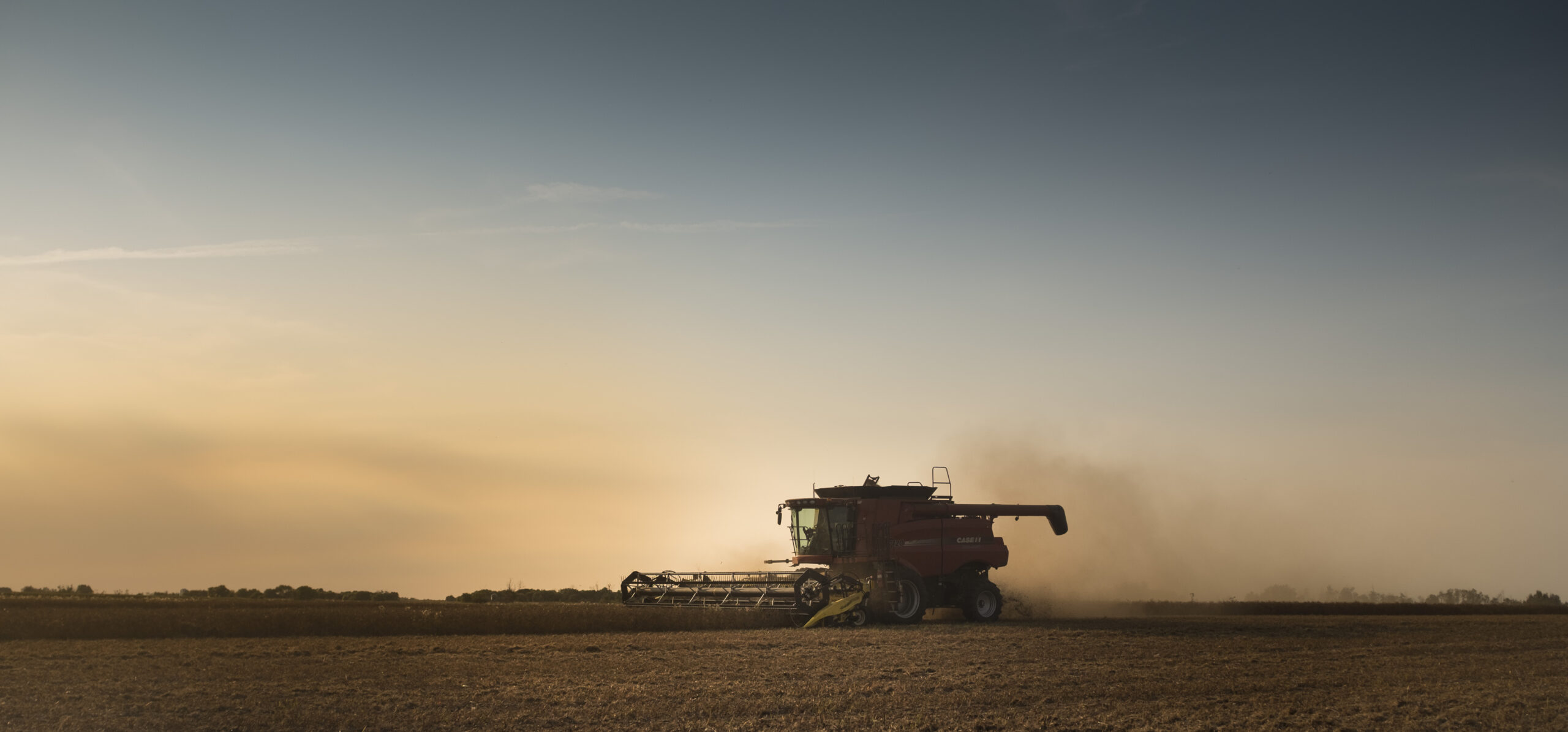
Dry beans can be harvested using specialized bean combines or with rotary/conventional combines. In specialized bean harvesters, beans move along conveyors over a large screen, allowing soil to fall away. However, these specialized combines require a significant investment. Conventional or rotary combines may be preferable for smaller operations or those that grow dry beans only occasionally.
Rotary combines are typically gentler on beans than conventional combines. Cylinder speeds should be set as low as possible and adjusted during the day as beans dry. Concave spacing should also be increased during the day as beans dry down. Conventional combines can be modified to be gentler on beans and to allow more soil to fall away by installing screen kits, especially in the feeder housing and at the header.
Handling dry beans once harvested should be done as infrequently and as gently as possible to avoid cracking the seed. Even hairline cracks are of concern as they will widen during processing and are not desirable for canning. Conveyors should be used instead of augers whenever possible. If augers must be used, reduce the speed and run full to cushion the beans.
Dry beans are often traded at a moisture content of 17%, but are considered dry at 16%. For long-term storage, beans should be at 14% moisture. Aeration fans can be used to dry down beans harvested at 18–22% moisture, but care should be taken to avoid over-drying. Some companies will take delivery directly from the combine to avoid damage from extra handling. If storing and hauling at later dates, care should be taken not to handle beans at frigid temperatures (below -20°C), as the risk of cracking increases.
Market-grade determinants include damaged or heat-damaged seeds, foreign material, disease, seed uniformity, and off-type beans. The Canadian Grade Commission does the grading.