Weed Management
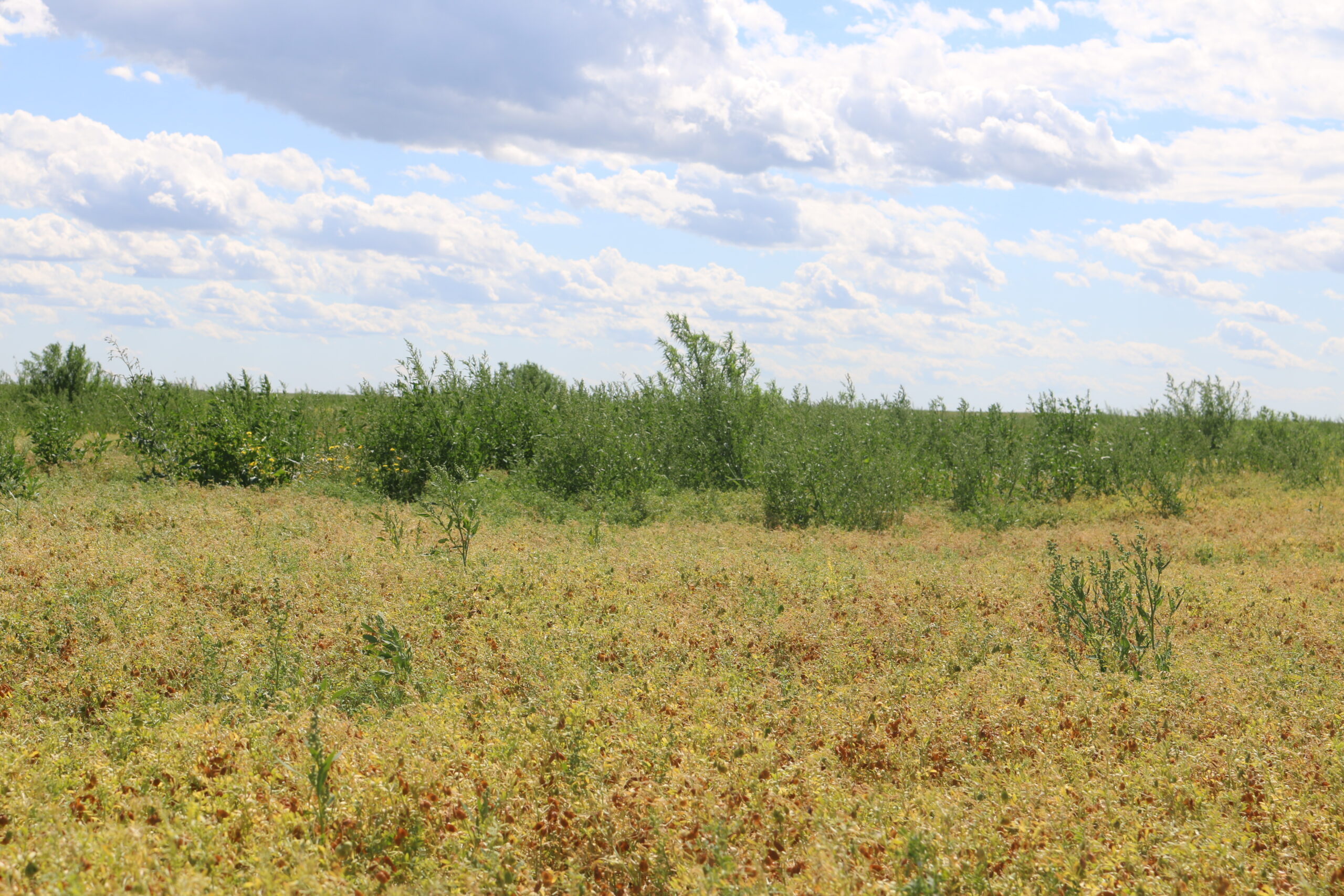
Dry beans are not competitive, and even low weed pressure can result in yield loss. Weed control is essential, as weeds can not only reduce yields, but can also serve as disease hosts and reduce seed quality by staining beans during harvest.
Since herbicide options are limited in dry beans, it is important to select clean fields and control problematic weeds (such as Canada thistle, perennial sow thistle, etc.) in the crop rotation for one or two years before growing dry beans. Dry beans are also susceptible to many herbicide residues, so herbicides used in rotation should be checked for restrictions on cropping.
Dry beans are typically seeded in Saskatchewan after May 25th to reduce the risk of late-spring frosts. Late seeding allows for weed control activities before seeding or crop emergence in the spring. When choosing in-crop herbicides, growers should carefully check labels, as not all herbicides have been tested on all dry bean types, and herbicide tolerance may vary between varieties.
Inter-row tillage is often used to manage in-crop weeds in row crop systems. Inter-row cultivation should be done on warmer days when beans are limp and less prone to breakage, and when weeds are wilted and likely to die more quickly. Cultivation should occur when the canopy is dry to prevent the spread of disease. Care should also be taken to avoid root pruning in later-season cultivations. Registered non-selective herbicides can also be sprayed between rows.
Related Resources

Disease Management
Dry beans are subject to several diseases that can reduce yield and quality to varying degrees. Growers are encouraged to adopt an integrated approach to disease management. Seed, soil, and plant residues can serve as sources of disease inoculum. These risks can be minimized by:
- Implementing effective crop rotations. Dry beans should be planted in the same field no more than once every four years. If possible, avoid planting adjacent to last year’s field to reduce disease spread from field margins.
- Be aware of alternate host crops for diseases of concern, and avoid planting them near dry beans (both temporally and in proximity).
- Using disease-free seed to avoid seed-borne pathogens. Seed should be handled gently both in storage and seeding operations to prevent damage to the seed coat.
- Selecting varieties that allow for improved airflow through the canopy and, if available, disease tolerance/resistance.
- Considering row spacing. Dry beans grown as row crops, compared with solid-seeding systems, have greater airflow through the canopy, reducing disease pressure.
- Using a registered fungicide seed treatment, especially if seeding into cool, wet soils.
- Regularly monitoring fields for diseases.
Dry beans can be affected by several root diseases, including Fusarium, Rhizoctonia, and Pythium. Together, these pathogens are known as the root rot complex. They are present in all Saskatchewan soils and can infect and kill individual seedlings from germination to the pod-filling stage. Infected dry bean plants develop lesions on the stems, and eventually become stunted and yellow with fewer pods and smaller seeds. While root rot complex diseases can cause economic losses, registered fungicide seed treatments are available.
Dry beans can also serve as hosts to Aphanomyces euteiches – a disease with devastating effects on field peas and lentils. While symptoms of the disease vary in dry beans, the disease is generally of minimal concern in this crop. However, if producers grow both dry beans and field peas, lentils, this is a disease to note.
Rust is not typically a disease of major concern in Saskatchewan, but severe early infections can be devastating to the crop. Rust is more common in pinto beans than in other types of dry beans. Symptoms present as pustules on leaves with a yellow halo. The pustules contain red summer spores, with black winter spores developing late in the season. Plants are susceptible to infection if conditions are wet and temperatures are moderate (16 to 25°C). The disease is usually most severe in late-planted, heavily fertilized beans with thick canopies. There are foliar fungicides registered for rust control.
In Saskatchewan, the two most common blights affecting dry beans are common blight (Xanthomonas campestris pv. Phaseoli) and halo blight (Pseudomonas syringae pv. Phaseolicola). Blights are most prevalent in wet, windy weather and mainly spread by rain splash, hail, or equipment. Blights cause leaf and pod lesions, which start as small, water-soaked spots on leaves. The spots conjoin into larger brown lesions with yellow halos. Damaged or cut tissue is particularly susceptible to infection. Pinto, great northern, and red Mexican bean varieties have some tolerance to halo blight.
Both blights are seed- and soil-residue-borne, so using disease-free seed is critical. Proper rotation of at least two years (ideally four or more years) between dry bean crops will also help reduce pathogen load. Streptomycin seed treatments are rather effective against blights, but growers should familiarize themselves with the most up-to-date labelling restrictions before ordering the treated seed. Copper-based fungicides can help control blights in-season, and they are most effective in drier conditions.
White mould infects many crops in Saskatchewan and can be a severe disease of dry beans. Prolonged wet conditions favour disease development, and solid-seeded irrigated beans are at higher risk. White mould is less common in beans grown in row-crop production systems, which have greater airflow through the canopy.
White mould is characterized by watery lesions and often fuzzy white mould growth. Depending on the timing of the infection, it can spread into the stem and girdle it, resulting in poor seed production and premature plant death. Small black sclerotia form inside the stems, which fall to the soil and produce spores in the following years.
Foliar herbicides are registered for control, but should be applied before disease symptoms are visible. Production practices that help dry out the canopy will also reduce disease virulence.
The pathogen that causes Anthracnose in dry beans is specific to dry beans and does not infect other crops. It is not a common concern in Saskatchewan and can be avoided by using disease-free seed and following a minimum three-year crop rotation.
Other concerns in dry beans that appear to be diseases may actually be abiotic or viral in nature, and fungicides are ineffective against them. It is crucial to identify the cause of symptoms to ensure accurate management.
Bean common mosaic virus can be spread by infected seed or by sap-feeding insects such as aphids. Affected bean plants are stunted, spindly, have few pods, and may be off-colour. Leaves may be puckered, wrinkled, or elongated. While infections seldom cause plant death, the impact on yield depends on the timing of infection, with earlier infections having a greater impact.
Some bean varieties exhibit varietal resistance, and using clean seed will help prevent issues.
Dry beans are susceptible to sunscald and ozone damage, leading to bronzing. Sunscald is caused by the intense sun and heat. It can affect leaves, stems, and pods, and is most often found on lush new growth. Affected leaves appear brown and scorched or show white discolouration. The leaf tissue dies and crumbles, leaving ragged edges. Leaves are most susceptible to sunscald when humid, warm, cloudy days are followed by bright sun.
Bronzing occurs when leaves are exposed to ozone. Ozone exposure is related to pollution and lightning events. Similar conditions that favour sunscald also favour damage from higher ozone concentrations. Leaves will exhibit small reddish-brown flecking on upper surfaces. Some pods may also show flecking. Some bean varieties are more sensitive to ozone damage, with black beans being particularly susceptible. Neither condition significantly affects yield.
Various nutrient deficiencies can appear to be diseases at first glance. Zinc deficiency in dry beans can mimic diseases or environmental symptoms. Dry beans experiencing zinc deficiency will have yellowing of the new leaves between leaf veins. Plants will have shorter internodes and may be stunted. The top leaves may start to curl under and have a bronzed appearance.
Fungicide Resistant Disease Populations
Just as with herbicides, fungicide groups can also develop disease-resistant populations. Any fungal pathogen population may contain some strains naturally insensitive to various fungicides. A gradual or total loss of disease control may occur if these fungicides are used repeatedly in the same fields. Other resistance mechanisms that are not linked to the site of action, but are specific for individual chemicals, such as enhanced metabolism, may also exist.
To delay fungicide resistance/insensitivity:
- Rotate fungicide groups.
- Tank mix fungicides that have a high risk of developing insensitivity with fungicides from a different group.
- Do not apply more than the maximum number of applications listed on the label.
- Avoid consecutive sprays of the same fungicide, or other fungicides in the same group, in a season.
- Fungicide use should be based on an integrated pest management (IPM) program that includes scouting and accurate record keeping of fungicide use and crop rotation.
- An IPM program also considers cultural, biological, and other chemical control.
- Monitor treated areas for signs of fungicide insensitivity. If the disease continues to progress after treatment, do not reapply the same product at a higher rate.
- If you observe fungicide insensitivity, switch to a fungicide with a different mode of action.
Contact your local regional crop specialist or certified crop advisor for any additional pesticide management and/or IPM recommendations for specific crops and disease problems in your area.
Fungicides
Use foliar fungicide only when the economic risk of potential losses outweighs the cost of fungicide application. Applying fungicides for the wrong problem or at the wrong time will significantly reduce economic returns and can limit control options for later in the season if disease risk increases.
Resistance of several fungal pathogens to strobilurin fungicides (Group 11) has been reported in Saskatchewan. No more than two applications of any strobilurin fungicide per year should be made to the same field. Continuous use of strobilurin fungicides without rotation greatly increases the risk of disease resistance.
Related Resources


Insect Management
The most concerning insect pests in dry beans are cutworms and wireworms, with a host of other pests that can cause non-yield-limiting or only occasional damage.
Cutworms overwinter in the soil as pupae, emerging in the spring to feed on new plants. Cutworms feed on dry beans and cut off the plant below the soil surface. Since dry beans lack growing points below ground, they cannot regrow after being cut off. Crops should be scouted regularly in early spring, and if dead or wilted plants are observed, the soil around and up the row from the plant should be examined for cutworms. The feeding behaviour varies by species, but most feed at night and are below the soil surface, up to a depth of 2 inches during the day.
Wireworms are small, segmented, tan-coloured worms that feed on a variety of plant hosts, including dry beans. Wireworms chew on plant stems, causing plants to wilt. Unlike cutworms, wireworms do not typically chew the stem completely off, so the plant is usually still attached to the roots. Seed treatments are available to control wireworms. Foliar sprays are ineffective against wireworms because they stay below ground.
The pea aphid adult is small (~4 millimetres (0.15 inches) long), light green, and long-legged. The insect may be wingless or have prominent, translucent wings. Although pea aphids rarely survive winter in Saskatchewan, they may overwinter as an egg attached to the stems or leaves of alfalfa or clover. The eggs hatch in early spring, and the young aphids feed on newly emerged alfalfa or clover plants. In May and June, a new generation develops wings and, with the aid of wind currents, flies to dry bean fields. Most aphids in dry bean fields are blown in on warm southerly winds from the United States in June or early July. The pea aphid weakens the plant by sucking its sap, and also transmits viral diseases.
Because it is only an occasional pest in dry beans, there are no established economic thresholds for this pest.
Alfalfa loopers are occasional pests of dry beans and are more common when grown near alfalfa. Loopers either overwinter in the soil as pupae or are blown up from the United States in early summer. Loopers may defoliate and clip flowers, resulting in yield loss. There is no economic threshold for dry beans; however, control is recommended in other crops when looper populations exceed 15 larvae per square metre, and heavy defoliation and flower clipping occur.
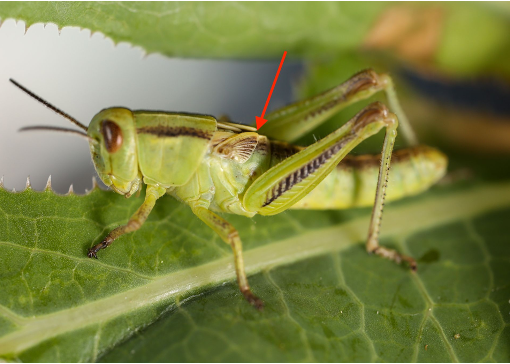
Grasshoppers feed on the foliage of almost any crop, dry beans included. Field edges usually have higher infestations as they move in from field borders. Significant defoliation and yield damage can occur, especially in indeterminate dry bean varieties, if the surrounding crops have matured and the dry beans are still immature, thereby increasing the migration of grasshopper populations into the field.
No economic thresholds have been established for grasshoppers in dry beans. However, if grasshopper numbers are sufficient to cause economic damage, the optimal insecticide timing is when nymphs are in the third instar, usually about mid-June. Always follow label instructions and the pre-harvest interval of the selected insecticide to maintain crop marketability.
Lygus bugs are not often a significant pest of dry beans. However, if conditions are hot and dry, there can be increased potential for damage to early growth. Lygus bugs feed on plant sap and have piercing, sucking mouth parts. If heavy feeding occurs, they can disrupt the flower set and cause pod abortion. Direct feeding on maturing beans can cause surface pitting, which can affect bean quality. Nymphs tend to be more problematic than adult lygus bugs.
Potato leafhoppers are small (3 mm), pale green, wedge-shaped bugs. Populations increase throughout the growing season and can reach economic threshold levels by July. Dry bean plants get ‘hopper burn’ from both adults and nymphs sucking sap from plants. Viruses can be transmitted to plants through their feeding, and affected plant tissue may become dwarfed, crinkled, and curled. Brown areas begin to appear on leaf margins, and plants may eventually die. Treatment is warranted when one leaf hopper is found per trifoliate leaf.
The adult seedcorn maggot looks like a common house fly and emerges from eggs in the soil in late May. The adult then lays eggs in cracks in moist soil, which hatch after two to four days when the temperature is above 10°C. Larvae are white, tough-skinned, and roughly 5mm long. They will burrow into both the seed and the stem of developing dry bean plants, resulting in thinned stands and wilted plants. Damage is worse when germination and emergence are delayed. Therefore, planting as early as possible into a warm, shallow seedbed encourages fast crop emergence and helps to limit maggot damage. Sprays are ineffective, so seed treatments are the only registered controls to protect against seedcorn maggot.