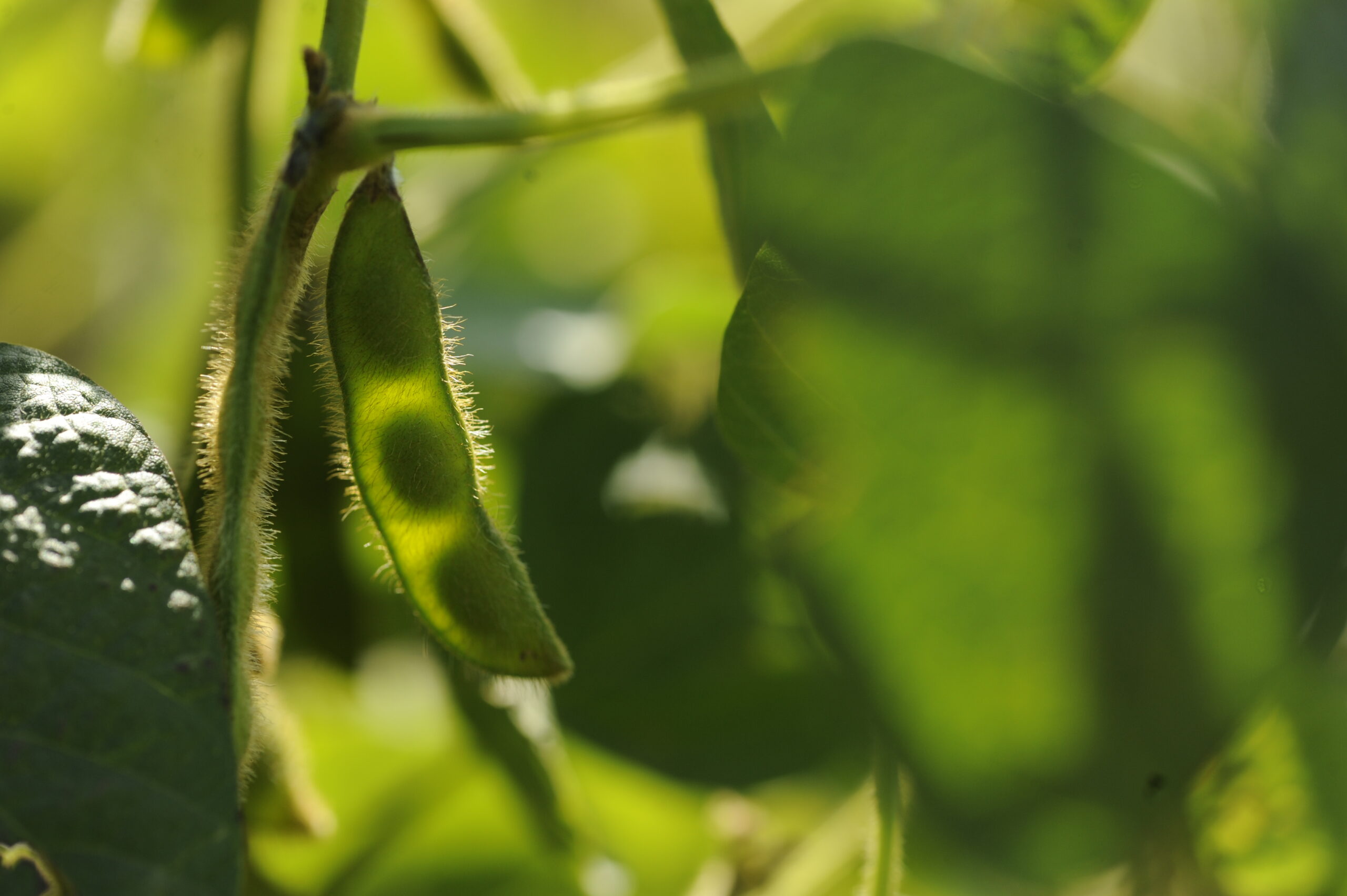
Weed Management
Soybean seedlings are non-competitive, and yield potential is maximized when weeds are controlled during a critical weed-free period that lasts until at least the third trifoliate stage. After the soybeans form a canopy, they are better able to compete with weeds. An integrated weed management system is recommended as a comprehensive weed control strategy.
Soybeans are typically seeded later in the spring into warm soil. This allows for weed control before seeding or crop emergence in the spring. Herbicide selection will vary by production system, as different herbicide-tolerant traits are available across varieties. When selecting in-crop herbicides, it is essential to review the labels carefully before application and consider potential drift and crop rotation concerns. Generally, weed management involves the application of registered herbicides, both pre-seed and in-crop. Growers should also be aware of past herbicide applications on fields planted to soybeans, as residual herbicides such as clopyralid, metsulfuron, and dicamba (if not a dicamba-tolerant variety) may cause soybean injury.
Because some herbicide systems developed in soybeans are the same as those used in canola (e.g., Roundup Ready® and Liberty Link®), volunteer herbicide-tolerant canola is often a primary weed of concern in soybean production. However, a wide range of commercial herbicides is registered for use in soybeans, and there are many different herbicide options to tank-mix to address these concerns.
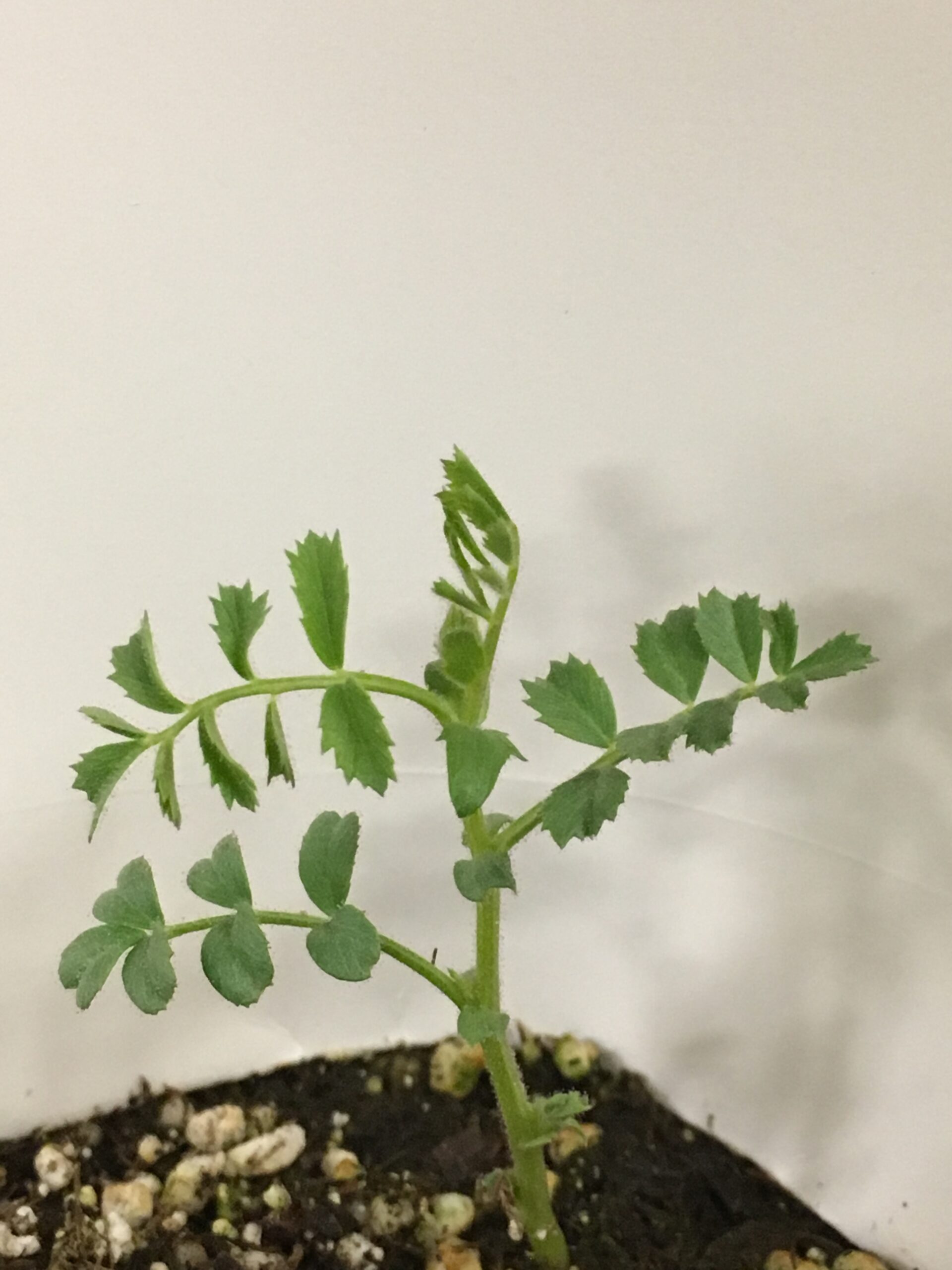

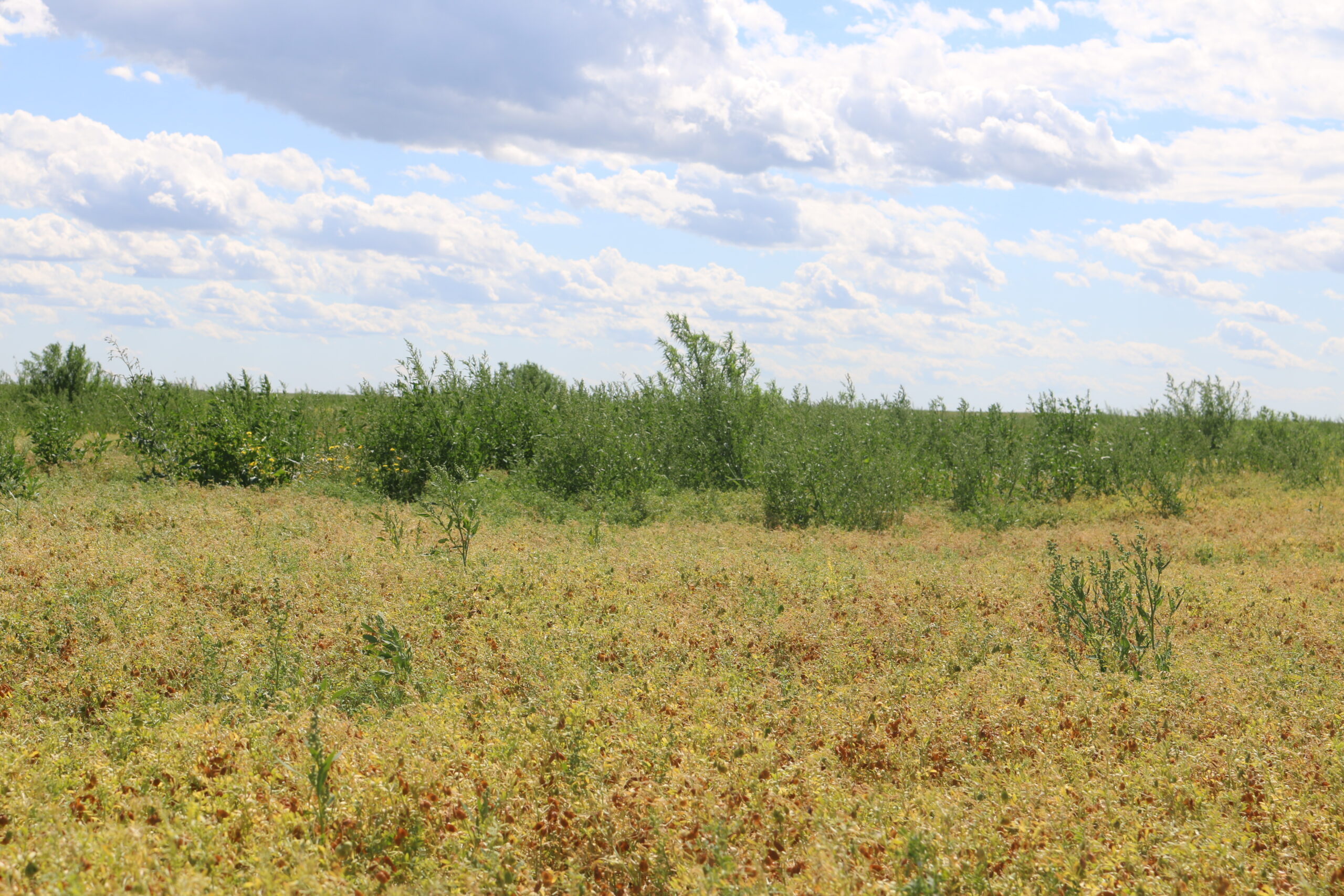
Disease Management
In Saskatchewan, many soybean diseases have yet to reach high incidence levels, as soybeans are a relatively new crop in this growing region. As soybeans become more established in Saskatchewan, the incidence of some of these diseases may increase.
Many management practices, including cultural controls, can reduce the risk of some diseases. Growers should consider:
- Seed Source and Handling: Planting clean seed that is disease-free. Many diseases can be carried on the seed, such as downy mildew, cercospora leaf blight, bacterial blight, and white mould. Seed should be handled gently during storage and seeding operations to avoid damage to the seed coat.
- Variety Selection: Many resistant varieties are available for several different diseases. If a particular disease is of concern, checking the ratings when selecting a variety is good practice.
- Weed Control: Keeping the crop weed-free, especially up until the end of the critical period, will allow for a drier canopy and reduce fungal disease pressure. Some weeds can also harbour pathogens, so prioritizing weed control is essential for managing disease pressure.
- Proper Fertilization: Balancing nutrition is essential to avoid nutrient deficiencies that may stress the plant and make it more susceptible to disease.
- Crop Rotation and Tillage: Well-managed crop rotations and burial of infested crop residue using conservation tillage practices can reduce pathogen levels of some diseases. Avoiding compaction and breaking up hardpans can also help minimize root stress, thereby decreasing disease incidence and severity.
Seed treatments protect seed and seedlings from seed-borne and soil-borne pathogens and help ensure good establishment of a strong, vigorous crop. Foliar fungicide applications can be used to target identified diseases at the correct timing during the growing season, thereby maximizing effectiveness and yield protection.
Root Rots
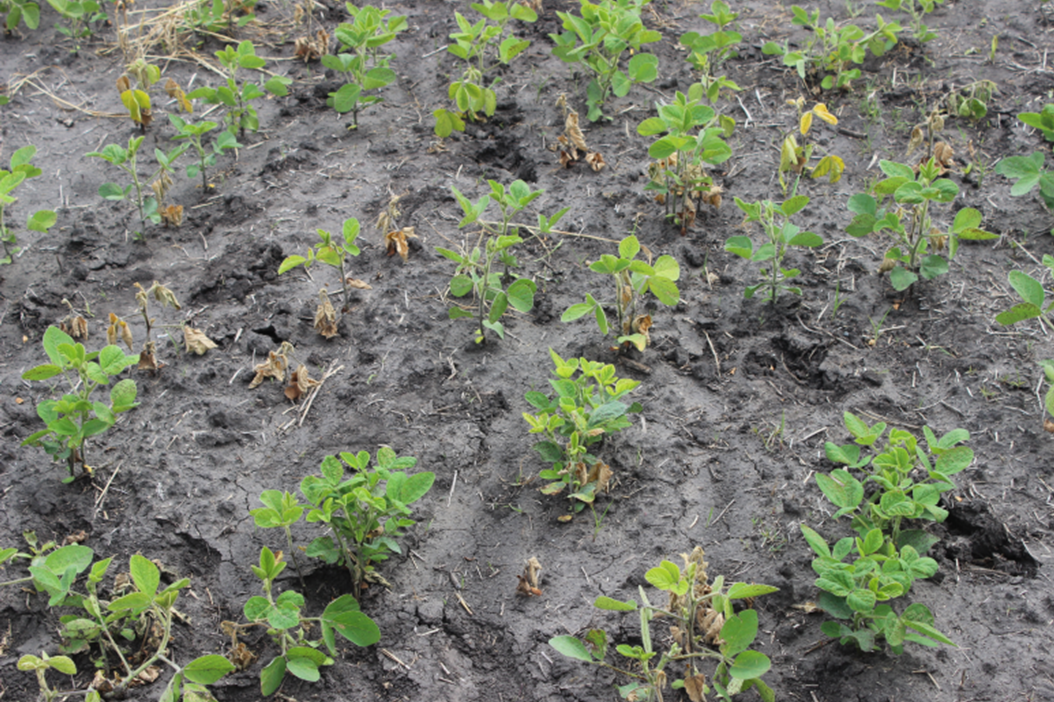
Several different pathogens can cause root rots in soybeans. The most common are Fusarium, Rhizoctonia, Phytophthora, and Pythium. Root rot is most common when the soil is very wet in the first few weeks after planting, and in heavy, poorly drained soils. Planting crops into warm soils that promote rapid growth and emergence, as well as using seed treatments, can mitigate the risk of root rot. Seed and seedling diseases may be exacerbated by slow soybean germination and growth, poor-quality seed, and plant stress.
Evidence of seed and seedling diseases includes seedlings failing to emerge, plant death, or stunted growth. Infection and damage before emergence are common but difficult to detect, as the infected parts are still underground. Factors other than disease can also cause these symptoms, so it is important to look closely to determine the cause(s).
Favoured by saturated, warm soil, Phytophthora is a significant disease of soybeans that can attack throughout the growing season up to maturity. Early-season symptoms include seed rot and pre- and post-emergence damping-off. Stems of infected seedlings appear water-soaked, while leaves may become chlorotic, and plants will wilt and die. Older plant symptoms vary by variety. Susceptible varieties exhibit interveinal chlorosis, and plants wilt and die with withered leaves attached. Varieties that are not fully susceptible may appear stunted, but plants are typically not killed. The most characteristic symptom of Phytophthora is a dark brown lesion on the lower stem that extends up from the taproot of the plant, often as high as several nodes. This lesion has the potential to girdle the stem and eventually stunt or kill the plant.
Phytophthora sojae survives in soil for up to 10 years on decomposed soybean tissues. Soybeans are the only known crop host for this pathogen. Crop rotation, variety selection, and seed treatments can minimize effects.
Pythium is a soil-borne, fungal-like pathogen—several different species damage soybeans. The various Pythium species that infect soybeans have a broad host range, encompassing many other crops. Pythium tends to be favoured by cool and moist soil, but some species may do more damage in warm soils.
Pythium can attack seeds and seedlings before emergence and can also cause post-emergence damping-off under wet conditions. The characteristic symptom of most Pythium infections is soft, brownish-coloured, rotting tissue. Infected seeds appear to be rotted, and soil adheres to them. Seedlings exhibit water-soaked lesions on the hypocotyl or cotyledons, which develop into brown, soft rot. Pythium and Phytophthora have similar symptoms in seedlings and can only be distinguished by laboratory examination. Although Pythium primarily damages seeds and seedlings, roots of established plants can also be infected, and plants may be stunted, turn yellow, or wilt if infection is severe. Well-drained fields help reduce disease pressure, as does avoiding planting in cold, wet soils. Seed treatments are also effective against Pythium spp.
Rhizoctonia infects young seedlings, causing both pre- and post-emergence damping-off. This pathogen prefers wet, warm soil. In seedlings and older plants, a firm, rusty-brown decay, or a sunken lesion on the root or lower stem, is a characteristic symptom. Infections can be superficial and cause no noticeable damage, or they can girdle the stem, stunting or killing the plant.
Fusarium is a common pathogen that can damage seeds and seedlings. It causes light to dark brown lesions on the roots, which may spread over much of the root system, making the roots appear shrunken. Fusarium may attack the taproot and promote adventitious root growth near the soil surface, and may also degrade lateral roots.
Aphanomyces is a highly problematic root disease in many pulse crops, but soybeans are currently considered a non-host of Aphanomyces.
The soybean cyst nematode has not yet been found in Western Canada, but it is a significant economic disease of soybeans worldwide. Fields in areas frequently in soybean rotation should be carefully monitored. The soybean cyst nematode may not cause noticeable physiological symptoms even though yield loss occurs. Notable symptoms include stunted, slow-growing crops with little to no canopy closure and chlorotic foliage.
Foliar Diseases
Sclerotinia sclerotiorum is the pathogen that causes Sclerotinia stem rot, also known as white mould. This disease affects many broadleaf crops in Saskatchewan, including soybeans. If >10% of soybean plants in the crop are affected, yield loss can be expected.
White mould is easily recognized by fluffy, white growth on stems. Initial symptoms develop from reproductive stage (R) 3 to R6, characterized by gray-to-white lesions at the nodes. Lesions rapidly progress above and below the nodes, sometimes girdling the entire stem. Characteristic black sclerotia will become visible, embedded in the white mycelium on the stem lesions and inside the stem.
Some moderately resistant soybean varieties are available, but integrative disease management remains crucial. Open canopies that have sufficient airflow are less susceptible to Sclerotinia development. Controlling weeds is also essential, as many broadleaf weeds also serve as disease hosts. Managing with crop rotation is challenging as there are many host crops, and spores can travel long distances in the air to affect nearby crops. Foliar fungicides are available to help manage white mould in soybeans.
Septoria glycines, or brown spot, is a common foliar disease of soybeans that develops soon after planting and is usually present throughout the growing season. Yield losses depend on how far up the canopy the disease progresses during grain fill.
It is typically a milder disease during vegetative growth stages, with infected plants exhibiting purple lesions on unifoliate leaves. Lesions on later leaves are small, irregularly shaped, and dark brown in colour. Infected leaves will turn yellow and drop. Lesions on stems, petioles, and pods are not as common but are similar in appearance. While foliar fungicides can be applied during the R3 to R5 growth stages to slow disease development and protect yield, they are usually not economically crucial in Saskatchewan.
Bacterial blight is another prevalent foliar disease; however, it seldom causes severe yield loss. Together with Septoria brown spot, it is usually the first foliar disease to occur on soybeans in most growing seasons. Infections can first happen on the cotyledons, and as plants grow, young leaves are most susceptible. Lesions are small, angular, and reddish-brown, with water-soaked margins and a yellow halo. As the disease progresses, lesions often merge to form large, irregularly shaped areas of necrotic tissue. Centres of older lesions usually fall out, and leaves appear tattered. Bacteria overwinter in crop residue and seed. They are spread with rain and wind, and infection occurs through wounds on the plant, making outbreaks common after rainstorms with high winds. Cool, rainy weather favours disease, while high temperatures slow or halt development.
Since it is a bacterial blight, foliar fungicides are ineffective. Some varieties appear more susceptible than others, but good crop rotation and tillage practices can reduce pathogen levels in the soil.
Downy mildew is a common soybean disease, but it seldom causes severe yield loss. The disease may affect seeds or seedlings, but is more common in later vegetative and reproductive growth stages. Lesions occur on upper leaf surfaces as irregularly shaped, pale green to light yellow spots. Older lesions turn brown with yellow-green margins. On the leaf underside, fuzzy, gray tufts may grow from the lesions, especially when humidity is high. Infected pods show no external symptoms, but inside, the pod and seed may be covered with a dried, whitish, crusty fungal mass. Infected seeds can be smaller and appear dull white with cracks in the seed coat.
Wide-resistant varieties are available, as are foliar fungicides. However, it is usually not economically significant.
Powdery mildew is most prevalent in cooler seasons. It is characterized by white, powdery fungal growth that can cover all above-ground plant parts, particularly the upper leaf surfaces. It usually appears by mid- to late reproductive phases. Most commercial varieties are resistant, and unless it seems early (in July), there are traditionally no economic reasons to control it. Foliar fungicides are available if the infection is early and severe.
Frogeye leaf spot (Cercospora sojina) is becoming more prevalent in northern regions and in fields under continuous soybean rotation. It can be seedborne, and early infections will result in stunted seedlings. Later in the season, infections on leaves, stems (less common), and pods start as dark, water-soaked spots that vary in size. As spots progress, the middle becomes gray to light brown, with dark red-brown margins. It can cause premature leaf drop and infected seeds if the pods get lesions. Infected seeds exhibit light to dark gray discoloured blotches and often show seed coat breakage.
Resistant varieties are available, and crop rotation is recommended to help reduce spore loads. Foliar fungicides applied during late flowering and early pod set can improve seed quality and yield when disease is present.
Colletotrichum truncatum, or Anthracnose stem blight, is generally a later-season disease that is prevalent on maturing soybean stems, but soybeans are susceptible to infection throughout the growing season. Warm, wet weather favours infection as the fungus is sensitive to drying and must remain continuously wet for 12 hours or more for successful infection. The disease can be carried on infected seed, which may not exhibit any symptoms. Early infections cause damping-off when infected seed is planted. Leaves, pods, and stems may also be infected without showing symptoms. When symptoms are present, they include reddish veins, leaf rolling, and premature defoliation. Stems and petioles exhibit irregularly shaped, red-to-dark-brown blotches during the early reproductive stages, and subsequently, black fungal bodies appear in the lesions. There is no known varietal resistance, but crop rotation can help reduce the incidence, and foliar fungicides are available for control.
Pod and stem blight (Phomopsis longicolla) causes seed decay, stem canker, and pod and stem blight. Fungi survive the winter in infected seeds and crop residues. Infection can occur early in the growing season, even asymptotically. All parts of the plant are susceptible to infection. Disease is favoured by warm, humid weather during maturation and by delayed harvest due to wet weather.
The most characteristic sign of pod and stem blight is linear rows of black specks (pycnidia) on mature stems of soybeans. Poor seed quality may result from pod infection. The seeds will appear cracked, shrivelled, and covered with chalky, white mould. An infected seed, if planted, will rot or have blight. Ensuring seed supply is disease-free is important in managing pod and stem blight. Foliar fungicides are registered for in-season control, which may help protect quality but may not significantly impact yield.
Many other diseases may also infect soybeans in Saskatchewan as the crop becomes established; however, they are currently seldom observed.
Several different viruses can be transmitted to soybeans from feeding insects. Viruses cannot be targeted with foliar fungicides; therefore, proper pathogen identification is crucial for determining the appropriate management strategy. Some viruses affecting soybeans include alfalfa mosaic virus and soybean mosaic virus, both of which are spread by aphids. A beetle spreads the bean pod mottle virus. Visual symptoms closely mimic herbicide drift damage, and a diagnosis based solely on them is challenging. Foliar insecticides may help control bean pod mottle beetle populations. Unfortunately, they are generally ineffective at reducing the transmission of alfalfa mosaic virus and soybean mosaic virus by aphids.
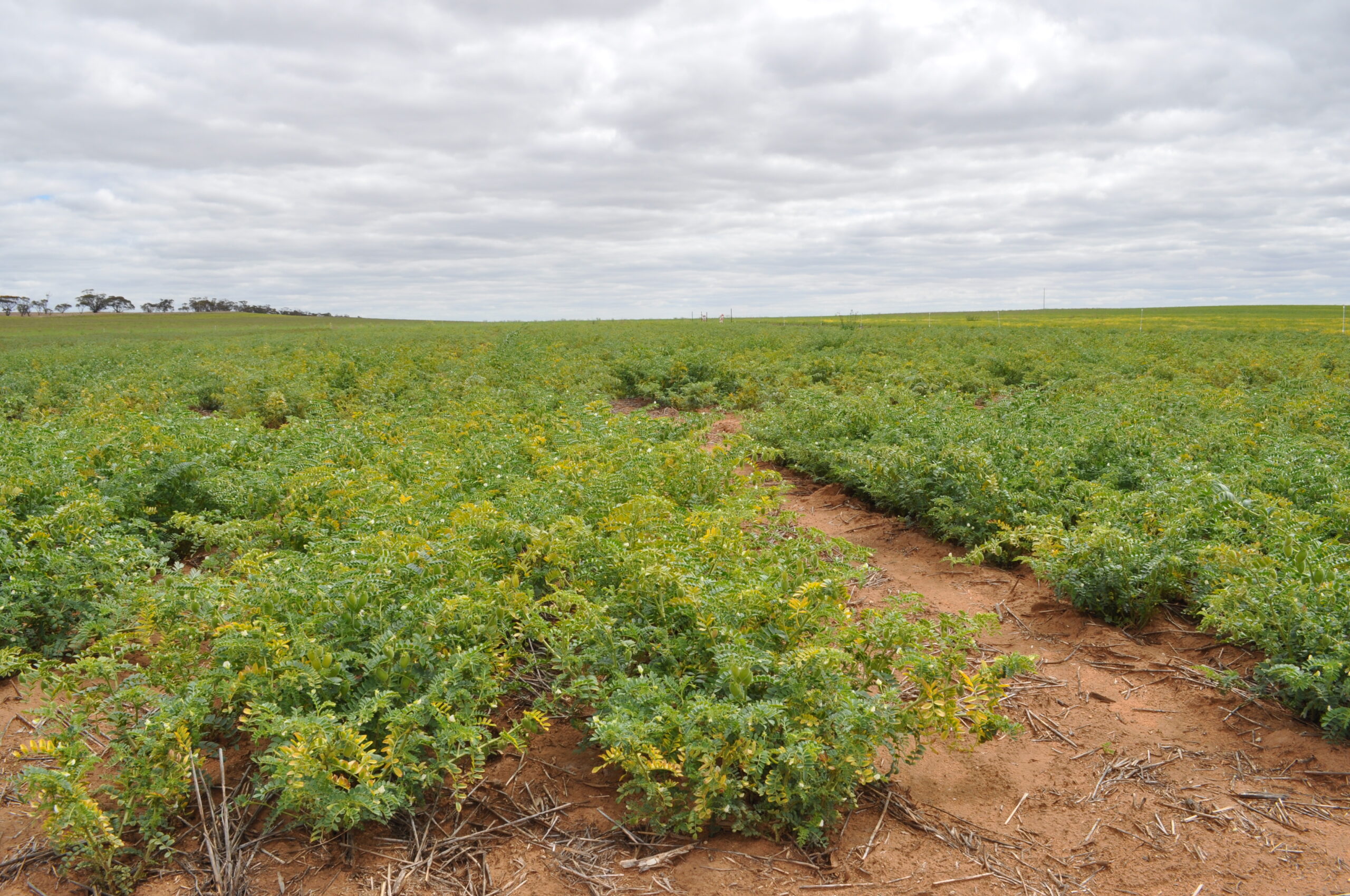
Insect Management
Insects of concern in soybeans include below-ground feeders, sap feeders, and defoliators. Crops should be scouted throughout the growing season to monitor for damage. Control measures should be taken only when economic thresholds are met to protect beneficial insects present in the field.
Below-Ground Feeders
Wireworms are small-segmented, tan-coloured worms that live in the soil and feed on a variety of plant hosts. Adult wireworms are beetles that do not cause economic damage to crops. Larvae will migrate near the soil surface in early spring and move deeper into the soil as soil temperatures rise. Wireworms chew on plant stems, causing plants to wilt. Wireworm damage may resemble that of cutworms. The distinction is that wireworm feeding often appears as if the stem is shredded, and it is usually still attached to the roots, whereas cutworm feeding cuts the stem right off. Foliar sprays are ineffective for wireworm control because wireworms live below ground, but effective seed treatments are available.
The adult seed corn maggot resembles a common house fly and emerges from eggs in the soil in late May. The adult then lays eggs in cracks in moist soil, which hatch after two to four days when the temperature is above 10°C. Larvae are white, tough-skinned, and roughly a quarter inch long. They will burrow into both the seed and the stem of developing soybean plants, resulting in thinned stands and wilted plants. Damage is worse when germination and emergence are delayed. Therefore, ensuring planting as early as possible into a warm, shallow seedbed can help limit damage. Sprays are ineffective, and seed treatments are the only registered controls to protect against the seed corn maggot.
Cutworms are the larvae of several different types of moths. They overwinter in the soil as pupae, emerging as larvae in the spring to feed on young plants. There are many cutworm species in Saskatchewan which affect a variety of crops. Soybean stems can be cut off below the soil surface by cutworms. Soybeans lack underground growing points and therefore cannot regrow after being damaged by cutworms. Crops should be scouted regularly in early spring. If dead or wilted plants are observed, the soil around and up the row from the plant should be scouted for cutworms. Most cutworm species feed at night and remain up to two inches below the soil surface during the day.
Sap Feeders & Sucking Insects
Occasionally, soybean aphids will become a significant pest of soybeans in Saskatchewan. Adult aphids are around 1.5 millimetres (mm) long, yellow-bodied, with distinct black cornicles, and can be wingless or winged. They are most often found on the underside of the newest leaves. If found on the stem or petioles, it usually indicates that the number of aphids on the plant is very high, as this tissue is a less desirable food source and typically aphids migrate there only when crowded. Aphids rarely overwinter in Saskatchewan, and most are blown in on warm, southerly winds from the United States (U.S.) in June or early July.
Depending on weather conditions, there may be seven to 15 generations per season. If conditions favour multiple generations, populations may reach levels where control is warranted. Populations can grow very rapidly because aphids can clone themselves; therefore, when identified, aphids should be monitored closely. Natural pests such as the ladybird beetle, minute pirate bug, damsel bug, syrphid fly larvae, and several parasitic wasps can help control populations. In warm, moist weather, a fungal disease can also affect aphids.
Soybean aphids suck out plant juices from the plant. This can reduce vigour, growth rates, leaf puckering, and pod and seed counts. All these factors may ultimately result in yield loss. Additional stressors, such as drought, exacerbate the damage. Aphid honeydew, produced as a waste product during feeding, promotes the development of gray, sooty mould on leaf surfaces, reducing the photosynthetic capacity of plants.
The economic threshold for controlling aphids is 250 aphids per plant. Soybeans can tolerate a lot of feeding, and some research shows that 670 aphids per plant are required to cause enough damage to cover insecticide costs. However, since populations can increase exponentially, the trigger is set at 250 to allow time for control measures to be implemented before economic damage occurs.
Two-spotted spider mites are yellow-orange in colour, with two distinct black spots on each side of the body. They commonly overwinter in alfalfa fields and make their way into soybean crops on the wind in mid-to-late summer. Two-spotted spider mites are tiny and difficult to see. Plant damage is usually evident before the mites are even noticed. Shaking symptomatic leaves over a white piece of paper to look for small, dark specks, or using a magnifying glass can help identify mites. Eggs may be observed on leaf undersides, characterized by a cover of webs.
Spider mites use their piercing and sucking mouthparts to extract cell contents, rendering the cell non-functional. Cells then turn yellowish and eventually brown, leaving a mottled, sandblast effect on the leaf when observed up close, which may look like general yellowing from a distance. Since mites often overwinter in grasses and clovers, an edge effect may occur from the mites moving in from the edges of the field. There may be 7–10 generations per season, and in severe infestations, yield losses can reach 40–60%.
There is limited information for economic thresholds, but recommendations based on visual damage suggest an insecticide application if 25% of leaves show discolouration before seed set, or 10% of the leaves if pods have set. Since spider mites often move in from field edges, growers may consider spot treatment if populations appear severe. Natural predators such as the predatory spider mite, minute pirate bug, and mite destroyer beetle can help keep populations in check. Additionally, Neozygites floridana is a fungal biological control agent that infects and kills spider mites.
Defoliators and Above-Ground Feeders
To determine whether control is required for many defoliating insects in soybeans, the percentage of defoliation on the plant is used as a reference. Soybeans are relatively tolerant of defoliation during the vegetative stage, with minimal yield reduction until defoliation reaches 30–40%. During the reproductive phase, they are less resilient to defoliation, but rates of up to 20% may still be tolerated. Once the pod set is complete, thresholds increase back to around 35% defoliation.
Grasshoppers feed on the foliage of almost any crop; however, soybeans are not a preferred food source for them. Growers may notice that grasshoppers moving into fields are feeding on weeds, rather than soybeans.
No economic thresholds have been established for grasshoppers in soybeans, but general defoliation tolerance can serve as a proxy. Typically, over 25% leaf defoliation would be required to consider controlling grasshoppers. Field edges may see higher infestations as grasshoppers move in from field borders. Growers should monitor their fields to ensure grasshoppers are not feeding on pods, as action may need to be taken sooner if the pods are being affected.
Thistle caterpillars are sporadic pests in soybeans. They do not overwinter in Saskatchewan; instead, they migrate northward from the southern U.S. Their host crops include soybeans, Canada thistle, and sunflowers. Caterpillars grow to be two to three centimetres (cm) long and are brown and black with yellow stripes down each side. They are covered in branched spiny hairs, giving them a bristly appearance. They are often found where they feed on leaves, inside a webbed area formed by cupping leaf margins together. Caterpillars form a golden/brown chrysalis that hangs from the plants, and the painted lady butterfly will emerge. Several generations of thistle caterpillars can occur in one season. Like grasshoppers, there are no established economic thresholds based on the number of caterpillars. Instead, the focus is on the severity of defoliation. At vegetative stages before flowering, defoliation should be >30% to warrant control; at flowering and in reproductive stages, the threshold for control measures is 20% defoliation.
Green cloverworms are only an occasional pest of soybeans. They do not overwinter in Saskatchewan; instead, they migrate north in the spring. They may have one or two generations per year. These caterpillars are green, with two narrow, white stripes running down their sides. When mature, the worms are 2–4 cm long. These caterpillars have only three pairs of fleshy prolegs on the abdomen, plus a pair of prolegs on the back segment. The worms move by arching the middle of their bodies, a movement known as looping. Young worms scrape leaf tissue, creating a transparent skin, or window on the leaf surface. Older cloverworms eat holes in the leaves. Damage can be mistaken for grasshopper defoliation or damage caused by other worms. Gently shaking damaged plants over a sheet to dislodge worms can help identify the culprit. While easy to mistake for alfalfa loopers because of their similar looping movement, green cloverworms can be distinguished by their vigorous wiggling when disturbed.
When cloverworms are actively feeding, percent defoliation can be used to determine if control is required. Before flowering, 40% defoliation is tolerated. At bloom-pod fill, 20% defoliation is tolerated, and between pod fill and harvest, 35% defoliation is tolerated. An average infestation of four to eight larvae per row foot typically causes 20–30% defoliation.