These environmental and climate heatmaps are developed through a partnership between Ukko Agro Inc. and Saskatchewan Pulse Growers to support Saskatchewan producers and agronomists.
Weather data is collected from a 20 km grid of virtual stations using hourly weather data from IBM/The Weather Company. Maps are generated in four-day increments for average, maximum, and minimum temperature, giving you timely updates to inform management decisions.
The maps provide producers and agronomists with the data to optimize seeding planning and predict potential emergence risks, ultimately aiming to improve yields and reduce risks associated with weather variability across Saskatchewan. Access to reliable climate data empowers growers to respond to changing conditions throughout the growing season.
Click each image to view full-screen.
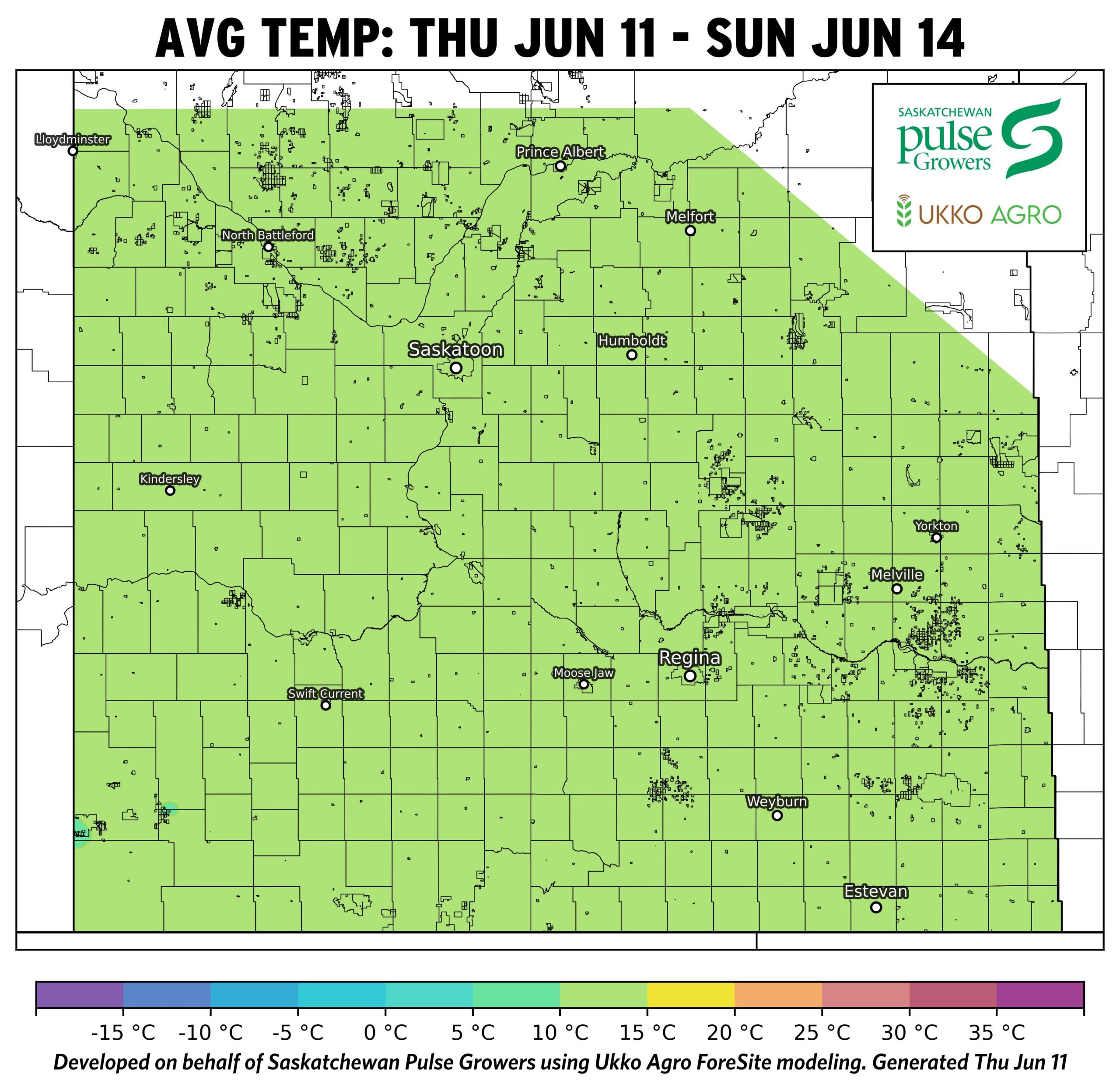
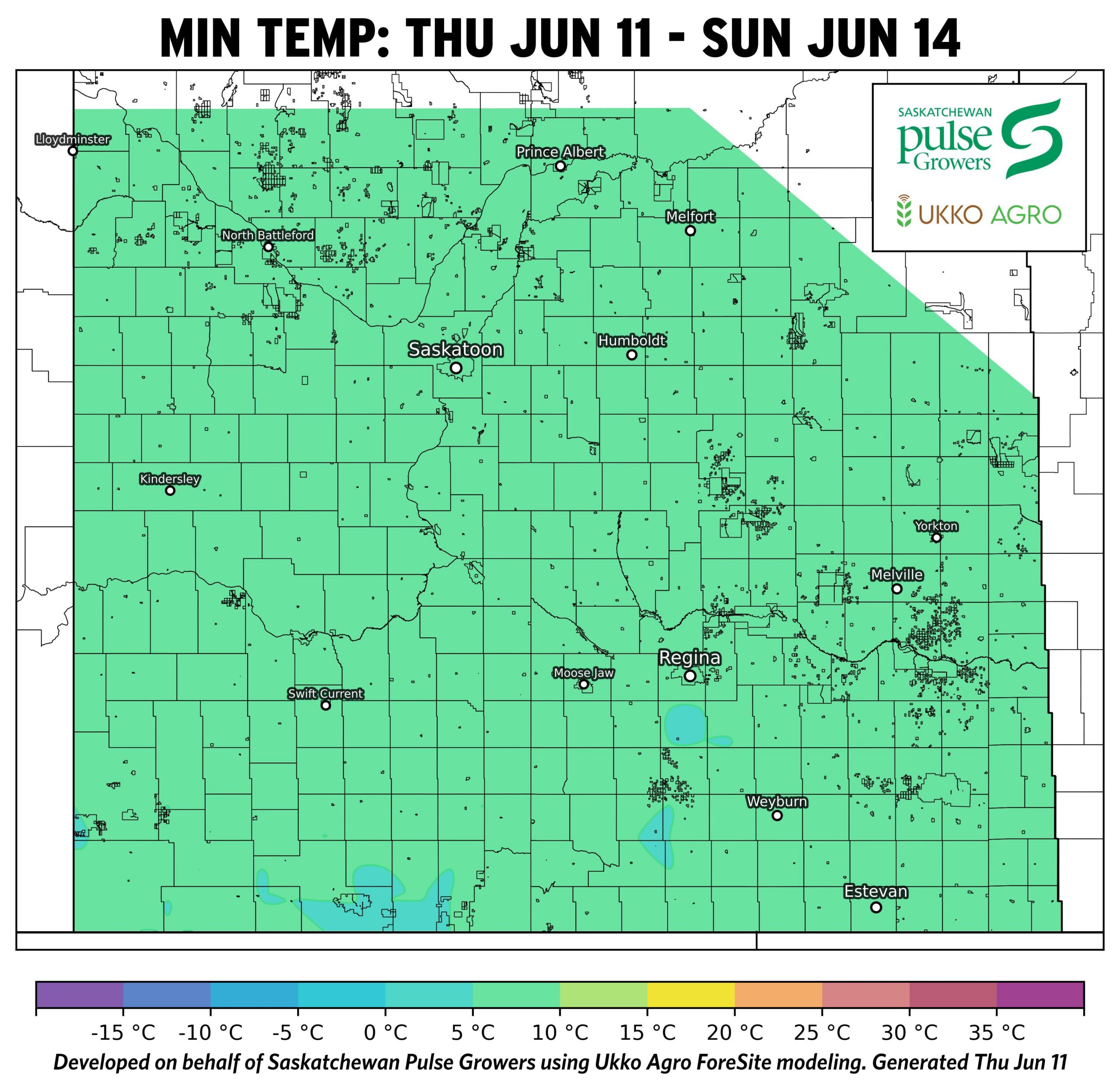
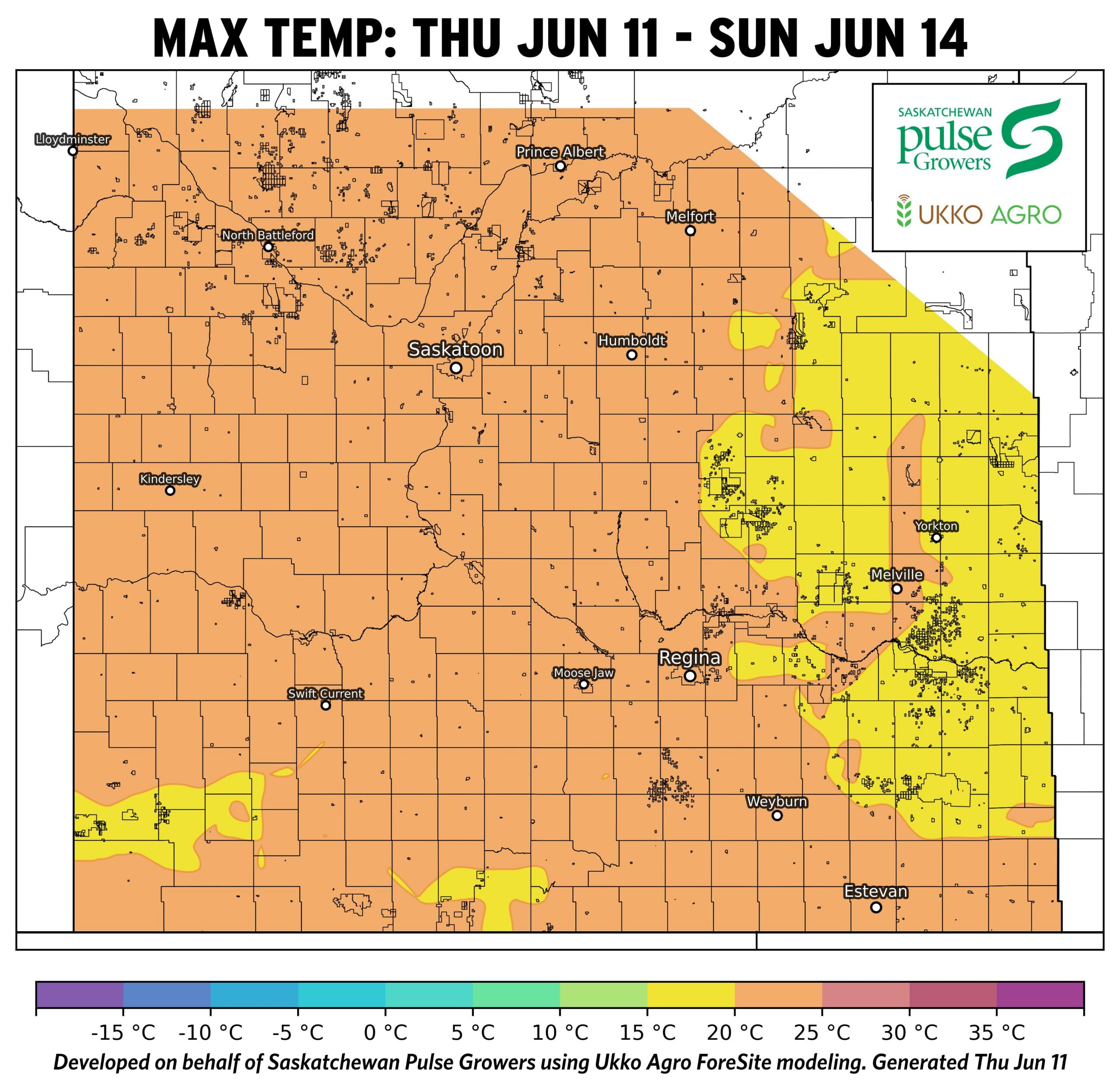
Temperature Maps: Agronomist Notes
- Moderate temperatures across Saskatchewan (avg ~12–16°C, max ~22–27°C, lows ~5–10°C) support steady vegetative growth in pulse crops.
- Warmer conditions are fairly uniform across the province, avoiding major stress and supporting consistent crop development.
- Eastern regions may see slightly warmer daytime highs, which could accelerate staging and tighten fungicide timing windows.
- No significant heat stress risk over this period, keeping moisture demand manageable and supporting stable crop progression.
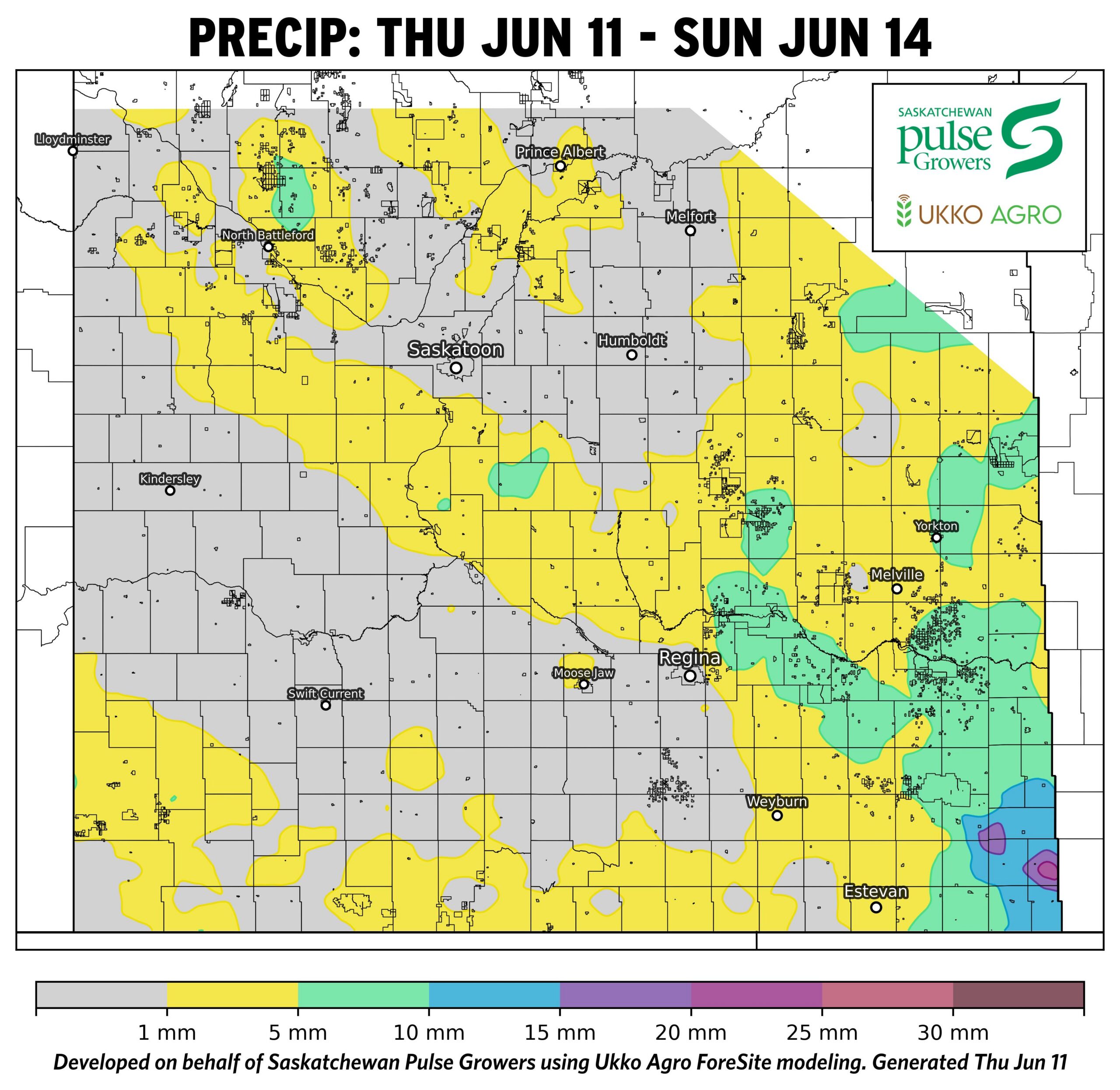
Precipitation Map: Agronomist Notes
- Scattered precipitation (generally 2–10 mm) across much of central and northern Saskatchewan supports crop growth without significantly increasing disease pressure.
- Heavier rainfall (10–25+ mm) in eastern and southeastern regions improves soil moisture but elevates risk of foliar diseases such as ascochyta and anthracnose.
- Central regions show variable rainfall patterns, which are generally favourable but may contribute to uneven crop growth and staging.
- Western and southwestern areas remain drier, where continued moisture limitations could begin to restrict crop development and yield potential.
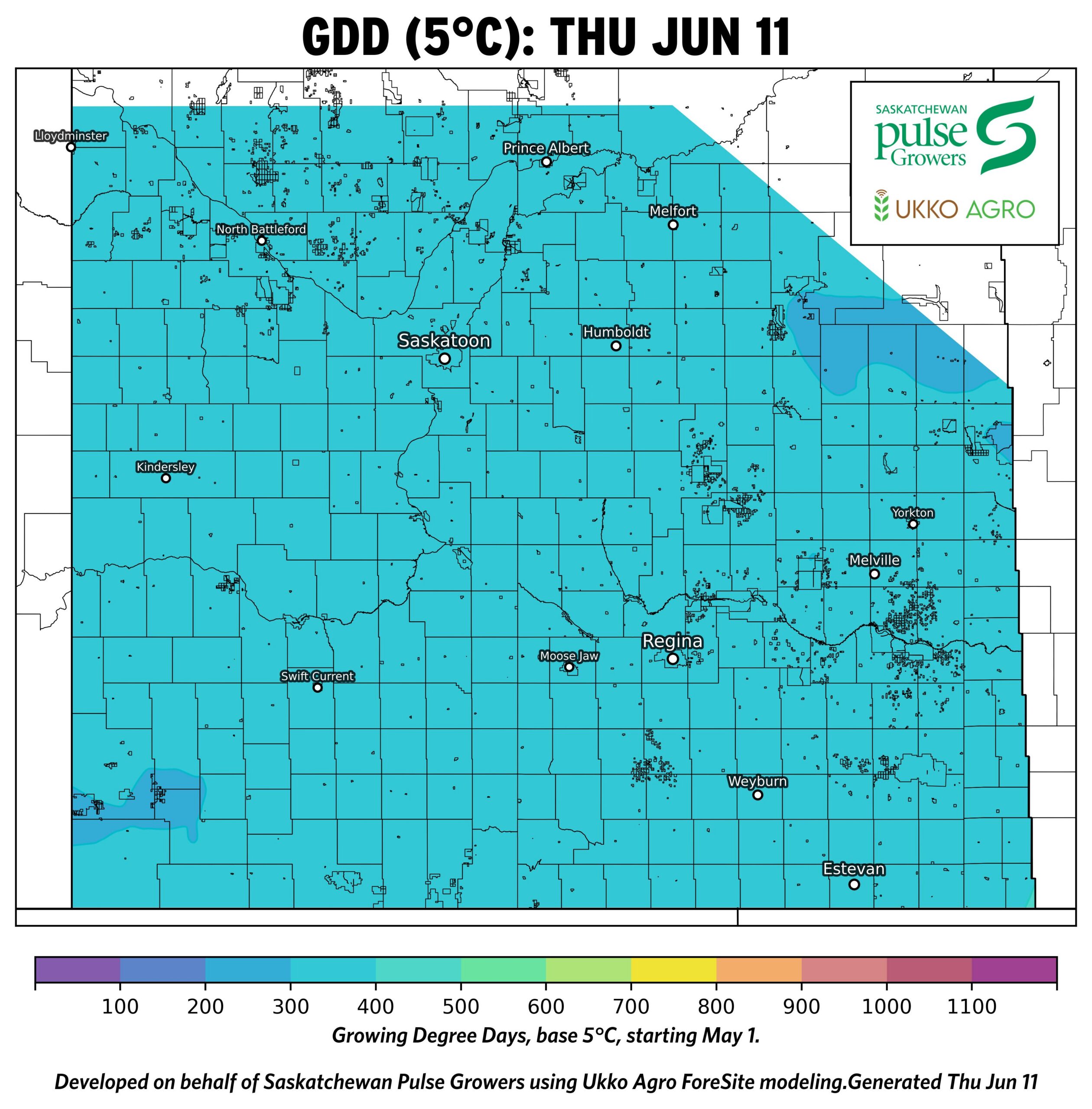
Growing Degree Days Map: Agronomist Notes
- Most of Saskatchewan is sitting around ~300–450 GDD since May 1, supporting steady progression through vegetative stages.
- Eastern and southeastern regions are slightly ahead (~400–500+ GDD), pushing crops closer to early reproductive stages.
- Western and central areas remain slightly behind, with slower canopy development and lower disease pressure.
- Overall GDD accumulation is moderate, keeping crop development manageable and allowing for well-timed herbicide and fungicide applications.
While efforts have been made to ensure the accuracy of these maps, it is important to understand that weather-driven models are inherently uncertain, and forecasts may not be 100% precise. The maps presented are based on the weather conditions at the time of the forecast and are subject to change as conditions evolve.
These maps are intended to serve as a general guide for understanding potential environmental and climate-related conditions and should not be relied upon as the sole basis for operational or management decisions. Local site conditions, land management practices, and other variables may influence outcomes beyond what is captured in the model. Where possible, verify conditions with on-site measurements and observations, and consult qualified professionals for advice tailored to your location and objectives.
Information related to these weather-based environmental and climate condition maps are OFFERED TO THE PUBLIC FOR INFORMATIONAL PURPOSES ONLY. The map creators and collaborating organizations assume no liability for decisions made or actions taken based on the use of this information.