Research Objective
To investigate the major factors influencing root rot complex on pulse crops.
Objective 4To enhance soil carbon and nitrogen (N) dynamics in different cropping systems.
Objective 7To enhance whole farm economic outcomes by improving input efficiency and increasing productivity.
To investigate the major factors influencing root rot complex on pulse crops; to discover antagonists (anti fungal organisms) in Saskatchewan soil that help pulse plants combat root rot pathogens; to optimize crop rotation systems for dry and humid ecoregions of Western Canada using system approaches; to enhance soil carbon and nitrogen (N) dynamics in different cropping systems; to minimize harvest loss in pulses through improved agronomic practices; to decrease the carbon footprints of agroecosystems with improved farming strategies; to enhance whole farm economic outcomes by improving input efficiency and increasing productivity.
Pulse crops play an important role in cereal/oilseed dominated cropping systems and improving farmer’s profitability in Western Canada. Pulse crops also provide essential ecosystem services in intensified cropping systems. However, high pulse crop frequency in rotations may have negative impacts on organic matter centered soil quality and crop diversification, causing disease outbreaks and limiting system production. To optimize wheat-pulse cropping system performance, we conducted 8 year field studies at Swift Current (SK), Brooks (AB), and Indian Head (SK), along with field surveys and greenhouse studies.
Root rot complex was surveyed across Saskatchewan and we found that rotations with three pulse phases had higher host-specific pathogen pressure compared to rotations with one pulse phase. We screened several antagonistic bacteria isolates from pea and lentil rhizosphere and roots. These bacteria isolates showed strong potential to suppress Aphanomyces root rot disease, which could be developed as novel bio-fungicides.
Averaged across the 8-year crop rotation period, pea resulted in greater yield benefits than chickpea for pulse-wheat rotations. However, the high frequency of pea in rotations caused high disease incidence in pea and replacing pea with lentil can effectively reduce the pea disease incidence. In addition, diversified rotations enhanced system stability across multiple site-years. Different types of pulse crops had similar effects on soil available nitrogen (N), but rotations including chickpea had the largest effect on soil microand meso-aggregate stability among tested pulse crops. Rolling land before seeding and keeping 15 cm crop stubble could reduce lentil yield loss during harvesting.
Environmentally, pea resulted in smaller N2O emissions than chickpea and lentil, and pulse frequency in rotations had a larger effect on N2O emissions than CO2 emissions. Increased pulse frequency can reduce carbon footprint substantially. Economically, pea performed better at Brooks while lentil performed better at Swift Current, and diversified rotations generated better net revenues at both sites.
We developed the sustainability index (SI) using multiple variables highly correlated to yields. The SI generated from the wheat crop phase indicated that a higher pulse frequency rotation was more stable, reflecting the benefits of pulse crops on the following cereals. However, at the cropping system level, diversified crop rotations or crop rotations involving pea were more stable. The current SI is yield-focused and an updated SI reflecting different aspects of sustainability of cropping systems should be developed.
Overall, we conclude that the benefits of pulse-based rotations largely depend on crop diversification and the frequency of pulse phases in rotations. A diversified cropping system with pulse crops can increase production, enhance resource use efficiency, improve profitability, reduce environmental impacts, and stabilize cropping system performance in a changing environment.
Research Summary: Intensifying Crop Rotations with Pulse Crops
This is one of seven research objectives explored under the project “Enhancing the Long-Term Sustainability of Pulse Cultivation Using System Approaches”.
Research collaborators: Dr. Kui Liu, Dr. Manjula Bandara, William May, Dr. Yantai Gan
Summary prepared by Jennifer Bogdan, PAg, CCA
Background
Pulse crops in the Canadian Prairies have been effectively incorporated into cereal and oilseed rotations, providing benefits such as reduced nitrogen (N) fertilizer usage, improved soil quality, a break-crop for cereal and oilseed host-specific pathogens, and increased overall crop system productivity. However, some farmers have experienced that intensifying pulse crops in rotations, where a high frequency of pulses are grown in the rotation, may have a negative impact on their overall productivity, such as having more frequent disease issues. Also, there are still unknown effects of pulse intensified rotations on soil carbon, soil nitrogen, soil microbial community, and production sustainability. This research objective aimed to provide information on the impact of using pulse crops more frequently in rotations and the effect of pulse intensified rotations on the cropping system as a whole.
Key Findings
- Growing pea (P) or lentil (L) before wheat (W) consistently increased the wheat crop yield. Growing chickpea (C) before wheat had a less consistent impact on the wheat crop yield due to its deep root system removing more water from the soil profile and the lack of competitiveness that chickpea exhibits towards weeds.
- A 2-year pea-wheat rotation had the greatest protein-based yield due to high pea and wheat grain yields, as well as higher protein in the wheat grain.
- Cumulative carbon added to the system from crop residue after the 8-year rotation was: P-W = W-W > L-W = C-W. Cumulative nitrogen from crop residue was: P-W > L-W > C-W = W-W.
- Pulse crop rotations had higher concentrations of nitrogen in the top 30 cm (1 foot) of soil compared to continuous wheat.
- Growing pea every other year had the greatest effect on pea yield, regardless of the crop grown between the pea years.
Experiment 1 – Optimizing Crop Rotation Systems for Dry Ecoregions of Western Canada
Research Methodology
An 8-year study consisting of two 4-year crop rotations was carried out at three locations between 2010 and 2019 (Table 1). Two experimental locations were in Swift Current, SK, conducted from 2010–2017 at one site and 2011–2019 at another site (no plots were established in 2015), and one location was in Brooks, AB from 2011–2018. Plots were direct seeded into wheat stubble in Year 1 and were managed using no-till practices. Wheat plots in the first year of each 4-year rotation received nitrogen fertilizer at 71 lb N/ac (80 kg N/ha); in other years, wheat plots were fertilized at 45 lb N/ac (50 kg N/ha). Each year, all plots received phosphorus fertilizer at 20 lb P/ ac (22 kg P/ha). Pulse crops were inoculated with their appropriate
Rhizobium granular inoculants. Glyphosate at 180 gai/ac was used as a pre-seed burn-off for all plots, and pulse plots received an application of trifluralin after seeding to mitigate the effect of weeds on pulse growth. Cultivars used were Lillian (hard red spring wheat), Brigade (durum wheat), Transcend (durum wheat), CDC Amarillo (yellow field pea), CDC Leader (kabuli chickpea), CDC Maxim (small red lentil, Clearfield tolerant), CDC Impulse (small red lentil, Clearfield tolerant), and Cutlass (oriental mustard).
Table 1. Crop rotation treatment structure
Treatment |
Year 1; Year 5 |
Year 2; Year 6 |
Year 3; Year 7 |
Year 4; Year 8 |
Rationale |
1 |
Wheat |
Wheat |
Wheat |
Wheat |
Continuous wheat as a control system |
2 |
Pea |
Wheat |
Wheat |
Wheat |
1 pulse every 4 years (can a pea crop function as green fallow?) |
3 |
Chickpea |
Wheat |
Wheat |
Wheat |
1 pulse every 4 years (can deep-rooted chickpea function as shallow-rooted pea?) |
4 |
Pea |
Wheat |
Pea |
Wheat |
2 pea crops every 4 years, alternated with a wheat break |
5 |
Pea |
Wheat |
Lentil |
Wheat |
2 lentil-pea alternated every 4 years, with a wheat break |
6 |
Lentil |
Wheat |
Chickpea |
Wheat |
2 pulses every 4 years, shallow- and deep-rooted pulses alternated with a wheat break |
7 |
Lentil |
Wheat |
Lentil |
Wheat |
2 lentil crops every 4 years, shallow-rooted lentil alternated with a wheat break |
8 |
Chickpea |
Wheat |
Chickpea |
Wheat |
2 chickpea crops every 4 years, alternated with a wheat break |
9 |
Pea |
Mustard |
Chickpea |
Wheat |
2 shallow- and deep-rooted pulses every 4 years, with oilseed and wheat alternated breaks |
10 |
Pea |
Mustard |
Lentil |
Wheat |
2 shallow-rooted pulses every 4 years, with oilseed and wheat breaks |
11 |
Pea |
Pea |
Pea |
Wheat |
3 consecutive shallow-rooted pea crops every 4 years with a wheat break |
12 |
Lentil |
Lentil |
Lentil |
Wheat |
3 consecutive shallow-rooted lentil crops every 4 years with a wheat break |
13 |
Chickpea |
Mustard |
Chickpea |
Wheat |
2 deep-rooted chickpea crops every 4 years with oilseed and wheat breaks |
14 |
Lentil |
Chickpea |
Pea |
Wheat |
3 different pulses alternated in 4 years with a wheat break |
Grain Yield Results
Four rotations were used to measure the agronomic effect of pulse crops in a cropping system: WWWW (continuous wheat), PWPW (pea-wheat), LWLW (lentil-wheat), and CWCW (chickpea-wheat). Grain yields during the pulse years (phases) were affected by crop type and the year. Lentil and wheat yields did not change significantly during the four pulse phases; however, pea and chickpea yields varied depending on the year (Figure 1A). There was a 52% increase in pea yields from the lowest yield (year 5) to the highest yield (year 1). Chickpea yields increased by 66% from the lowest yield (year 7) to the highest yield (year 1).
During the wheat phases, grain yields were affected by the preceding pulse crop and the year (Figure 1B). Growing pea or lentil the year before wheat consistently increased wheat yields by 8–27% for pea and 5–28% for lentil, compared to continuous wheat. Chickpea had an inconsistent effect on the following wheat crop, with wheat yields being 23% higher than continuous wheat in the first rotation but 4–5% lower in the following three rotations.
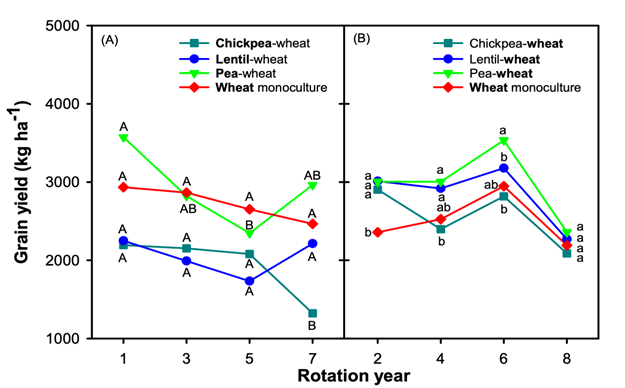
Figure 1. Grain yields at (A) the pulse crop phase and (B) wheat crop phases in an 8-year pulse-wheat rotations study at Swift Current, SK and Brooks, AB. Grain yields at pulse phases in a given rotation marked with the same letter mean no yield difference during the course of the study at the 0.05 significance level. Wheat yields at wheat phases in a given year marked by the same letter mean no significant effects by the preceding crops at the 0.05 level.
One explanation for chickpeas having a less consistent impact on yield of the succeeding wheat crop could be due to the root system of the crop. Chickpea is a deep-rooted pulse, compared to shallow- rooted pea and lentil, allowing the crop to remove more water from the soil profile. Chickpeas can extract water from depths of 1.2 meters, similar to a cereal crop. Since water is a critical limiting factor for crop production in the semi-arid regions of the Prairies, deep-rooted crops such as chickpeas leave less water behind for subsequent crops, impacting their yields if inadequate rainfall is received. Chickpea is also a poor competitor against weeds. Weed infestations that occur in a chickpea crop can build the weed seedbank, allowing for higher weed pressure in subsequent wheat crops. Although chickpea does provide a N benefit for the following wheat crop, the decreased residual soil water and higher weed pressure in the wheat crop may negate this N benefit.
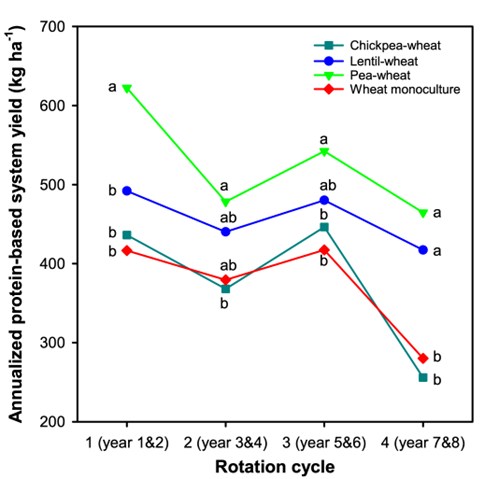
Figure 2. Protein-based system yields (PBSY) during the first 4 cycles of 2-year pulse-wheat rotations. System yields marked with the same letters in a given rotation cycle are not significantly different at the 0.05 level.
To more accurately compare yield performance of cropping systems containing different crops, the grain yield of each crop was converted to a protein-based yield (PBY), where PBY = grain yield x %N of grain x 6.25/100 (note: 6.25 is the conversion factor used for converting %N to %protein). The average PBY after 2 years of each crop rotation was then used to measure the yield performance of the cropping system (protein-based system yield, or PBSY). Pea-wheat most consistently had the greatest impact on protein, with PBSY either equal to or higher than that of L-W, C-W, and continuous wheat (Figure 2). This result was due to the high pea and wheat yields, as well as the higher wheat protein in the P-W rotational system. PBSY was 26–49% higher in P-W and 15–49% higher in L-W than W-W after any given 2-year rotation. Chickpea-wheat PBSY did not differ significantly from continuous wheat due to low chickpea yields as well as low wheat yields following the chickpea crop.
Crop Residue, Soil Carbon, and Soil Nitrogen Results
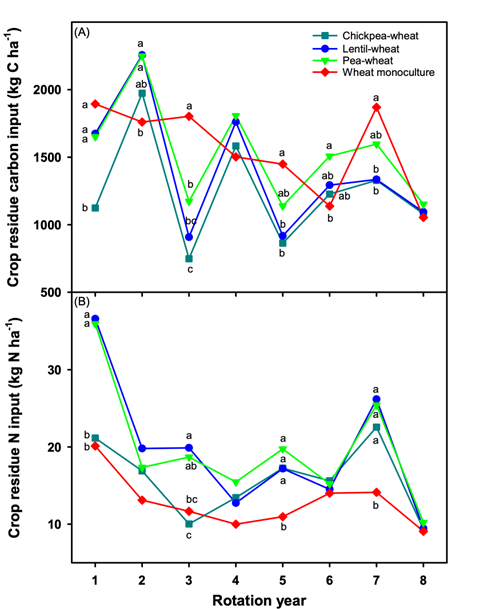
Figure 3. Quantity of (A) crop residue carbon input and (B) crop residue nitrogen input to soils in pulse-wheat rotations during the first 4 cycles of 2-year pulse-wheat rotations. Means with the same letters in a given rotation year are not significantly different at the 0.05 level.
Crop residue carbon and nitrogen input to the soil were both measured (Figure 3). Of the three rotations containing a pulse crop, the P-W rotation resulted in the highest amount of carbon input from crop residue, followed by L-W, and lastly, C-W. For all rotations, in the pulse years (years 1, 3, 5, 7), continuous wheat produced the highest amount of crop residue carbon due to the higher amount of plant biomass produced in a wheat crop relative to a pulse crop. Conversely, in the wheat years (years 2, 4, 6, 8), the W-W rotation produced the lowest amount of crop residue carbon compared to the pulse crop rotations, since pulse crops generally increase the crop biomass of the following wheat crop.
The results for crop residue N input found no differences between rotations in the wheat years (years 2, 4, 6, 8), but there were significant N input differences in the pulse years (years 1, 3, 5, 7). Crop residue N input in continuous wheat was equal to or significantly lower than any of the pulse rotations throughout all 8 years of the study. Within the pulse rotations, the crop residue N input from pea was 12–70% higher than that of chickpea (although only statistically significant in one year), and pea residue N input was not significantly different from lentil.
Cumulative crop residue carbon and nitrogen input – the amount of carbon and N in crop residue added to the system throughout the 8-year study – were also determined. Cumulative carbon of P-W and W-W were the same (12.1 and 12.0 mt carbon/ha, respectively). Of the pulse crop rotations, the cumulative crop carbon of P-W was significantly higher than L-W (10.3 mt carbon/ha) and C-W (9.1 mt carbon/ha). More significant differences between the four crop rotations were observed with cumulative crop residue N. Pea-wheat cumulative N (155 kg N/ha) was significantly higher than L-W (133 kg N/ha), which in turn was significantly higher than C-W (109 kg N/ha). No statistical difference was found between C-W and continuous wheat.
Soil organic carbon at 0–15 cm depth was measured at the start of the experiment and at the end of year 8. The starting soil organic carbon concentration was 10.3 g carbon/kg and at the end of the experiment, organic carbon values were 10.8, 11.4, 10.9, and 11.7 g carbon/kg for W-W, P-W, L-W, and C-W, respectively. Although these differences were not statistically significant, the research showed that rotations including pulse crops can increase soil organic carbon over time. Despite their lower crop residue production, pulse crops increase the yield of the wheat crop grown in subsequent years, helping to compensate for their own reduced biomass. In addition, below-ground crop residue of a pulse crop such as chickpea that has a large root-to-shoot ratio can also compensate for lower above-ground residue production.
Soil mineral nitrogen in the 0–60 cm depth was measured prior to seeding wheat in the second, fourth, and eighth years of the study. Rotations with pulse crops had higher concentrations of soil N compared to continuous wheat. There were no significant differences in soil N concentration among the pea, lentil, and chickpea rotations, and nitrogen contributions remained in the top 30 cm of the soil. Pulse crops fix their own nitrogen, thereby removing less N from the soil compared to wheat, and their N-rich residues break down quickly releasing nitrogen into the soil, explaining the positive effect on soil N from pulse crop rotations.
Experiment 2 – Optimizing Canola Intensified Crop Rotation Systems for Humid Ecoregions of Western Canada
Research Methodology
An 8-year pulse and canola intensified crop rotation study was carried out in Indian Head, SK from the spring of 2012 until the fall of 2019. Five crops – pea (P), lentil (L), canola (C), wheat (W), and oat (O) – were grown in 6 different 4-year rotations for 2 cycles of each rotation (Table 2). Crop varieties used in the trial were CDC Golden peas (2012–2014) and CDC Amarillo peas (2015–2019); CDC Maxim CL lentils; InVigor® L150 canola (2012), InVigor® 5540 canola (2013), InVigor® L252 canola (2014–2015), InVigor® L140 canola (2016– 2018), and LL 233P canola (2019); AC Unity VB wheat (2012–2016) and AAC Prevail wheat (2017–2019); Triactor oats (2012–2016) and AAC Justice oats (2017 and 2019). Pulse crops were inoculated at the time of seeding.
Table 2. Pulse and canola intensified rotation systems and phases in Indian Head
Phase in Rotation |
Rotations |
|||||
1 |
2 |
3 |
4 |
5 |
6 |
|
A (pea stubble) |
Wheat |
Wheat |
Wheat |
Wheat |
Wheat |
Wheat |
B (wheat stubble) |
Canola |
Pea |
Pea |
Pea |
Lentil |
Canola |
C (broadleaf stubble) |
Oat |
Oat |
Canola |
Lentil |
Oat |
Pea |
D (oat, canola, lentil, or pea stubble) |
Pea |
Pea |
Pea |
Pea |
Pea |
Canola |
Rationale |
Cereal- oilseed- pulse in a rotation, expected to be the most sustainable rotation system |
Intensified pea-based rotation with cereal as a break crop |
Intensified broadleaf crop with 1 cereal as a break crop |
Intensified pulse- based rotation, 2 pulse species with 1 cereal as a break crop |
Intensified pulse- based rotation, 2 pulse species with cereal as a break crop between |
Intensified canola- based rotation with cereal and pulse between |
Grain Yield Results
Pea yield was significantly higher in the WCOP and WLOP rotations than in both pea years (phases) of WPOP and WPCP, and the fourth year of WPLP. Growing pea every other year had the greatest effect on pea yield, regardless of the crop grown between the pea years, even if that crop was a pulse crop. It should be noted that this study was conducted before soil-borne diseases, such as Aphanomyces, became apparent. These results found that growing three pulse crops in a row (WPLP) did not seem to worsen the yield impact of growing peas every other year. Additionally, pea yield was not affected in the WLOP rotation where lentil was the second crop compared to the negative effect on pea yield where pea was the second crop (WPOP). Of consideration is the below average rainfall received in 2017 and 2018 that could have allowed growing pulse crops in 3 out of 4 years, without having disease issues. In this study, growing canola every second year did not have negative impacts on grain yield or quality, and both wheat and oat were not affected by other crops in the rotation.
Conclusions
This research found that increasing the frequency of pulse crops in a rotation did not have a negative effect on soil quality from the lower amount of crop residue produced by pulses. Although pulse crops do leave less crop residue behind, the increased crop residue from the succeeding wheat crop can partially compensate for the lower residue in the pulse year. Additionally, deep-rooted pulse crops such as chickpea contribute below-ground residue to the cropping system. Pea and lentil added to the rotation can greatly increase the grain and protein-based yield of the following wheat crop. Pulse crops also contribute to the cropping system by increasing the amount of soil nitrogen compared to continuous wheat.
Acknowledgements
This project was funded by Saskatchewan Pulse Growers, the Saskatchewan Ministry of Agriculture – Agricultural Development Fund, and Agriculture and Agri-Food Canada.

Research Summary: Using Pulse Crop Rotations to Enhance Soil Carbon & Nitrogen Dynamics
This is one of seven research objectives explored under the project “Enhancing the Long-Term Sustainability of Pulse Cultivation Using System Approaches”.
Research collaborators: Dr. J. Diane Knight, Dr. Kui Liu, William May, Dr. Manjula Bandara, Dr. Yantai Gan
Summary prepared by Jennifer Bogdan, PAg, CCA
Background
Pulse crops in the Canadian Prairies have been effectively incorporated into cereal and oilseed rotations, providing benefits such as reduced nitrogen fertilizer usage, improved soil quality, a break- crop for cereal and oilseed disease pathogens, and increased overall crop system productivity. However, some farmers have experienced that intensifying pulse crops in rotations, where a high frequency of pulses are grown in the rotation, may have a negative impact on their overall productivity, such as having more frequent disease issues. Also, there are still unknown effects of pulse intensified rotations on soil carbon, soil nitrogen, soil microbes, and production sustainability. This research objective aims to provide information on the impact of using pulse crops more frequently in rotations on soil structure, soil organic matter, and the soil microbial community.
Key Findings
- Soil carbon (C) and nitrogen (N) were impacted more by the current crop than the overall crop rotation.
- Continuous wheat had higher amounts of soil macro-aggregates, whereas pulse crops had more micro-aggregates, indicating their quicker transformation into the initial steps of decomposition.
- Of the pulse crops, chickpea residue was the most difficult for soil microbes to break down, but over time, there was no difference in the amount of decomposition compared to pea and lentil.
- Including pulse crops in rotations was not sufficient to influence the amount of highly stable organic matter formed in the 8 years of this study.
- Soil microbial populations were influenced more by the year than by the specific crop rotation. Fungal populations favoured pea and chickpea, with arbuscular mycorrhizal fungi (AMF) being the most common fungus in chickpea.
Research Methodology
Soil quality evaluations were performed on four rotations at Swift Current, SK and Brooks, AB: (1) Continuous wheat (W-W-W-W); (2) Pea-wheat every two years (P-W-P-W); (3) Lentil-wheat every two years (L-W-L-W); and, (4) Chickpea-wheat every two years (C-W-C-W). An additional rotation, (5) Pulse-wheat every two years using lentil and chickpea (W-L-W-C) was also evaluated. These rotations were in place for 8 years from 2010–2017. Soil samples were taken in the fall of 2016 (after the 7th year of the rotation and final year of a pulse crop in the rotation, except for the continuous wheat treatment) and in the fall of 2017 (after the eighth year of the rotation and a wheat year) for all treatments. Soil was sampled at three depths (0–10 cm, 10–20 cm, and 20–30 cm) and analyzed for total C and N, inorganic N, organic C, active C, pH, electrical conductivity (EC), bulk density, soil aggregate distribution, water extractable organic matter (WEOM), very light fraction organic matter (VLFOM), light fraction organic matter (LFOM), heavy fraction organic matter (HFOM), cation exchange capacity (CEC), soil microbial C and N, and N mineralization potential. Phospholipid fatty acid (PLFA) analysis was also conducted as part of the microbial population comparisons.
Soil C and N Results
Soil C and N were more impacted by the current crop in the rotation than the overall rotation. Higher amounts of C were present in the top 10 cm and gradually decreased with soil depth as a result of crop residue being added to the soil surface. Crops with lower amounts of biomass produced, as seen in the lentil phase of the rotation, had lower amounts of soil C. Soil N trends largely followed soil C. For example, chickpea in the pulse phase had significantly higher total soil N than any of the other crops and also had the most total soil C (significantly higher than L-W, but not than W-W or P-W). The higher residue inputs from chickpea resulted in the addition of higher amounts of organic N contributing to higher amounts of total N. Organic matter can be a useful indicator of soil quality. All of the pulse crops had similar amounts of inorganic N mineralized by the time the wheat crop was seeded the following spring.
Soil Aggregate Size Results
Soil aggregate size was measured in the top 5 cm of soil in the spring after the wheat year as well as the spring after the pulse year. Macro- aggregates help to protect the soil from erosion (wind, water, tillage). Micro-aggregates represent the first stage of C stabilization in the soil. Continuous wheat showed the highest proportion of macro- aggregates, whereas pulse crop rotations had more micro-aggregates, particularly in the year after the pulse crop was grown (Figure 1). This suggests that pulse crops are better at the initial stage of aggregate formation with the C released from microbial degradation of OM. Although pea and lentil produce less above- and below-ground biomass than chickpea, they still had similar amounts of aggregation as chickpea.
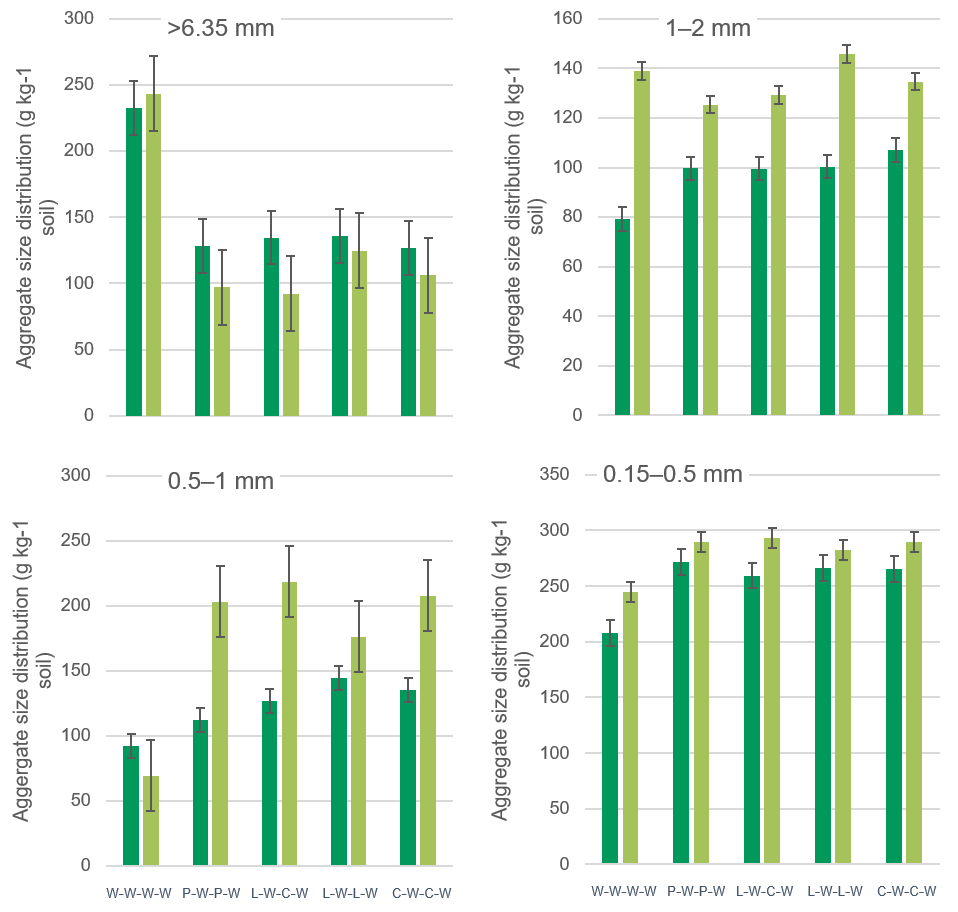
Figure 1. Soil aggregate size distribution in soils from different rotations at Brooks, AB. Aggregates in the 0–5 cm soil depth in 2017 (spring after the wheat year) are shown with the dark green bars and 2018 (spring after the pulse crop year) are shown with the light green bars.
Soil Organic Matter Results
In no-till systems, organic matter (OM) ages with soil depth meaning that more processed OM is deeper in the soil profile. The different degrees of microbial processing make up the different fractions of OM – very light fraction OM (VLFOM) are the newest residue inputs, light fraction OM (LFOM) are intermediate, and heavy fraction OM (HFOM) are the oldest inputs. Minerals, typically clay particles, bind to the HFOM (giving it its ‘heaviness’) and protect the C from microbial breakdown. C:N ratios differ among the OM fractions, with C:N of VLFOM very similar to that of previous standing crops. As microbial breakdown occurs, the C:N decreases since microbes use the C as an energy source. Cereal residues have higher C:N ratios and take longer to mineralize their N (i.e., N immobilization is increased) than pulse crop residues with their low C:N ratios.
The results from this study showed that the OM fractions were generally the same between the final pulse year and the final wheat year, meaning that the rotation did not have a consistent effect on the OM fractions of the soil. The W-W and C-W rotations at Swift Current and the C-W rotation at Brooks had significantly higher amounts of VLFOM and C, and increased N. This was due to wheat and chickpea having larger above-ground and root biomass, and therefore taking longer to break down, than pea and lentil. However, at both locations, these differences became less apparent in the lower OM fractions as more decomposition occurred. In both Swift Current and Brooks, the P-W rotation had the lowest LF-C and N and the highest HF-C and N, suggesting that the pea rotation is breaking down the OM more quickly into its stable form, although this trend was not always statistically significant. However, the overall impact of crop rotation on HFOM was negligible and it was concluded that pulse crop rotations were not able to influence this stable form of OM during this study. Since changes to OM take many years to detect, the eight years in this study may not have been long enough to measure any differences.
Water extractable OM (organic matter in the soil solution that is most easily degraded by microbes) was measured at Swift Current and was found to be not affected by crop rotation.
Soil Microbial Community Results
Microbial populations were impacted by individual years rather than by specific crop rotations. Fungal populations appeared to be higher in pulse rotations compared to continuous wheat, especially in the pea and chickpea rotations (Figure 2). The most common fungus in chickpea was AMF. Furthermore, the C-W rotation generally had the highest amount of soil microbial diversity.
Conclusions
Individual crop years had more of an influence on soil C and N dynamics than the overall crop rotation. Pulse crop rotations tended to have higher fungal populations than continuous wheat. Pea and lentil residue was more easily broken down by soil microbes compared to chickpea and wheat residue initially, but there were no differences in the amount of highly stable HFOM formed between any of the crop rotations. Since the final highly stable stage of OM takes multiple years to form, a study of longer than 8 years may be required to measure any differences in OM formation between crop rotations.
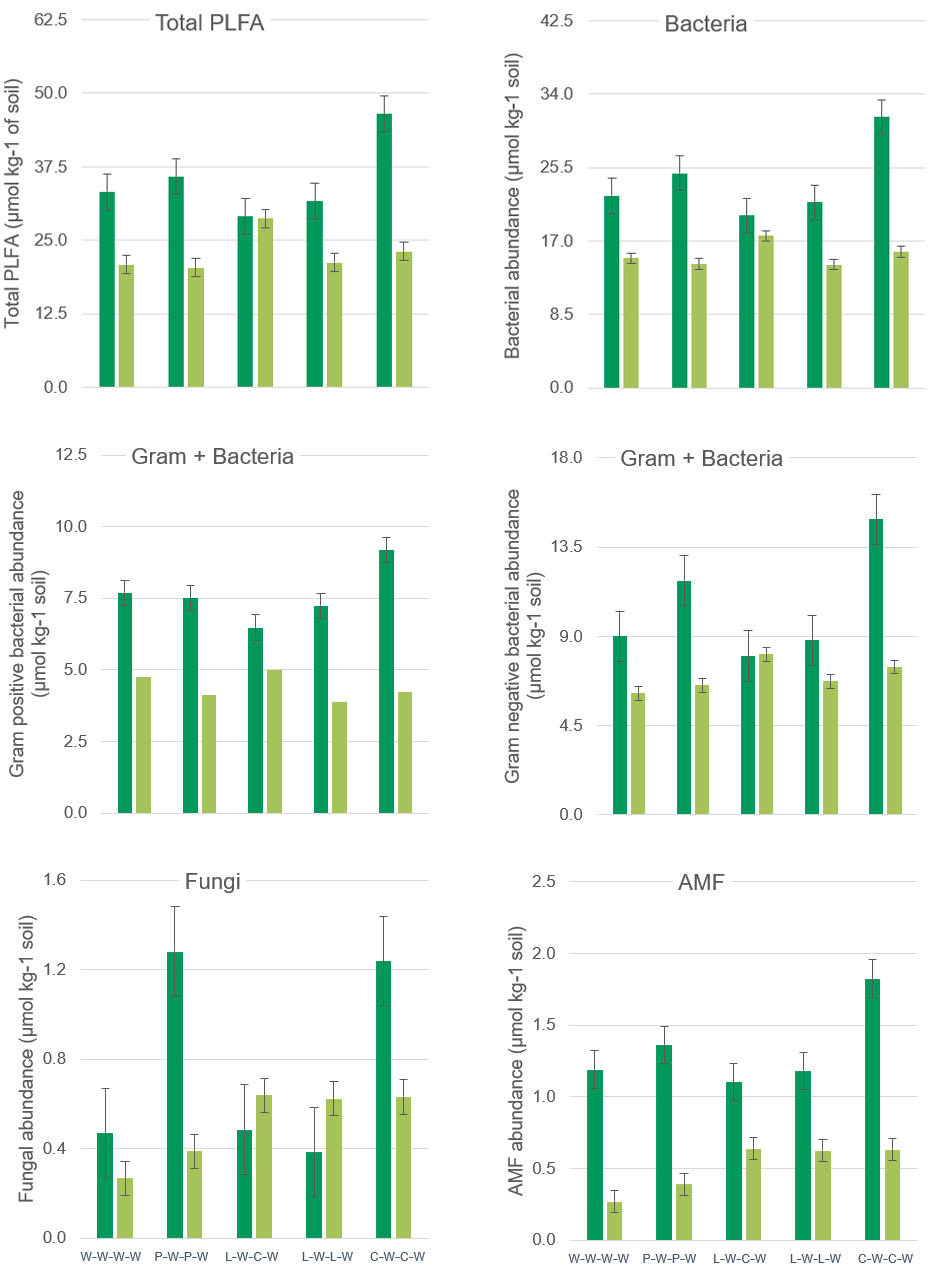
Figure 2. Soil microbial community composition in soils from different crop rotations at Brooks, AB in 2017 (dark green bars) and 2018 (light green bars). Samples were collected in spring from a 0–15 cm depth.
Acknowledgements
This project was funded by Saskatchewan Pulse Growers, the Saskatchewan Ministry of Agriculture – Agricultural Development Fund, and Agriculture and Agri-Food Canada.