Disease Reference – Action Thresholds and Registered Seed Treatment Options
| Pathogen (Disease) | Threshold on Seed | Action if Over Threshold | Seed Treatment Options | ||||||||||||
| Agrox® FL (Norac Concepts) | Apron® Advance (Syngenta Canada) | ApronMaxx® RFC (Syngenta Canada) | Insure Pulse® (BASF Canada) | INTEGO™ Solo Fungicide (Valent Canada/NuFarm Agriculture) |
Rancona Trio (UPL AgroSolutions Canada)3 |
Trilex® EverGol® (Bayer) |
Trilex® EverGol® SHIELD2 (Bayer) |
Vibrance® Maxx RFC (Syngenta Canada) | Vibrance® Maxx with INTEGO™ (Syngenta Canada) | Vibrance® Total (Syngenta Canada) | Vitaflo® Brands (various) | Zeltera® Pulse (Valent Canada/NuFarm Agriculture) | |||
| Aphanomyces euteiches | Not applicable; Soil-borne disease only | Use seed treatment if: History of disease, provides early season protection only |
X1 |
X1 |
X1 |
X1 |
|||||||||
| Ascochyta lentis (Ascochyta Blight) | 0-10% (Black soil zone) | Use seed treatment | X | X | X |
X1 |
X1 |
X | X | X |
X1 |
||||
| 5-10% (Brown soil zone) | Use seed treatment | ||||||||||||||
| Greater than 10% | Do not plant seed | ||||||||||||||
| Botrytis spp. (seed-borne) | 10% on seed (total of Fusarium, Botrytis, and Sclerotinia) | Use seed treatment | X | X |
X1 |
X | X | X | X | X | X |
X1 |
|||
| Colletotrichum(Anthracnose) | Rarely found on seed Primarily soil-borne disease | Use seed treatment if: History of disease, expecting humid/moist conditions |
X1 |
X1 |
|||||||||||
| Fusarium spp. | 10% on seed (total of Fusarium, Botrytis, and Sclerotinia)Soil-borne as well | Use seed treatment | X | X | X | X | X | X | X | X | X | X | X | ||
| Pythium spp. | Not applicable; Soil-borne disease only | Use seed treatment if: History of disease, seeding under cool-moist conditions | X | X | X | X | X | X | X | X | X | X | X | X | |
| Rhizoctonia spp. | Unknown; Primarily soil-borne disease | Use seed treatment if: History of disease, seeding under cool-moist conditions | X | X | X | X | X | X | X | X | X | X | X | ||
| Sclerotinia sclerotiorum (seed-borne) | 10% on seed (total of Fusarium, Botrytis, and Sclerotinia) | Use seed treatment | X | X | X |
X1 |
|||||||||
| General seed rot, root rot, damping-off, and seedling blight | Not applicable | Use seed treatment if: History of disease, seeding under cool-moist conditions | X | X | |||||||||||
1 Product registered for suppression only
2 Product contains an insecticide component
3 Tank-mixing Rancona Trio with INTEGO™ Solo offers control of early-season (only) aphanomyces as per the Rancona Trio product label.
Insect Reference – Recommendations and Registered Seed Treatment Options
| Insect | Recommendation | Seed Treatment Options | |||
| Cruiser® 5FS (Syngenta Canada) | Lumivia™ CPL (Corteva Agriscience) | Stress Shield® 600 (Bayer) |
Trilex® EverGol® SHIELD4 (Bayer) |
||
| Armyworm and Cutworm | Use seed treatment if: History of insect pressure on the field or in the nearby area | X | |||
| Pea Leaf Weevil | Use seed treatment if: History of insect pressure on the field or in the nearby area | X | |||
| Wireworm | Use seed treatment if: History of insect pressure on the field or in the nearby area | X | X | X | |
4 Product contains fungicide components
Action thresholds have not been identified for all disease and insect risks in lentils, so the recommendations provided are based on thresholds from similar crops, identified action thresholds for lentils, or rules of thumb.
Understanding seed quality and applying seed treatments to pulse seed when disease or insect risk is present is critical to maximizing yield.
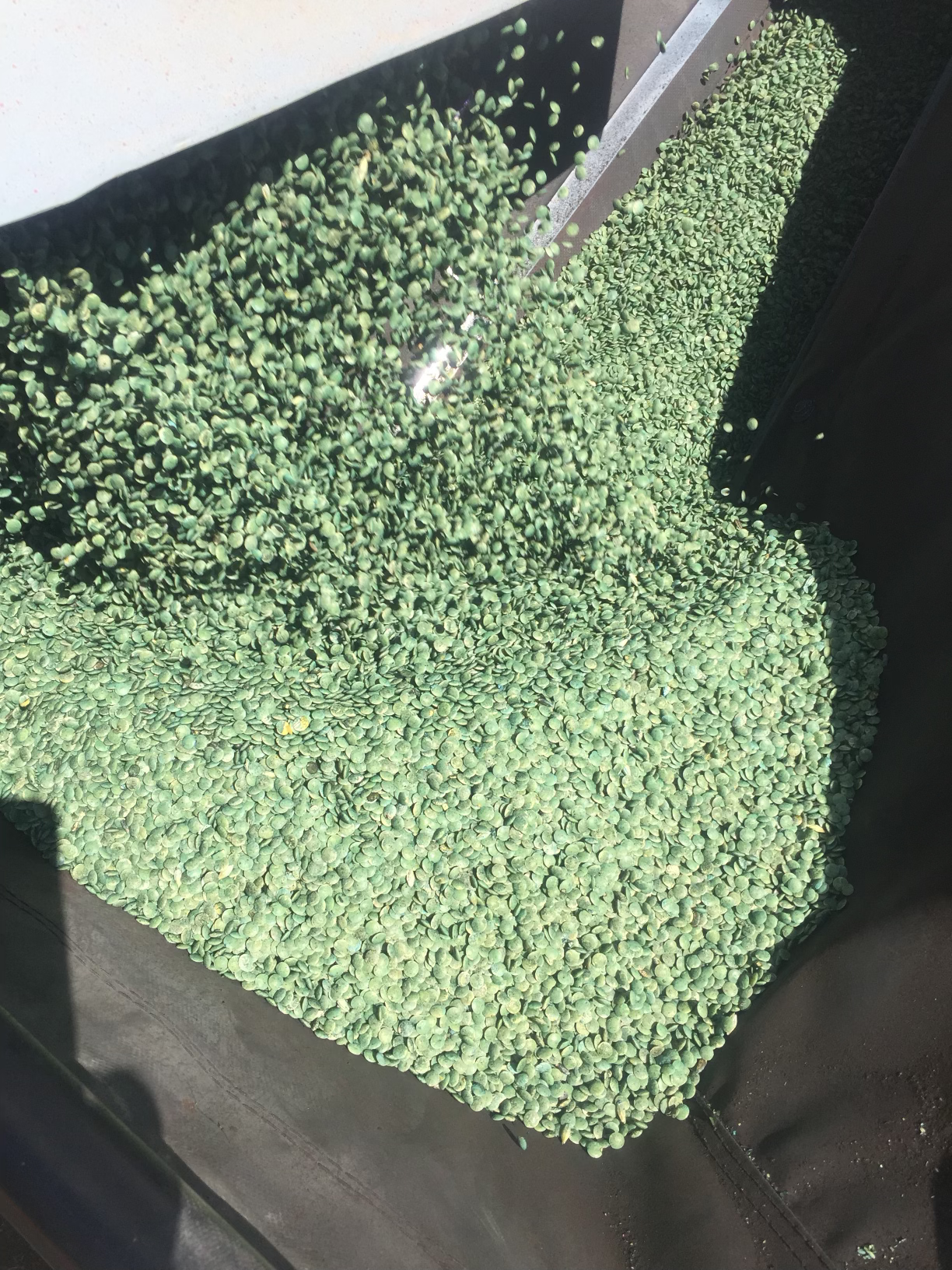
Fungicide seed treatments protect the seed and seedlings from soil-borne diseases, as well as those diseases found on the surface of the seed or carried inside the seed. Seed treatments will not cure seed with high disease levels or poor quality.
For a seed treatment to provide effective protection, it is important to ensure adequate seed coverage and appropriate rates for the target pest(s).
Seed treatments will break down as the plant begins to develop, and as a result, their protective effect on the seed will only last for the early part of the plant’s growth.
When using a seed treatment in combination with an inoculant, it is important to check with the inoculant manufacturer to ensure compatibility with the seed treatment before use.
A seed treated with a seed treatment may pose a risk to other organisms or plants in the environment. Dispose of all leftover treated seed properly, and do not leave treated seed on the soil surface.
Version March 2024