By Alexis Adams, MSc, PAg
Introduction
The impact of viruses on human health is well understood, but less is known about their effects on plants, including pulse crops. Symptoms of pulse viruses vary widely, ranging from minimal yield impact to complete crop failure. Viruses can infect all pulse crops grown in Western Canada, including peas, lentils, chickpeas, and faba beans. While pulse viruses are more prevalent in other regions, such as the Middle East, Australia, and the United States (U.S.), cases have been reported in Saskatchewan. The incidence of pulse viruses is currently extremely low but may increase in the future as pulse acres expand, climate change progresses, and viruses spread from nearby growing regions. Farmers need not fear the future threat of these viruses, however, as several tools exist to manage viruses in pulse crops. The goal of this fact sheet is to build understanding of pulse virus basics, including transmission, symptoms, scouting, testing, and management strategies. Understanding these basics will equip growers and agronomists to identify pulse viruses in the field and prepare for future management.
Virus Transmission
Methods of Transmission
Viruses can be seed-borne, mechanically transmitted, or passed on by insect vectors. Viruses are transmitted via seed when an infected plant sets seed that is either intentionally regrown the following year or comes up as a volunteer weed. Mechanical virus spread typically requires entry into the plant by breaking cell walls and is more common in crops that are pruned or topped, such as tobacco or corn, than in pulse crops. Viruses will not survive long in crop residue; thus, mechanical spread by field implements is low. Insect vectors transmit pulse viruses from one plant to another through feeding. Vectors include aphids, whiteflies, leafhoppers, planthoppers, true bugs, thrips, and beetles. These insects can pick up the virus from an infected plant, weed, or volunteer in the same field, but may also carry disease from adjacent fields or from fields farther away if the insect is carried by wind.
Insect Vector Modes of Transmission
The two main modes by which insect vectors transmit viruses between plants are known as persistent and non-persistent transmission. The mode of transmission depends on the virus.
Persistent transmission involves an insect ingesting a virus from an infected plant, after which the virus travels through the insect’s circulatory system and lodges in its salivary glands. This process takes over a day; thus, an insect cannot immediately infect other plants after feeding on an infected plant. Once an insect is infected with a persistently transmitted virus, it remains infected for life and will continue to transmit the virus throughout its life cycle.
Non-persistent transmission occurs when an insect feeds on an infected plant and carries the virus on its mouthparts to other plants. After feeding on a few plants, the virus will be shed from the insect’s mouthparts. The virus does not have to pass through the insect’s body, so virus transmission can occur immediately. Unlike persistent transmission, an insect will not continue to infect plants unless it acquires more virus by feeding on another infected plant.
Viruses of Concern to Saskatchewan
Currently, viruses are not commonly observed in pulse crops in Saskatchewan, although they have been detected in Saskatchewan for decades, as noted in historical disease and field crop records. The viruses that have the greatest potential to become prevalent in Saskatchewan are Pea Seedborne Mosaic Virus (PSbMV), Bean Yellow Mosaic Virus (BYMV), Cucumber Mosaic Virus (CMV), and Pea Enation Virus (PEMV). Bean Leaf Roll Virus, Bean Common Mosaic Virus, Pea Streak Virus, Red Clover Vein Mosaic, and Alfalfa Mosaic Virus can infect pulse crops in North America but pose less of a threat to Saskatchewan pulse production.
Virus Symptoms
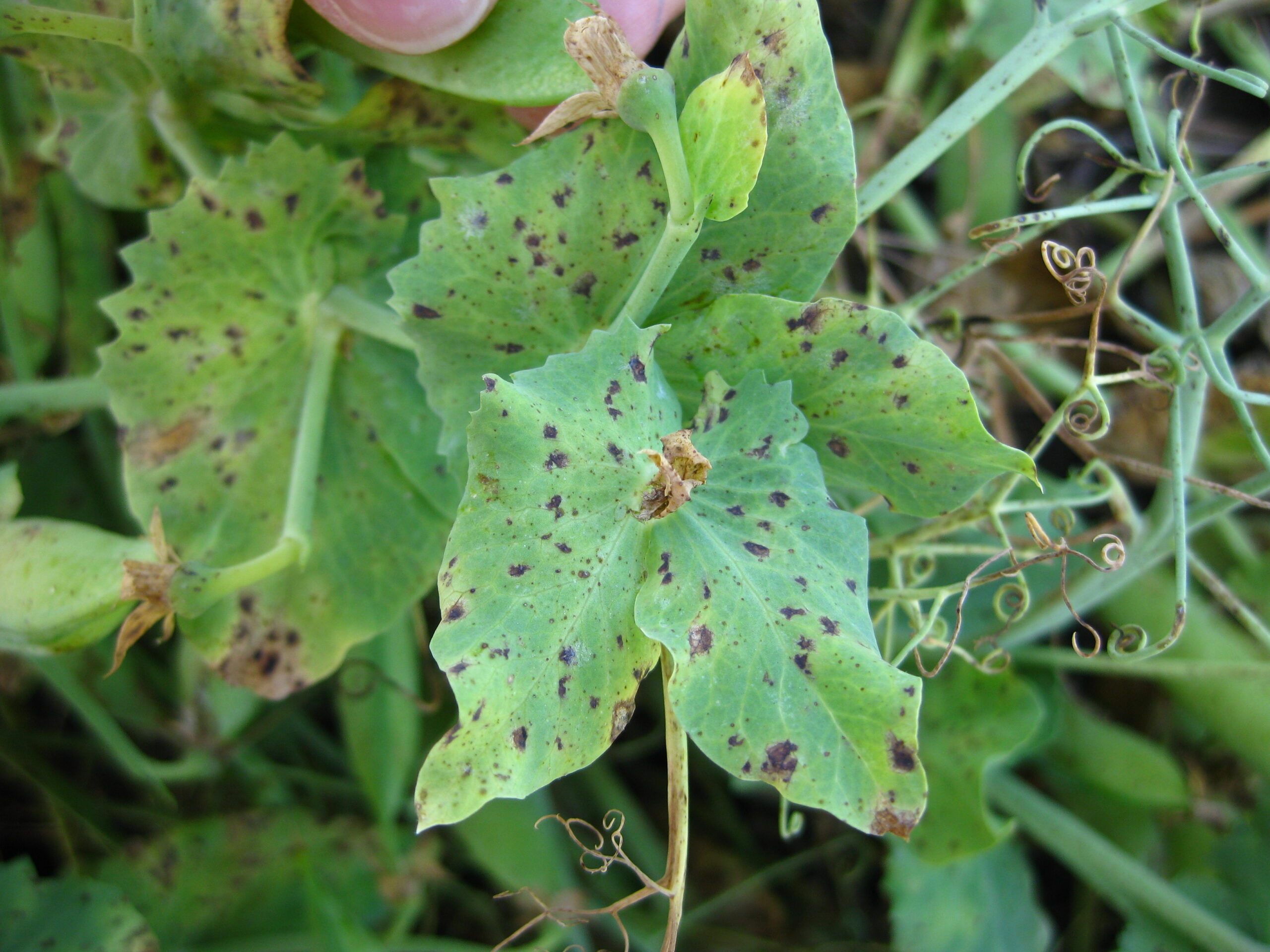
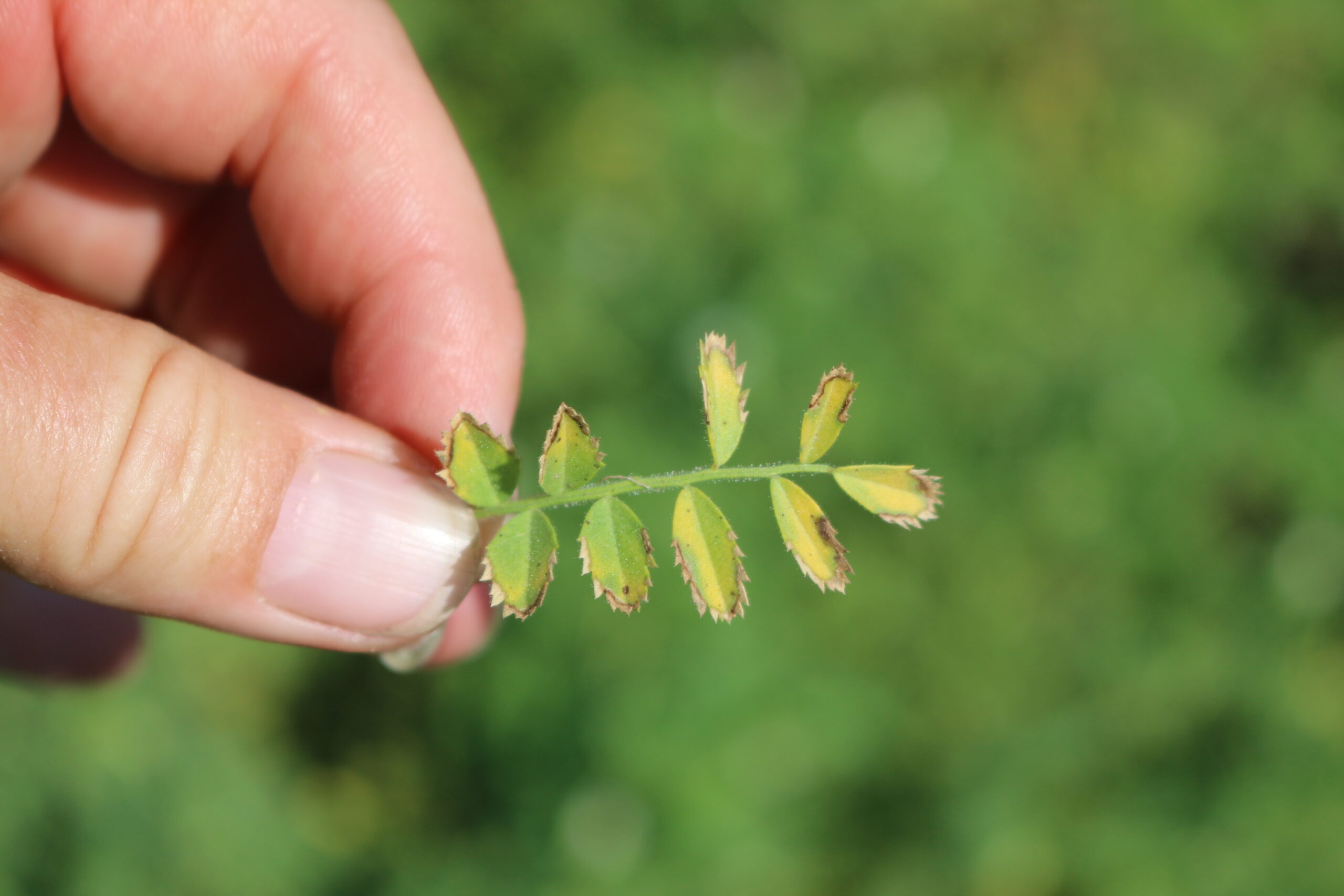
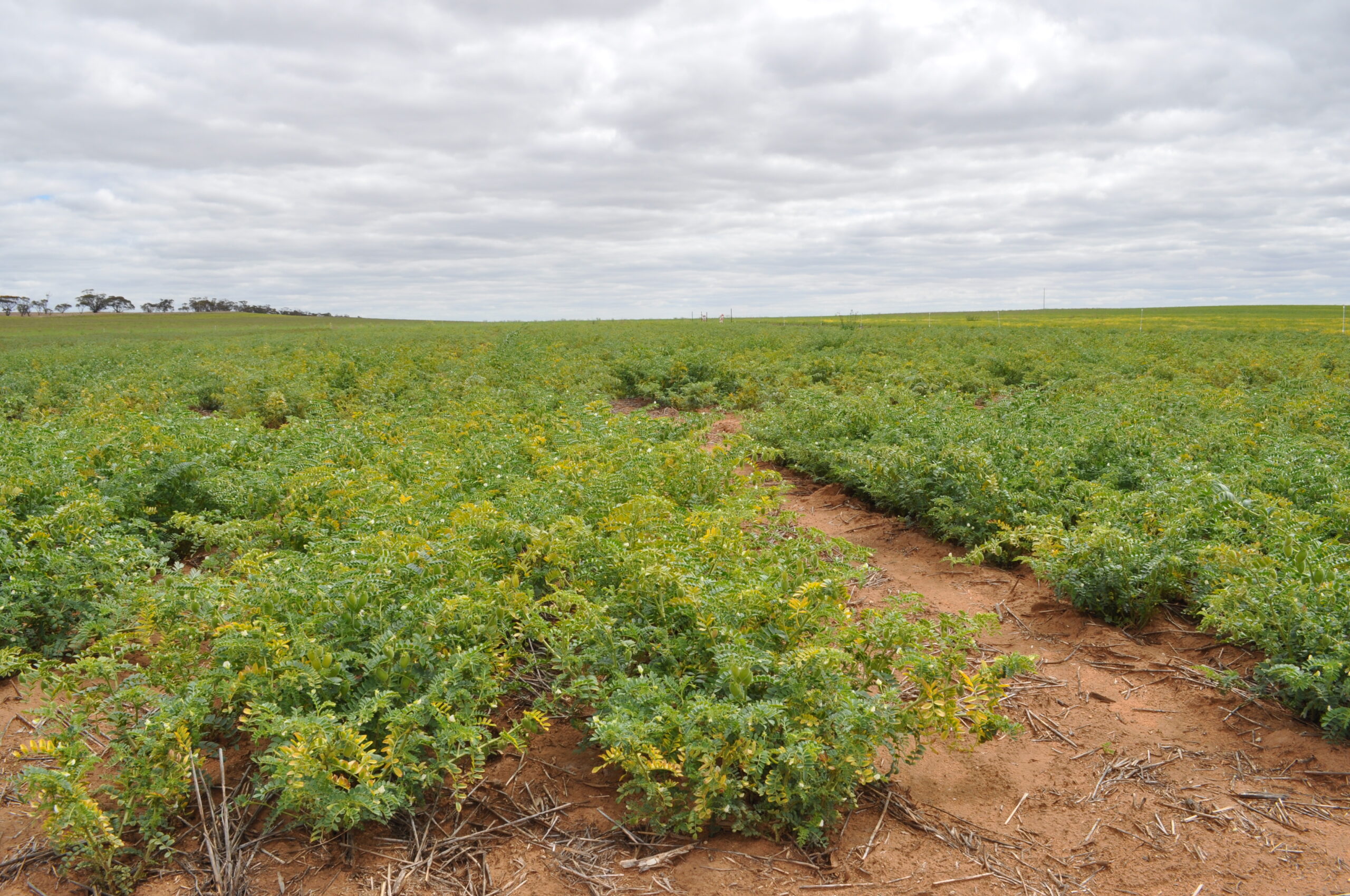
Virus symptoms vary widely, and their expression depends on interactions between the virus and the crop, as well as on the virus strain, crop variety, climate, and plant stage at the time of infection. General virus symptoms seen across crop varieties include chlorosis, stunting, and leaf curling. Certain viruses may cause necrotic symptoms, while others may produce mosaic symptoms. Additionally, different varieties of a crop may exhibit diverse symptoms in response to the same virus. Little symptomology research has been done to date on Saskatchewan pulse varieties. The symptoms described in this fact sheet are derived from other regions and may differ from what is observed in our local varieties. The timing of infection will also impact symptom expression. Plants infected at earlier growth stages will usually have more uniform stunting and discoloration throughout the plant. Plants infected at later growth stages will express symptoms in leaf tips before spreading to the rest of the plant. Typically, earlier infection causes greater crop loss, especially prior to or during flowering. Additionally, some plants or seeds may be asymptomatic but still produce infected seed that will propagate crop infection. Pulse virus symptoms can be mistaken as nutrient deficiency, herbicide drift and carryover, or moisture stress. Seed symptoms can be confused with fungal pathogens, harvest damage, or storage issues. Identifying pulse viruses is challenging because of the resemblance of symptoms to other crop issues and wide range of symptomology, thus a lab test is recommended to confirm the presence of a virus.

Pea Seed-borne Mosaic Virus
| Virus: | Pea Seed-borne Mosaic Virus (PSbMV) |
| Hosts: | Chickpea, lentil, pea, faba beans. Peas are the crop of greatest concern. Hosted by but does not infect alfalfa. |
| Transmission: | Insect vector, seed, mechanical spread |
| Vector: | Pea aphid |
| Mode: | Non-persistent |
| Notes: | PSbMV is the virus with the greatest potential to cause damage in SK. High seed to plant transmission rate. Infected seeds may be asymptomatic but pass on virus. |
| Management: | Planting virus free seed, genetic resistance when available, aphid control |
| Symptoms: | Whole plant: Stunted and malformed. Delayed or uneven maturity. Leaves: In peas see mosaic leaf pattern, clearing and swelling of leaf veins, mottling, leaf curling up or down, leaf and stipule necrosis, and thickened, tightly curled tendrils. In chickpea and lentil see narrowing and curling of leaflets with reddened or necrotic lesions. Shoots: Stunting, reduced internode length, internode malformation. Pods and seeds: Pods deformed. Seed aborted. On peas and chickpea see brown rings and spots on seeds. Seeds shrivelled and small. Seed coat splitting. Reduced seed size for Kabuli chickpea. |

Pea Enation Mosaic Virus
| Virus: | Pea Enation Mosaic Virus (PEMV) |
| Hosts: | Chickpea, lentil, pea. Alfalfa is not a host. |
| Transmission: | Insect vector, seed, mechanical spread |
| Vector: | Pea aphid |
| Mode: | Persistent |
| Management: | Aphid control, genetic resistance when available. |
| Symptoms: | Pea: symptoms follow a sequence of expression. Later symptoms in pea are much more distinct than in chickpea or lentil. Leaf symptoms (downward curling, chlorosis, or translucent spots on leaves) show up first, a week after infection. Next can see stunting, wrinkling of leaves, or loss of apical dominance. Three weeks after infection see leaf growths known as enations, as well as warts on pods and pod distortion. Very low seed set with severe infection. Chickpea and lentil: stunting, leaf rolling, and tip wilting or necrosis. |

Bean Yellow Mosaic Virus
| Virus: | Bean Yellow Mosaic Virus (BYMV) |
| Hosts: | Chickpeas are the crop of most concern but also infects peas, lentils, faba bean, and forages such as alfalfa, clover, and vetch |
| Transmission: | Insect vector, seed, mechanical spread |
| Vector: | Pea aphid |
| Mode: | Non-persistent |
| Management: | Planting virus free seed, genetic resistance when available, aphid control |
| Symptoms: | Whole plant: Delayed or uneven maturity. Stunting in chickpea and lentils. Stunting in peas with early infection. Wilting and early senescence in chickpeas. Leaves: In peas see vein clearing, dark green spots, leaf mottling. Leaf malformation with early infection. In chickpeas see yellowing, red leaf margins, and early senescence, with leaf deformation and narrowed leaflets occurring in early season infections. In lentils see yellowing, mild mosaic, curled leaves, mild necrosis, mottling. Shoots: In chickpeas see shoot tip necrosis, formation of secondary shoots, phloem discoloration. Pods and seeds: In peas see malformed pods with early infection. In lentils see reduced pod and flower formation. |

Cucumber Mosaic Virus
| Virus: | Cucumber Mosaic Virus (CMV) |
| Hosts: | Chickpea, beans, lentil, pea. Very wide host range including several weed species. |
| Transmission: | Insect vector, mechanical spread, seed at low transmission rates |
| Vector: | Pea aphid, green pea aphid, soybean aphid, cowpea aphid |
| Mode: | Non-persistent |
| Management: | Weed management because of wide host range, aphid control. |
| Symptoms: | Whole plant: Stunting. Reddening or yellowing of whole plant in chickpeas. Leaves: Chlorosis in chickpeas, peas, and lentils. Leaf distortion in peas and lentils. Less severe crop impacts than other viruses. |
Scouting
The presence of both an infected plant source and insect vectors is necessary for the spread of crop viruses. The main components of scouting for viruses, therefore, include looking for virus symptoms in plants and looking for the presence of insect vectors.
Insect Vector Scouting
Farmers and agronomists should already be regularly scouting for pea aphids because they can have a serious impact on yield, even when they are not transmitting viruses. See this Pulse Knowledge Fact Sheet for more information on scouting, identification, and thresholds for pea aphids. Research is underway in Saskatchewan to update aphid thresholds and to understand the impact of pulse viruses on the insecticide-use threshold.
Virus Symptom Scouting
To detect infected plants, growers and agronomists should look for irregularities in the field during regular crop checks. Look for colour change and patterns or growths on leaves, as well as chlorosis, necrosis, wilting, or premature senescence of plant parts. Watch also for malformed leaves, leaflets, pods, or tendrils, as well as shortened internodes and plant stunting. Some of these symptoms may look like nutrient, water, or herbicide stress, so carefully consider soil and growing conditions when scouting. Also note that insect vectors can carry viruses to new fields. If symptoms are found in one field, be on the lookout for the virus spreading to nearby pulse fields.
Scouting Timing
Because pulse viruses can cause the greatest damage prior to flowering, begin looking for aphid presence and virus symptoms during vegetative growth through to the end of pod development. Scouting later in the season remains important, as late-season infection can significantly affect seed quality. Be especially on the lookout under good growing conditions where lots of plant matter is produced for pea aphids to feed on, and when temperatures are in the range of 23 to 28°C, which is the optimal temperature for aphid feeding and reproduction. Aphids can move in from neighbouring alfalfa fields after cutting, thus scouting should increase after forage cuts. Also, continue scouting for aphids and virus symptoms in faba beans as other pulse crops in the area begin to dry down. Aphids migrate to faba fields at the end of the season because they stay greener longer. Also, expect higher aphid populations in a growing season following a warm and dry fall and a mild winter, as a larger portion of overwintering aphids will survive.
Testing
Plant Tissue Testing
If a plant with potential viral symptoms is found in the field, testing of the plant tissue is recommended to confirm the diagnosis. Plant tissue can be tested in the field using rapid test strips or by sending plant tissue to a commercial laboratory. Virus test strips, which work similarly to COVID-19 rapid test strips, can be used in the field to test suspicious plant material. Test strips are virus-specific; thus, the proper test must be used. A&L Canada Laboratories (London, Ontario) sells a Potyvirus Immunostrip to test for PSbMV. If the proper test strip cannot be found, or to confirm results, samples can be tested in a lab. Lab testing methods include Enzyme- Linked Immunosorbent Assay (ELISA) and quantitative polymerase chain reaction (qPCR). There are two commercial labs that will screen plant material for viruses using ELISA: A&L Canada Laboratories and Agriculture and Food Laboratory (AFL) at the University of Guelph. The ELISA testing method is limited because it cannot identify the virus strain and may produce false results, especially if the wrong part of the plant is sampled. Dr. Sean Prager at the University of Saskatchewan is developing more accurate tests for pulse viruses in Western Canada using qPCR. Samples can be sent to Dr. Prager’s lab for testing. For more details, email Dr. Prager. Always check with the laboratory for sample submission guidelines before collection to properly retrieve, package, and ship a sample.
Seed Testing
Testing seed is more difficult than plant material, as there is no commercial option for virus testing of seed. The only method for testing a seed that is suspected or confirmed to be infected with the virus is to perform a bioassay. This involves regrowing seed and assessing for virus symptomology. If the plants grown from the seed exhibit symptoms, the infected plant tissue can be sent to a laboratory for analysis, and a decision on whether to use the seed can be made. Faba beans and peas will exhibit viral symptoms on seeds, whereas lentils or chickpeas may not.
Management
“Manage the vector, manage the virus” is the mantra for control of pulse viruses. Because other vectors, such as leafhoppers or whiteflies, are not prevalent in the Western Canadian pulse system, management of pea aphid populations is the focus for managing viruses in our region. Strategies for minimizing plant infection are also important for virus management. Many of these strategies provide benefits outside of controlling viruses and may already be employed on the farm.
Strategies to Reduce Vector Populations
- Minimizing migration of aphids into the field through reducing bare earth: Pea aphids find new fields to colonize through detecting a contrast between soil and crop. This contrast between bare earth and green crop can be minimized through minimum tillage and seeding into standing stubble, as well as by maximizing crop establishment and uniformity. Ensuring adequate fertility and seeding rates, using seed with good germ and vigour, and checking seeding equipment for proper depth and uniformity will all help reduce bare earth. Additionally, fields with narrower row spacing will have less bare earth and may therefore have lower aphid colonization rates.
- Reduce crop stress: Aphids prefer feeding on stressed plants. Reduce crop stress by using the techniques above to maximize crop establishment, reducing weed pressure, managing soil moisture by reducing soil disturbance, and using inoculants properly to maximize nitrogen fixation.
- Seed treatments: Neonicotinoid seed treatments will suppress early-season aphid populations. Aphids must feed on plants to take up insecticide and die. This strategy is better for persistent viruses, where the insect will likely die from the seed treatment before it can infect other plants. Seed treatments will still reduce overall aphid populations and improve seed establishment, helping manage non-persistent viruses. Keep in mind that aphids may not colonize the field until after the seed treatment has worn off.
- Insecticides: When scouting for pea aphids, determine thresholds and use insecticides when thresholds are exceeded, especially in the absence of beneficial insects. If virus symptoms are present, intervening with an insecticide before the threshold is reached may be necessary. For non-persistent viruses, use contact insecticides. Systemic insecticides require feeding to kill insects, which also results in non-persistent virus spread.
- Control aphids in nearby forage fields: Scout for aphids in alfalfa, clover, or other leguminous forages that host the virus of concern, especially those near pulse fields. Aphids may overwinter in forage fields; thus, scout for aphids at the end of the growing season. Use insecticide when forage economic thresholds are reached.
Strategies to Reduce Crop Infection
- Use seed with genetic resistance: Virus resistance has not been a breeding priority in Saskatchewan thus far; however, genetic resistance is a common management strategy in other regions where viruses pose a larger threat.
- Use virus-free seed: Avoid using seed from an infected source crop. If infection is suspected, confirm by performing a bioassay and submitting suspicious plant material, as discussed in the testing section.
- Seed crop as early as possible: The more mature a plant is when infected with a virus, the less impact the virus has on the crop.
- Control host weeds and volunteer crops: The full range of weed species that can host viruses in Western Canada is unknown; however, any leguminous weed, such as vetches, clovers, or black medic, may be a virus host.
Potential Impact of Pulse Viruses in Saskatchewan
Globally, pulse viruses can significantly impact crop production. In Australia, with low infection levels, crop loss has been 15%, with up to 100% loss from more severe early-season infection. In the Pacific Northwest, a yield loss of 80–90% has been observed in the field. Pulse viruses have yet to become a serious management concern in Saskatchewan. The main reasons for the current low virus incidence are two-fold. First, pea aphids are the only vector present in our system, and until recently, they have not been abundant in the field. Secondly, viruses are present in only a very small percentage of plants in our region, so there is little disease material for vectors to spread to other plants.
Although viruses are not an immediate risk to Saskatchewan pulse production, they may become a concern in the future. Aphid numbers have been on the rise, likely due to increased pulse acreage, climate change, and changing wind patterns that are bringing more aphids north from the U.S. With increased aphid numbers, we may see an increase in pulse viruses across Western Canada. As well, viruses such as PSbMV are prevalent in border states including North Dakota, Montana, and Washington, thus the virus is close enough to spread up to Western Canada and impact our pulse growers.
Research and Monitoring
A research project led by Dr. Sean Prager at the University of Saskatchewan is underway to investigate aspects of PSbMV, CMV, and BYMV epidemiology in our province and to develop improved diagnostic resources, laboratory testing methods, and management strategies. Research objectives include:
- Developing new tools to detect pulse viruses in Saskatchewan
- Determining how commonly pulse viruses occur in Saskatchewan
- Quantifying yield effects and documenting symptomology of BYMV and PSbMV in faba, pea, lentil, and chickpea. Field guides with pictures will be created to help growers and agronomists diagnose.
- Determining how well aphids transmit BYMV and PSbMV to Saskatchewan pulse crop varieties, which will contribute to developing better aphid thresholds when viruses are involved.
- Examining genetic variation of PSbMV populations from across North America to determine whether the source of virus infestation is local or from seed sourced elsewhere.
There are currently no provincial monitoring programs in place for pulse viruses, as the viruses have not yet occurred with sufficient incidence to make monitoring worthwhile.
Key Takeaways
Pulse viruses are not currently a serious threat to pulse growers. They can, however, currently be found in Saskatchewan and may continue to show up more frequently as aphid populations rise. Growers and agronomists should be familiar with virus symptoms and on the lookout for them during routine crop checks. Growers and agronomists should especially be looking for pulse virus symptoms when vectors are present in the field. Several management strategies exist to reduce vector populations and crop infection. Current research will further support the diagnosis, testing, and management of pulse viruses and vectors in Saskatchewan. Understanding how to identify and manage pulse viruses now will allow for earlier intervention and reduced crop impact if pulse viruses become a serious management concern in the future.
References
- Extension Australia. 2020.https://extensionaus.com.au/ FieldCropDiseasesVic/docs/identification-management-of-field- crop-diseases-in-victoria/viruses/viruses-of-pulse-crops/. Available online (accessed January 3, 2022).
- Fleury, D. 2021. Pea aphid and aphid-transmitted viruses in Saskatchewan pulse crops. https://www.topcropmanager.com/pea- aphid-and-aphid-transmitted-viruses-in-saskatchewan-pulse-crops/. Available online (accessed January 3, 2022).
- Montana State University. Important Seedborne Diseases of Pulse Crops. https://plantsciences.montana.edu/pulsecropdiagnosticlab/ seedborne-pulse-crops.html. Available online (accessed January 11, 2022).
- New South Wales Government Department of Primary Industries. 2021. Managing viruses in pulse crops in 2021. https://www.dpi.nsw. gov.au/ data/assets/pdf_file/0005/1299965/Managing-viruses-in- pulse-crops-in-2021.pdf. Available online (accessed January 11, 2022).
- NDSU Extension Service. 2014. Pea Seed-borne Mosaic Virus (PSbMV) in Field Peas and Lentils. https://www.northernpulse.com/ uploads/26/PSBMVPeaSeedbornMosaicVirusinFieldPeasandLentils. pdf. Available online (Accessed January 11, 2022).
- Pulse Australia. 2015. Australian Pulse Bulletin: Managing Viruses in Pulses. https://www.pulseaus.com.au/growing-pulses/publications/ manage-viruses. Available online (accessed January 11, 2022).
- Rashed, A., X. Feng, S.M. Prager, L.D. Porter, J.J. Knodel, A. Karasev, and S.D. Eigenbrode, 2018. Vector-Borne Viruses of Pulse Crops, With a Particular Emphasis on North American Cropping System. Ann. Entomol. Soc. 111(4):205-207.