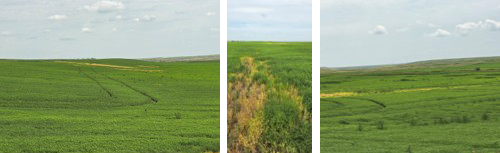
Surveys of pests in pulse crops are important for monitoring for new diseases and insects, as well as to follow the severity of pests over time. In 2025 pulse crops were surveyed across Saskatchewan for foliar and root diseases and insects by the Saskatchewan Ministry of Agriculture (SMA), Saskatchewan Association of Rural Municipalities (SARM), University of Saskatchewan (U of S), Agriculture and Agri-Food Canada (AAFC), Saskatchewan Crop Insurance Corporation (SCIC), and Saskatchewan Pulse Growers (SPG). Results of these surveys are summarized below. A seed quality survey of commercial seed test labs was also initiated to evaluate diseases on seed samples from the 2025 production year.
Disease Surveys
Disease assessments were made by visually examining plants from predetermined sampling patterns within each field. It is important to note that diagnosis of foliar disease was only based on visual symptoms in the field and no lab confirmation was carried out (except where noted).
Incidence is calculated as the percentage of the total number of plants assessed that have symptoms of the disease. For example – 76 out of 100 plants or 76% incidence within a field which is then averaged over the fields evaluated in each region.
Prevalence is a measure of the presence or absence of the disease in the field and is expressed based on the percentage of fields positive for that symptom. For example – Anthracnose symptoms are found in 31 out of the 36 lentil fields which equates to 86.1% prevalence.
Lentil (SMA)
A total of 61 lentil field were surveyed for the presence and incidence of diseases in Saskatchewan. The survey was completed between July to August 13 with most of the surveyed fields in staging of R4 (Flat pod) to R7 (Physiological maturity). The number of surveyed crops was highest in Southwest Saskatchewan, with 21 of the 61 crops surveyed located in this region. The distribution of the surveyed crops across the rest of the province was as follows: 19 (West-central), 16 (Southeast), four (East-central) and one (Northwest). Disease assessments were made by visually examining 10 plants from each of 5 sites along a W-pattern in each field. Individual sites were located at least 50 m from the field edge and at least 30 m apart. Crops were assessed for the incidence of anthracnose (Colletotrichum lentis), ascochyta blight (Ascochyta lentis), sclerotinia stem and pod rot (Sclerotinia sclerotiorum), botrytis stem and pod rot (Botrytis cinerea) and stemphylium blight (Stemphylium spp.) and the prevalence of root rot complex (Fusarium spp / Pythium spp. / Rhizoctonia solani / Aphanomyces euteiches) and all previously listed diseases. Incidence is calculated as the percentage of plants assessed (out of 50 plants total per crop) with symptoms of the disease, while prevalence is a measure of the presence or absence of the disease in the field. All disease assessments were made based on visual symptoms observed in the field and samples were tested in the lab only if requested by an individual surveyor.
Root rot complex symptoms were present in 84% of the surveyed crops (Table 1). Across the regions, prevalence ranged from 75% to 100% of survey fields. Overall average incidence of root rot across the province was 66% with an average severity of 2.67 across all fields (Table 2 and 3).
Anthracnose was the most prevalent foliar disease and was identified in 69% of the surveyed crops with an overall average incidence of 37% with an average severity of 0.71 across all fields (Tables 1, 2 and 3). The incidence of anthracnose was highest in Northwest Saskatchewan (100%) followed by the Southeast (58%).
Stemphylium blight was observed in 31% of fields with an average incidence of 5% (Tables 1 and 2). Highest prevalence was observed in the East-Central (50%), followed by Southwest (38%) and Southeast (31%).
Ascochyta blight was found in 13% of fields with an average incidence of 0.6% (Tables 1 and 2). It is important to note that diagnosis was only based on visual symptoms in the field. Plants having visual symptoms that were consistent with ascochyta blight were not confirmed with additional testing.
Sclerotinia stem and pod rot was observed in 3% of fields with an average incidence of 1% (Tables 1 and 2). Sclerotinia stem and pod rot were found only in two fields in the West-Central region. Botrytis stem and pod rot was not observed.
Severity Scale for root rot complex of lentils (modified from Chatterton et al. 2019)
Severity scale for root rot complex of lentils (modified from Chatterton et al. 2019)
| Rating | Lesions | % affected | Pruning |
|---|---|---|---|
| 1 | None | 0 | 0 |
| 2 | Small (<1cm), lesion near seed attachment | 0 | 0 |
| 3 | Small coalescing lesions approximately 180° around the stem | 10-20% | 0 |
| 4 | Lesions extending and completely encircling the stem | >20-95% | 5-20% |
| 5 | Increasingly discolored and extended epicotyl lesions | 100% | >20-50% |
| 6 | Epicotyl lesions encircling the stem extending up to 2 cm | 100% | >50-80% |
| 7 | Tap root (including epicotyl) completely lesioned | Dead | Dead |
Severity scale for lentil anthracnose (developed by Dr. Michelle Hubbard, AAFC)
| Rating | Description |
|---|---|
| 0 | None |
| 1 | Up to 5% of plant area diseased (lower canopy). A few superficial lesions at stem base |
| 2 | >5-25% of stems and leaves affected in infected plants (lower canopy). Lesions, some leaf drop. |
| 3 | >25-50% of stems and leaves affected in infected plants (lower and mid canopy). Lesions and leaf drop. |
| 4 | >50-75% of stems and leaves affected in infected plants (lower, mid and upper canopy). Lesions, leaf drop, shoot die-back). |
| 5 | >75% of stems and leaves affected in infected plants (lower, mid and upper canopy). Lesions, leaf drop, severe shoot die-back. |
Table 1. Prevalence of Disease in Saskatchewan Lentil Fields Surveyed in 2025
| Region1 | Number of Fields Surveyed | Prevalence (%) | |||||
| Root rot complex | Anthracnose | Ascochyta blight | Sclerotinia stem & pod rot | Botrytis stem & pod rot | Stemphylium Blight | ||
| SW | 21 | 76 | 48 | 14 | 0 | 0 | 38 |
| SE | 16 | 94 | 100 | 0 | 0 | 0 | 31 |
| EC | 4 | 75 | 25 | 75 | 0 | 0 | 50 |
| WC | 19 | 84 | 74 | 11 | 10 | 0 | 21 |
| NW | 1 | 100 | 100 | 0 | 0 | 0 | 0 |
| Overall | 61 | 86 | 69 | 20 | 2 | 0 | 28 |
1Region: Southwest (SW); Southeast (SE); East Central (EC); West Central (WC); Northwest (NW).
Source: Saskatchewan Pulse Disease Situation Report 2025 submitted to Western Committee on Plant Diseases by Alireza Akhavan from Saskatchewan Ministry of Agriculture
Table 2. Disease Incidence in Saskatchewan Lentil Fields Surveyed in 2025
| Region | Incidence of disease (%) (Incidence in only infected fields)2 | |||||
| Root rot | Anthracnose | Ascochyta blight | Sclerotinia stem & pod rot | Botrytis stem & pod rot | Stemphylium Blight | |
| SW | 70 (92) | 19 (40) | 0.2 (2) | 0 (NA) | 0 (NA) | 5 (14) |
| SE | 61 (65) | 58 (58) | 0 (NA) | 0 (NA) | 0 (NA) | 6 (18) |
| EC | 75 (100) | 25 (100) | 5 (6) | 0 (NA) | 0 (NA) | 17 (33) |
| WC | 67 (80) | 39 (53) | 0.5 (5) | 3.2 (31) | 0 (NA) | 2 (9) |
| NW | 4 (4) | 100 (100) | 0 (NA) | 0 (NA) | 0 (NA) | 0(NA) |
| Overall | 66 (79) | 37 (54) | 0.6 (4) | 1 (31) | 0 (NA) | 5 (16) |
2Average incidence of disease for all crops surveyed (disease incidence averaged across only fields with disease symptoms)
Source: Saskatchewan Pulse Disease Situation Report 2025 submitted to Western Committee on Plant Diseases by Alireza Akhavan from Saskatchewan Ministry of Agriculture
Table 3. Severity of Root Rot and Anthracnose in Saskatchewan Lentil Crops Surveyed in 2025
| Region | Root rot complex | Anthracnose |
| SE | 2.11 | 1.07 |
| SW | 3.17 | 0.47 |
| EC | 3.70 | 0.36 |
| WC | 2.46 | 0.74 |
| NW | 1.04 | 1.06 |
| Province | 2.67 | 0.71 |
1Region: Southwest (SW); Southeast (SE); East Central (EC); West Central (WC); Northwest (NW).
Source: Saskatchewan Pulse Disease Situation Report 2025 submitted to Western Committee on Plant Diseases by Alireza Akhavan from Saskatchewan Ministry of Agriculture
Pea (SMA)
A total of 47 field pea crops were surveyed in Saskatchewan in 2025. The highest number of surveyed crops were in the Southwest with 12 of the surveyed fields located in this region. The survey was completed between July 2 and August 8 with crop growth stage ranging from R1 (flower bud) to R7 (full maturity). Disease assessments were made by examining 10 plants from each of 5 sites along a W-pattern with at least 30m between sampling sites. Crops were assessed for the incidence of root rot complex (Aphanomyces euteiches, Fusarium spp., Rhizoctonia spp., and Pythium spp.), mycoshpaerella/ascochyta complex [Peyronellaea (Mycosphaerella) pinodes, Ascochyta pisi and Phoma medicaginis f.sp. pinodella], downy mildew (Peronospora viciae), white mould (Sclerotinia sclerotiorum) and bacterial blight (Pseudomonas syringae pv. pisi). All disease assessments were made based on visual symptoms in the field. Unless requested by an individual surveyor for a specific sample, no additional testing was conducted to confirm diagnosis.
Root rot complex was present in 87% of the surveyed field pea crops with an average incidence of 50% across the province (Tables 4 and 5). Average disease incidence ranged from 13% (East-Central) to 80% (Southwest). Disease severity was generally low with an average severity of 2.09 across the province.
Mycoshpaerella/Ascochyta complex was present in 72% the surveyed fields. Average incidence was 43% and ranged from 13% (East-Central) to 86% (Southeast) and average severity was quite low at 1.6 across the province.
Downy mildew was present in 40% of the surveyed fields. Average incidence was 16%. White mould was not present in the surveyed fields this year.
Symptoms of rust (Uromyces spp.) were observed in one field and septoria leaf blotch (Septoria pisi) symptoms were observed in nine fields (data not shown).
Symptoms consistent with bacterial blight were present in 64% of crops. Bacterial streaming test was conducted with a microscope on representative samples from a portion of assessed fields, but no additional testing was performed to identify/confirm the causal organism. Presence of this disease may be influenced by crop damage due to adverse weather in these regions.
Severity scale for root rot complex of field pea (modified from Chatterton et al. 2019)
| Rating | Lesions | % affected | Pruning |
|---|---|---|---|
| 1 | None | 0 | 0 |
| 2 | Small (<1cm), lesion near seed attachment | 0 | 0 |
| 3 | Small coalescing lesions approximately 180° around the stem | 10-20% | 0 |
| 4 | Lesions extending and completely encircling the stem | >20-95% | 5-20% |
| 5 | Increasingly discolored and extended epicotyl lesions | 100% | >20-50% |
| 6 | Epicotyl lesions encircling the stem extending up to 2 cm | 100% | >50-80% |
| 7 | Tap root (including epicotyl) completely lesioned | Dead | Dead |
Severity scale for mycosphaerella/ascochyta blight leaf rating of field pea (modified from Liu et al. 2013)
| Rating | Description |
|---|---|
| 1 | None |
| 2 | Mild to moderate disease on less than 5% of plant |
| 3 | Moderate to severe disease on ≥5-20% of plant |
| 4 | Moderate to severe disease symptoms on >20-50% of plant |
| 5 | Moderate to severe disease symptoms >50-80% of plant |
| 6 | Disease on all or most of the plant, plant stunted but alive |
| 7 | Plant stunted/dying |
Table 4. Prevalence of Disease in Saskatchewan Pea Fields Surveyed in 2025
| Region | Number of Fields Surveyed | Percent Prevalence (number of fields) | ||||
| Root rot complex | Mycosphaerella/Ascochyta complex | White mould | Downy Mildew | Bacterial blight | ||
| SE | 9 | 100 (9) | 100 (9) | 22 (2) | 44 (4) | 78 (7) |
| SW | 12 | 100 (12) | 42 (5) | 0 | 8 (1) | 83 (10) |
| EC | 9 | 56 (5) | 78 (7) | 0 | 67 (6) | 33 (3) |
| WC | 9 | 78 (7) | 67 (6) | 11 (1) | 33 (3) | 44 (4) |
| NE | 3 | 100 (3) | 100 (3) | 0 | 100 (3) | 100 (3) |
| NW | 5 | 100 (5) | 80 (4) | 0 | 40 (2) | 60 (3) |
| Overall | 47 | 87 (41) | 72 (34) | 6 (3) | 40 (19) | 64 (30) |
Source: Saskatchewan Pulse Disease Situation Report 2025 submitted to Western Committee on Plant Diseases by Alireza Akhavan from Saskatchewan Ministry of Agriculture
Table 5. Incidence and Severity of Disease in Saskatchewan Pea Fields Surveyed in 2025
| Region | Root rot complex | Mycosphaerella/Ascochyta complex | White mould | Downy Mildew | Bacterial blight | ||
| Average Incidence (%) | Average Severity | Average Incidence (%) | Average Severity | Average Incidence (%) | Average Incidence (%) | Average Incidence (%) | |
| SE | 55 | 2.4 | 86 | 2.4 | 1.3 | 10 | 26 |
| SW | 80 | 2.9 | 29 | 1.6 | 0 | 1 | 16 |
| EC | 13 | 1.2 | 13 | 1.1 | 0 | 38 | 5 |
| WC | 37 | 1.6 | 29 | 1.4 | 0.9 | 10 | 5 |
| NE | 67 | 2.1 | 63 | 1.9 | 0 | 7 | 31 |
| NW | 45 | 2.3 | 61 | 1.6 | 0 | 35 | 10 |
| Province | 50 | 2.1 | 43 | 1.6 | 0.4 | 16 | 14 |
Source: Saskatchewan Pulse Disease Situation Report 2025 submitted to Western Committee on Plant Diseases by Alireza Akhavan from Saskatchewan Ministry of Agriculture
Dry Bean (SMA)
A total of 8 irrigated dry bean fields were surveyed and assessed for disease incidence and severity in Saskatchewan. The survey was completed between August 13 and 18 while crops were between growth stage R4 (full pod) to R7 (full seed). Ten plants were assessed for the incidence and severity of diseases at five sites located in a W-pattern (at total of 50 plants per field). Individual sites were at least 30m apart and located at least 50m from the field edge. Each of the 50 plants were assessed for the presence of the following diseases: bacterial blight complex (Pseudomonas syringae pv. syringae, Xanthomonas axonopodis pv. phaseoli, and Pseudomonas syringae pv. phaseolicola), sclerotinia stem rot (Sclerotinia sclerotiorum), anthracnose (Colletotrichum lindemuthianum), and root rot complex (Fusarium spp. / Pythium spp. / Rhizoctonia solani, or others). Disease severity was also assessed for root rot using the pea root rot scale and bacterial blight complex. The type of the bacterial blight was confirmed in each field using symptom analysis and plating at the Crop Protection Laboratory. All other disease assessments were made based on visual symptoms in the field.
The most prevalent diseases in Saskatchewan were bacterial blight complex and sclerotinia stem rot which were found in every field surveyed with an average incidence of 51% and 27%, respectively. Bacterial brown spot and common bacterial blight were found in seven and eight fields, respectively, while halo blight was found in two of the assessed fields.
Anthracnose was not observed in any fields. Root rot complex symptoms were present in seven of the surveyed fields with an average incidence of 30%. Disease severity was low with an average severity of 1.43. Symptoms suggesting viral diseases were common and found in all of the assessed fields.
Severity scale for root rot complex of dry bean (modified from Chatterton et al. 2019).
| Rating | Lesions | % affected | Pruning |
|---|---|---|---|
| 1 | none | 0 | 0 |
| 2 | small (<1 cm), lesion near seed attachment | 0 | 0 |
| 3 | Small coalescing lesions approximately 180° around the stem | 10-20% | 0 |
| 4 | Lesions extending and completely encircling the stem | >20-95% | 5-20% |
| 5 | increasingly discolored and extended hypocotyl lesions | 100% | >20-50% |
| 6 | hypocotyl lesions encircling the stem extending up to 2 cm | 100% | >50-80% |
| 7 | Tap root (including hypocotyl) completely lesioned | Dead | Dead |
Severity scale for bacterial blight complex (modified from A. Xue)
| Rating | Description |
|---|---|
| 0 | no observed lesions or other signs of infection |
| 1 | < 5% of plant area (leaf and stem-hypocotyl) diseased |
| 2 | 5- <10 % of plant area diseased |
| 3 | 10- <25 % of plant area diseased |
| 4 | 25- <50 % of plant area diseased |
| 5 | 50-100 % of plant area diseased |
Table 6. Prevalence, Incidence, and Severity of Saskatchewan Dry Bean Crops Surveyed in 2025
| Disease | Prevalence (%)1 | Average Incidence (%)2 | Average Severity3 |
| Bacterial blight complex | 100 | 51 | 0.6 |
| Anthracnose | 0 | 0 | not assessed |
| Sclerotinia stem rot | 100 | 27 | not assessed |
| Root rot complex | 88 | 30 | 1.43 |
1Prevalence = the percent of crops surveyed with symptoms of the disease
2Average incidence of the disease averaged across all the surveyed crops.
3Average severity across all the surveyed crops.
Report on faba bean foliar disease survey in Saskatchewan and Manitoba in 2025 (AAFC)
Kazi Kader, Syama Chatterton, Ahmed Abdelmagid
In 2025, foliar disease surveys were conducted in 28 faba bean fields across Saskatchewan and Manitoba. Researchers collected leaf samples from 28 different fields (11-SK, 17-MB) at mid-pod stage (late July to mid-August). Fields surveyed were rated on a 1-5 scale where 1: healthy plants and 5: extensive lesions on leaves, stems, pods cover >10% leaf surface, severe defoliation. The primary diseases found were Chocolate Spot (Botrytis spp.), Alternaria Leaf Spot (Alternaria alternata), and Stemphylium Blight (Stemphylium spp.). Botrytis cinerea was found in 45% and 29% of samples from Saskatchewan and Manitoba, respectively. Average disease severity rating was 1.9 in Saskatchewan and 2.5 in Manitoba. None of the samples had detectable levels of B. fabae. Alternaria alternata and Stemphylium spp. were detected on 100% of samples. Colletotrichum lentis and Ascochyta fabae were not identified in any of the samples from the 28 locations.
Table 7. Summary of foliar faba bean disease survey results for SK and MB in 2025.
| Province | # Fields Surveyed | Average disease severity (1-5 scale) | Prevalence | |||
| Chocolate spot | Alternaria leaf spot | Stemphylium blight | ||||
| Botrytis cinerea | Botrytis fabae | |||||
| Saskatchewan | 11 | 1.9 | 45% | 0 | 100% | 100% |
| Manitoba | 17 | 2.5 | 29% | 0 | 100% | 100% |
2025 Chickpea Nematode Survey in Saskatchewan (AAFC)
Michelle Hubbard (AAFC), Mario Tenuta (University of Manitoba), Fernanda Gouvea Pereira (U of M), Victoria Marchesini (AAFC)
Ectoparasitic nematodes may contribute to the chickpea emerging health issue, the symptoms of which include leaf tip whitening, wilting of apical growth or upper branches and, sometimes, plant death (Marchesini et al. 2025). Two genera of nematodes – Paratylenchus, or pin nematodes, and Helicotylenchus, or spiral nematodes, are of particular interest.
Soil samples were collected from commercial and research fields in Saskatchewan. Nematodes were extracted, counted and identified based on morphology at the University of Manitoba.
From a total of 27 samples, nine contained no pin nematodes. A further eight contained between 1 and 50 nematodes per 100 grams of dry soil. Six had between 100 and 500 nematodes per 100 grams of dry soil, three had 700 to 1000 and one had 1312 nematodes per 100 of dry soil. Pin nematodes made up 0-78% of the total nematodes identified. Only four samples had any spiral nematodes: 12, 26, 185 and 958 spiral nematodes per gram of dry soil. These numbers represent 4, 5, 13 and 76% of identified nematodes, respectively. Nematodes likely to feed on bacteria and/or fungi were also detected in all soils, with counts ranging from 54 to 5349 nematodes per 100 grams of dry soil. This latter classification represents 22-97% of the nematodes identified.
2025 Chickpea Ascochyta Fungicide Insensitivity Testing (SPG)
Mike Brown (SPG), Tessa Lester & Dave Greenshields (Insight Plant Health)
In 2025, tissue samples with suspected Ascochyta rabiei were collected from chickpeas being surveyed as part of the chickpea root disease and nematode surveys with support from SMA. Group 11 (strobilurin) fungicide insensitivity was determined using mismatch amplification mutation assay (MAMA)-PCR (Delgado et. al 2013) to match the sensitive or insensitive allele of the cytB gene at the G143A mutation.
Eight samples of suspected A. rabiei were submitted for analysis. Six of the eight samples tested positive for A. rabiei and all six were determined to be insensitive to Group 11 fungicides.
Further Group 11 fungicide sensitivity testing is proposed for 2026 for A. rabiei in chickpea and C. lentis in lentil.
Lentil Anthracnose Risk Maps (SPG)
In 2025, SPG partnered with Ukko Agro to produce weekly lentil anthracnose disease risk maps. Utilizing historical survey data and disease lifecycle information, a model was developed to assess historical and forecasted short-term weather, crop stage, and lentil acreage data to give an assessment of risk across Saskatchewan lentil growing regions. These maps were hosted by the Prairie Crop Disease Monitoring Network (PCDMN) and are planned to continue for 2026.

Insect Surveys

Source: Saskatchewan Provincial Insect and Pest Report 2025 submitted to Western Committee on Crop Pests by James Tansey, Saskatchewan Ministry of Agriculture.
Grasshoppers (various species)
Overall, numbers where much lower than was observed in 2024. The survey for grasshoppers was conducted on 1149 sites throughout the province from July to September. Populations greater than 10/m2 were reported at 8 sites in the province with damage reported in the Northeast and Northwest.

Source: Saskatchewan Provincial Insect and Pest Report 2025 submitted to Western Committee on Crop Pests by James Tansey, Saskatchewan Ministry of Agriculture.
Pea Leaf Weevil (Sitona lineatus (L.))
Pea leaf weevil populations (feeding damage) were surveyed again in 2025. The survey again included northern growing sites and extended further North than in previous years and included a larger number of sites (219 in 2025, 215 in 2024, 199 in 2023). Significant populations were seen on several sites. Damage and the geographic range increased substantially from 2024 to 2025. Pea and faba growers in areas with large populations should consider the use of insecticidal seed treatments to limit damage. Neonicotinoid seed treatments remain the best protection against pea leaf weevil larvae in field peas when adult numbers warrant.
Pea Aphids (Acyrthosiphon pisum (Harr.))
Populations of pea aphid in lentil over a large area requiring insecticide application, with populations exceeding economic thresholds around the week of July 21. Poor performance of lambdacyhalothrin products was reported from numerous sites again in 2025. Field-testing kit results indicated reduced susceptibility of field populations to lambda-cyhalothrin product Silencer® relative to a susceptible laboratory colony. Heavy populations of pea aphid were reported across the province with thresholds exceeding damaging levels in a very short amount of time in mid-July. Work will continue in monitoring for insensitivity.
Thresholds for pea aphids in lentils and faba beans specific to Saskatchewan have been released through work conducted by Ningxing Zhou in the Prager lab, Dr. Wist, and Dr. Prager. Economic threshold (ET) in lentils are 20 to 66 aphids per sweep which provides a 7-day lead time before reaching the economic injury level (EIL) of 78 aphids per sweep. In faba’s, the ET is 34 to 50 aphids per main stem which provides a 7-day lead time before hitting the EIL of 96 to 142 aphids per main stem. The faba bean thresholds are applicable to both tannin and low tannin varieties.
Seed Quality Survey
The interim results (as of January 8, 2026) of commercial plate tests for seed-borne pathogens of 261 field pea, 371 lentil, and 98 chickpea samples are summarized in Tables 8-9. The ten-year summary of the seed quality survey in Table 9 shows 2025 interim data compared to 2015-2024 results. The number of pathogen-free samples (PFS) has dropped in lentil and chickpea while peas are similar to 2024 levels. 23.0% of lentils samples had detectable levels of anthracnose and 27.6% of chickpea detectable levels of Ascochyta. Compared to the 10-yr average for PFS, lentil anthracnose is 10.3% lower and pea Ascochyta 12.0% lower than their 10-year averages. Chickpea Ascochyta is 5.3% higher in PFS compared to it’s 10-year average. Read this factsheet to learn more about seed tests and how they can benefit your farm operation.
Table 8. 2025 Saskatchewan Seed Quality Survey Interim Results by Crop District for Seed-Borne Ascochyta and Anthracnose
| Crop District | Lentil | Field Pea | Chickpea | |||||
| Ascochyta | Anthracnose | Ascochyta | Ascochyta | |||||
| % PFS1 | Mean2 | % PFS | Mean | % PFS | Mean | % PFS | Mean | |
| 1A | 100 | 0 | 100 | 0 | 30.8 | 3.6 | 33.3 | 0.3 |
| 1B | nd | nd | nd | nd | 40 | 0.7 | nd | nd |
| 2A | 24 | 2.1 | 60 | 1.8 | 50 | 1.3 | 66.7 | 0.8 |
| 2B | 92.3 | 1 | 87.2 | 0.7 | 55.6 | 4 | 84.6 | 1.5 |
| 3AN | 75 | 2 | 66.7 | 0.7 | nd | nd | 66.7 | 1.5 |
| 3AS | 58.3 | 3 | 48.9 | 1.3 | 23.1 | 4.2 | 76.5 | 1.5 |
| 3BN | 88.9 | 0.3 | 63 | 0.5 | 77.8 | 2.1 | 90 | 0.3 |
| 3BS | 92.3 | 0.3 | 92.3 | 0.3 | nd | nd | nd | nd |
| 4A | nd | nd | nd | nd | nd | nd | nd | nd |
| 4B | 80 | 0.3 | 80 | 1.2 | 0 | 2.2 | 25 | 2.6 |
| 5A | 100 | 0 | 0 | 0.3 | nd | nd | nd | nd |
| 5B | nd | nd | nd | nd | 27.6 | 2.4 | nd | nd |
| 6A | 93.3 | 1.3 | 95.8 | 0.3 | 33.3 | 2 | 50 | 0.5 |
| 6B | 86.7 | 0.3 | 86.7 | 0.3 | 11.1 | 2 | 90.9 | 1 |
| 7A | 100 | 0 | 63.6 | 0.3 | 0 | 2.5 | 50 | 1.2 |
| 7B | 85.7 | 0.3 | 91.4 | 0.3 | 57.1 | 1.4 | 81.3 | 0.4 |
| 8A | nd | nd | nd | nd | 26.1 | 1.9 | nd | nd |
| 8B | 100 | 0 | 100 | 0 | 27.3 | 2.8 | nd | nd |
| 9A | 100 | 0 | 100 | 0 | 27.3 | 1.5 | nd | nd |
| 9B | 100 | 0 | 100 | 0 | 79.4 | 1.6 | nd | nd |
| Total | 80.8 | 0.7 | 77 | 0.5 | 36.4 | 2.3 | 72.4 | 1.1 |
1 PFS – percent of samples that are pathogen-free (pathogen-free samples)
2 Mean – average infection level of samples with disease
nd = no data
Source of interim seed quality data for 2025: Prairie Diagnostic Seed Lab, Weyburn, SK; 20/20 Seed Labs Inc., Nisku, AB; Discovery Seed and Soil Labs Ltd., Saskatoon, SK; SGS Canada, Sherwood Park, AB.

Table 9. Ten-Year Summary of Pulse Seed Samples Tested at Accredited Labs from Seed Grown From 2015-2025 in Saskatchewan (2025 data is interim results as of January 8, 2026).
| Crop | Pathogen | 2015 | 2016 | 2017 | 2018 | 2019 | 2020 | 2021 | 2022 | 2023 | 2024 | 10 Yr Avg | 2025 (int.) | ||||||||||||
| PFS1 | Mean2 | PFS | Mean | PFS | Mean | PFS | Mean | PFS | Mean | PFS | Mean | PFS | Mean | PFS | Mean | PFS | Mean | PFS | Mean | PFS | Mean | PFS | Mean | ||
| (%) | |||||||||||||||||||||||||
| Lentil | Ascochyta | 98.5 | 0.1 | 97.8 | 0.4 | 98.1 | 0.9 | 98 | 0.4 | 95.5 | 0.8 | 97.9 | 0.5 | 99.3 | 0.4 | 91.8 | 0.4 | 96.6 | 0.4 | 96.2 | 0.5 | 97.0 | 0.5 | 80.8 | 0.7 |
| Anthracnose | 72.4 | 1 | 60.4 | 0.8 | 95.1 | 0.7 | 94.1 | 0.5 | 89.2 | 0.9 | 85.3 | 1.2 | 97.2 | 0.9 | 85.6 | 1.1 | 96.4 | 0.6 | 97.3 | 0.6 | 87.3 | 0.8 | 77.0 | 0.5 | |
| Botrytis | 54.8 | 1.8 | 14.8 | 3.3 | 90.3 | 1.1 | 96.2 | 1 | 93.2 | 1 | 95.9 | 0.8 | 98.5 | 0.5 | 97.7 | 0.9 | 98.8 | 0.6 | 96.8 | 1 | 83.7 | 1.2 | 90.2 | 0.2 | |
| Sclerotinia | 90.3 | 0.4 | 33.3 | 1 | 95.4 | 0.8 | 97.7 | 0.5 | 96 | 0.7 | 97.8 | 0.5 | 99.8 | 0.3 | 97.7 | 0.7 | 99.3 | 0.6 | 97.4 | 0.7 | 90.5 | 0.6 | 89.6 | 0.3 | |
| Pea | Ascochyta | 36.5 | 2.4 | 8.4 | 5.4 | 66.4 | 1.6 | 59 | 2.4 | 36.3 | 4.7 | 33.9 | 2.8 | 75.9 | 1.2 | 53.6 | 1.6 | 61.8 | 1.7 | 52.1 | 1.9 | 48.4 | 2.6 | 36.4 | 2.3 |
| Botrytis | 74.8 | 1.6 | 61.1 | 0.9 | 93.3 | 0.6 | 99.1 | 0.9 | 93.6 | 1 | 93.6 | 0.8 | 99.5 | 0.6 | 96.8 | 0.9 | 99.7 | 0.5 | 93.6 | 0.6 | 90.5 | 0.8 | 91.4 | 0.3 | |
| Sclerotinia | 90.6 | 0.3 | 78.3 | 0.7 | 98.5 | 0.4 | 99.2 | 0.6 | 99 | 0.6 | 99.1 | 0.6 | 100 | 0 | 97.3 | 1.1 | 99.4 | 0.5 | 96.2 | 0.6 | 95.8 | 0.5 | 97.7 | 0.1 | |
| Chickpea | Ascochyta | 40 | 4.1 | 65.6 | 4.7 | 97.2 | 0.6 | 74.9 | 1.2 | 51.3 | 3.2 | 44.1 | 3.2 | 71.6 | 0.7 | 62.2 | 1.4 | 85 | 0.4 | 79.1 | 1 | 67.1 | 2.1 | 72.4 | 1.1 |
| Botrytis | 42.4 | 3.8 | 37 | 8.4 | 100 | 0 | 96.3 | 1.1 | 86.6 | 1.9 | 87.1 | 1.1 | 96.7 | 0.4 | 98.7 | 0.8 | 99.4 | 0.3 | 97.6 | 2.3 | 84.2 | 2.0 | 80.2 | 1.1 | |
| Sclerotinia | 83.3 | 0.5 | 74.1 | 2 | 100 | 0 | 98.1 | 2.2 | 89.8 | 0.9 | 99.3 | 0.3 | 98.7 | 0.7 | 100 | 0 | 100 | 0 | 99.3 | 0.4 | 94.3 | 0.7 | 74.5 | 0.3 | |
1 PFS – percent of samples that are pathogen-free (pathogen-free samples)
2 Mean – average infection level of samples with disease
Source: Saskatchewan Pulse Growers
Acknowledgements
Saskatchewan Pulse Growers would like to thank the many people that helped with the coordination and carrying out of the surveys including: Saskatchewan Ministry of Agriculture, Saskatchewan Crop Insurance Corporation, Saskatchewan Association of Rural Municipalities, Agriculture and Agri-Food Canada, University of Saskatchewan, and the many industry partners and agronomists. Thank you to those growers who signed up their fields to allow the surveys to be completed.
Contributors/Authors:
- 20/20 Seed Labs Inc. (Nisku, AB)
- Ahmed Abdelmagid, AAFC
- Brian Olson, contractor for seed quality survey
- Carter Peru, SMA
- Discovery Seed and Soil Labs Ltd. (Saskatoon, SK)
- Dr. Alireza Akhavan, SMA
- Dr. James Tansey, SMA
- Dr. Mario Tenuta, U of M
- Dr. Michelle Hubbard, AAFC
- Dr. Syama Chatterton, AAFC
- Fernanda Gouvea Pereira, U of M
- Insight Plant Health (Saskatoon, SK)
- Kazi Kader, AAFC
- Mike Brown, SPG
- Prairie Diagnostic Seed Lab (Weyburn, SK)
- SGS Canada (Sherwood Park, AB)
- SCIC
- Victoria Marchesini, AAFC
To understand the risks and potential damage associated with these pests, the Ministry of Agriculture and its partners monitor the presence, abundance and impact of important crop pests in Saskatchewan. This information is used to build forecast maps and make recommendations for control. Data from the pest surveys are archived and used as a reference to see historical trends that can be used to guide research initiatives or identify changes in pest pressure. Pest-related research is also supported through pest surveys via the collection of samples used by researchers in studies.
To participate in the survey program, enroll your farm today via this online sign-up form.

Published March 2026