By Alexis Adams, M.Sc., P.Ag.
Phosphorus is an essential nutrient for pulse crop production. Applying the right phosphorus source, in the right place, at the right rate, and at the right time are known as the 4Rs of nutrient stewardship and are also important factors in maximizing farm sustainability and economic returns while minimizing environmental impact.
Phosphorus Basics
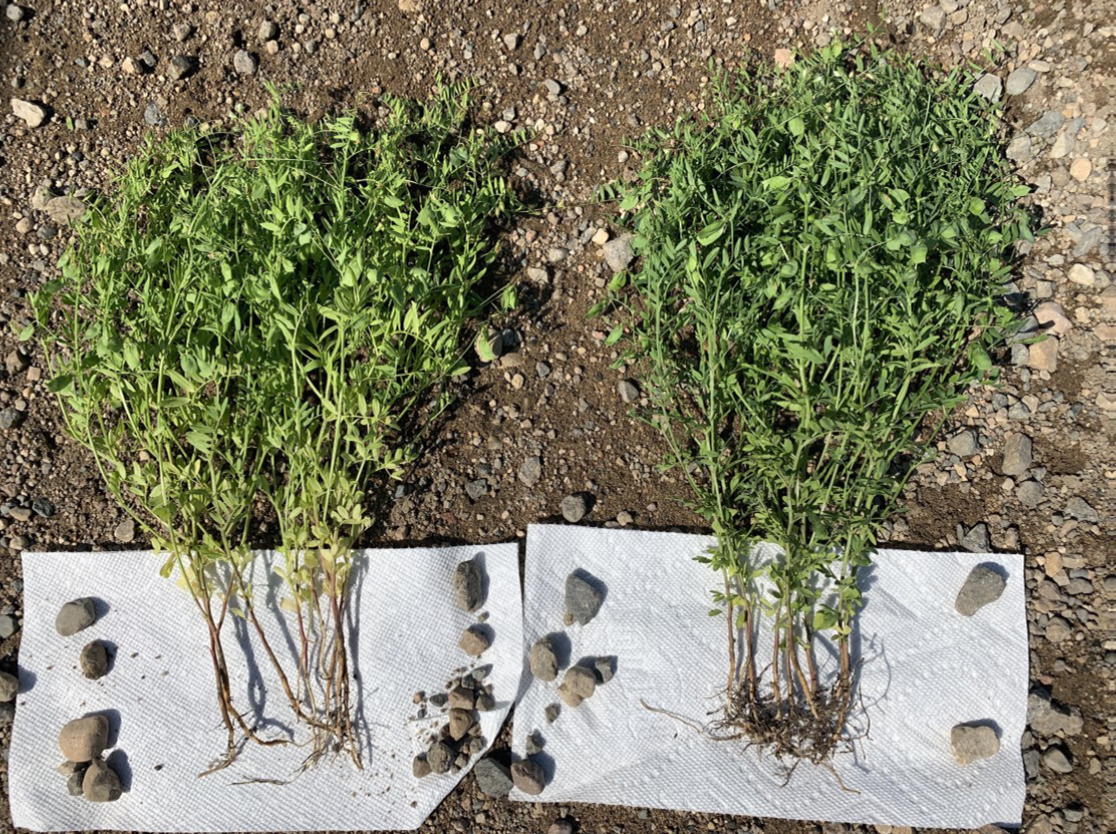
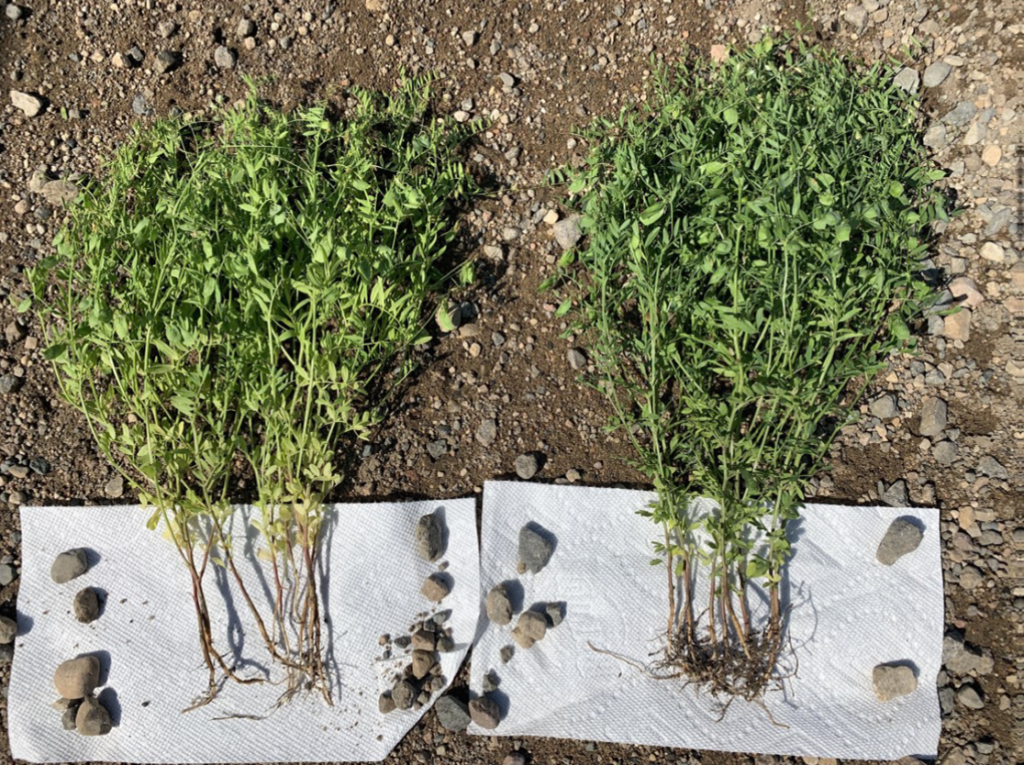
Plants require phosphorus for several processes, including root growth and development, plant maturity, seed production, photosynthesis, and nitrogen fixation. Phosphorus deficiency symptoms in pulse crops include delayed emergence, delayed development of plants and leaves, stunted plants, thinner stems and roots, increased root material in relation to shoots, reduced nodulation, leaf colour change, and dropping of leaves beginning in the oldest leaves.
Phosphorus exists in the soil in many forms, such as in soil organic matter, soil compounds, and on soil mineral surfaces. These soil phosphorus forms vary in their plant availability and undergo many reactions, transitioning into different forms and increasing or decreasing in plant availability. Plants take up phosphorus in the orthophosphate form from the soil solution, and this fraction makes up only a very small percentage of the phosphorus in the soil. Phosphorus is also very immobile in the soil and will not move towards plants, so plant roots must intercept phosphorus to take it up.
Right Source
Choosing a phosphorus source that is in a plant-available form when applied is an important component of 4R management. Commercial phosphorus fertilizer, which includes dry monoammonium phosphate (MAP, 11-52-0), and liquid ammonium polyphosphate (APP, 10-34-0) among other products, is a form that is readily available to plants in the year of application. Specialty phosphorus fertilizers, such as liquid Alpine®, contain a higher ratio of orthophosphate phosphorus to polyphosphate than MAP or APP. Polyphosphate is less available because it must first be broken down to orthophosphate for plant uptake.
Recycled forms of phosphorus, such as animal manure and struvite, are not as readily plant-available initially. However, they present an opportunity to recycle nutrients and improve farm sustainability. Manure contains both organic and inorganic phosphorus, and when the field is a reasonable distance from the manure source, it can be applied at a relatively low cost at a high rate, which will build soil phosphorus for several cropping years. Struvite, which is derived from livestock manure or wastewater sludge, is formulated into a pearl and can be soil-applied. Crystal Green® is the most common form currently available. In research, struvite performed similarly to a commercial phosphorus fertilizer; however, little work on pulse crops in Western Canada has been conducted to date.
Certain products, including fertilizer additives and polymer coatings, and microbial products such as mycorrhizal fungi (AMF) and Penicillium bilaiae (Jumpstart®), have been marketed to improve plant phosphorus uptake. However, these products have not shown consistent yield results in the field. These phosphorus-enhancing products may have a higher probability of yielding benefits under certain conditions, such as low-phosphorus soils or high or low soil pH.
Right Time
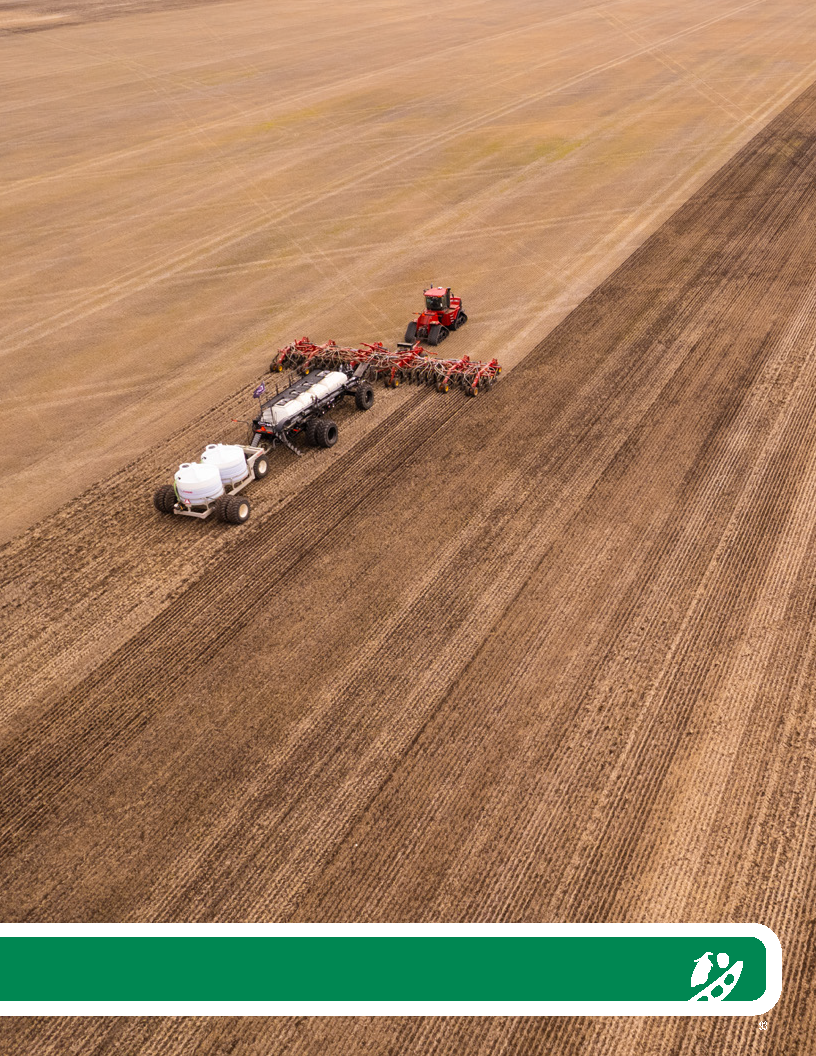
Source: Andrew Reddekopp, Westgreen Agronomy
Pulse crops demand phosphorus at the highest rate in the early season, from shortly after germination to early flower. The application must be timed to meet this early-season demand; therefore, the best timing option for phosphorus application is at or prior to seeding. Immediate access to phosphorus is especially important when pulses are sown early into cold soil. Soil phosphorus is less available at cold temperatures, so the plant will rely more on fertilizer to meet its needs.
Pulse crops are effective scavengers of soil phosphorus, so an alternative timing for phosphorus would be to apply extra in the crop year prior to the pulse or to band it in the fall. Starter phosphorus should still be considered at seeding to ensure it is available to the crop as it begins to develop.
A foliar phosphorus application may be helpful as a rescue treatment when a plant is showing deficiency symptoms or as a top-up. The staging for this application is in the later vegetative stages.
Proper 4R management of phosphorus in pulses involves timing a portion of the application to meet early-season crop demand. Because pulses can scavenge phosphorus, the remainder can also be applied in previous cropping years or banded prior to seeding.
Right Source: Phosphorus in a form available for plant use early in the season
Right Time: At or before seeding to meet early-season demand
Table 1. Pulse crop phosphorus uptake and removal rates per harvest unit and seed-placed safe rates of phosphorus fertilizer
| Crop | Harvest Unit | Phosphorus Uptake (lb P2O5 per harvest unit) | Phosphorus Uptake (lb P2O5 per harvest unit) | Phosphorus Uptake (lb P2O5 per harvest unit) | |||||
| Low | High | Avg | Low | High | Avg | Saskatchewana | Manitobab | ||
| Peas | bushel | 0.76 | 0.92 | 0.84 | 0.62 | 0.76 | 0,69 | 15 | 20 |
| Lentils | bushel | 0.73 | 0.90 | 0.82 | 0.60 | 0.66 | 0.63 | 20 | – |
| Faba Beans | bushel | 0.70 | 0.85 | 0.78 | 0.67 | 0.78 | 0.73 | 40 | 20 |
| Chickpeas | CWT | – | – | 0.83 | – | – | – | 20 | – |
| Soybeans | bushel | 0.8 | 1.0 | 0.90 | 0.80 | 1.00 | 0.90 | 20 (limited data) | 10 |
| Dry Beans | CWT | – | – | 1.39 | – | – | 1.12 | 30 (pinto) | 10 |
CWT = 100 pounds.
Sources: Adapted from Canadian Fertilizer Institute, 2001; Heard et al., 2006; Government of Saskatchewan; Government of Manitoba
a Recommendations from Saskatchewan Ministry of Agriculture, based on 1″ openers with 9″ row spacing (10-15% SBU) and good-to-excellent moisture conditions, using MAP
Right Rate
The optimal phosphorus rate for pulse crops is the rate that meets crop demand without depleting soil phosphorus resources. A key consideration in determining the appropriate phosphorus rate is the amount the crop will require to produce the desired yield (uptake) and the amount removed in the harvested grain (removal rate) (Table 1). If the soil phosphorus pool and fertilizer application supply less than what the plant requires to produce the desired yield, then phosphorus deficiency and yield loss may occur. Pulse crops do not always respond to applied phosphorus; however, crop removal rates should still be applied to prevent mining of soil phosphorus.
The two main approaches farmers may use to manage their soil phosphorus rate in pulse crops are the short-term sufficiency strategy and the long-term sustainability strategy. In the short-term sufficiency strategy, farmers apply only enough phosphorus to elicit a crop yield response based on crop removal rates and soil test results. If the yield targets are surpassed, the crop could be deficient in phosphorus. Under the long-term sustainability strategy, a farmer may either maintain soil phosphorus by applying crop removal rates or build soil phosphorus by applying it at rates above the crop removal rate. For the soil-building approach, the amount of extra phosphorus added depends on fertilizer cost, equipment limitations, and the desired rate of soil building. Growers can add extra phosphorus in one year by applying a larger amount when prices are attractive, or build soil phosphorus slowly by adding 10–30 pounds per acre each year until the desired level is reached. Regular soil testing, preferably yearly but at least every two to three years, is an important component of selecting an appropriate phosphorus rate and monitoring soil levels, regardless of the rate strategy used.
Right Placement
Placement options for phosphorus fertilizer include surface broadcasting and soil banding. Soil banding is important for maximizing availability to the roots in the year of application, as phosphorus is not mobile in the soil. Broadcast phosphorus is not effective in the year of application due to limited mobility into the soil without tillage to incorporate. One fit for broadcasting phosphorus is to apply larger amounts to build up soil phosphorus; however, incorporation should be considered to reduce the risk of surface runoff.
Soil banding options for phosphorus include seed placement, sidebanding, and mid-row banding. Seed placement ensures a supply of phosphorus for the plant before roots have developed. With sidebanding, fertilizer is placed to the side and/or below the seed, typically 0.5–1 inch away, which creates separation between the fertilizer and the seed to prevent seedling burn while still allowing access to the fertilizer as roots develop. Mid-row banded fertilizer is placed between seed rows and is usually 4–6 inches from the seed, making it less available to developing roots early in the season. Banding of phosphorus, and especially mid-row banding, without any seed-placed fertilizer, especially in cold or low phosphorus soils, may result in early season deficiency, as the roots must access enough phosphorus from the soil to grow into the fertilizer band.
Pulse crops are more sensitive to seed-placed fertilizer than other crops, and sensitivity varies between pulse crops (Table 1). Seeding equipment also impacts seed sensitivity. Risk of fertilizer burn increases with wider row spacing and narrower openers because of the increased concentration of fertilizer with the seed. Also, dry conditions increase the risk of seed/seedling damage from fertilizer, whereas high moisture can mitigate some of that risk.
4R management of phosphorus placement involves placing a safe rate with the seed to ensure an adequate early-season supply. Placing the remaining phosphorus in the sideband or mid-row, or banding in the previous year, is important to ensure that crop removal rates are met or exceeded and soil phosphorus is not being mined.
Right Rate: Apply at crop removal rates or higher build rates to ensure sufficient phosphorus for the crop and to maintain soil levels for future crop production. Soil testing is important for monitoring levels
Right Placement: Safe rate with seed for early accessibility, with higher rates banded provide the best access for roots during the season