For pulse and soybean growers, rolling the soil surface may be required to:
- Improve speed and efficiency at harvest
- Allow for the harvest of pods closer to the ground
- Improve the ability to pick up lodged plants
- Protect equipment (ex. combine or forage harvester) from dirt and rocks
- Improve seed quality by reducing the risk of seed tag or soil on the seed
Timing of Rolling Operation
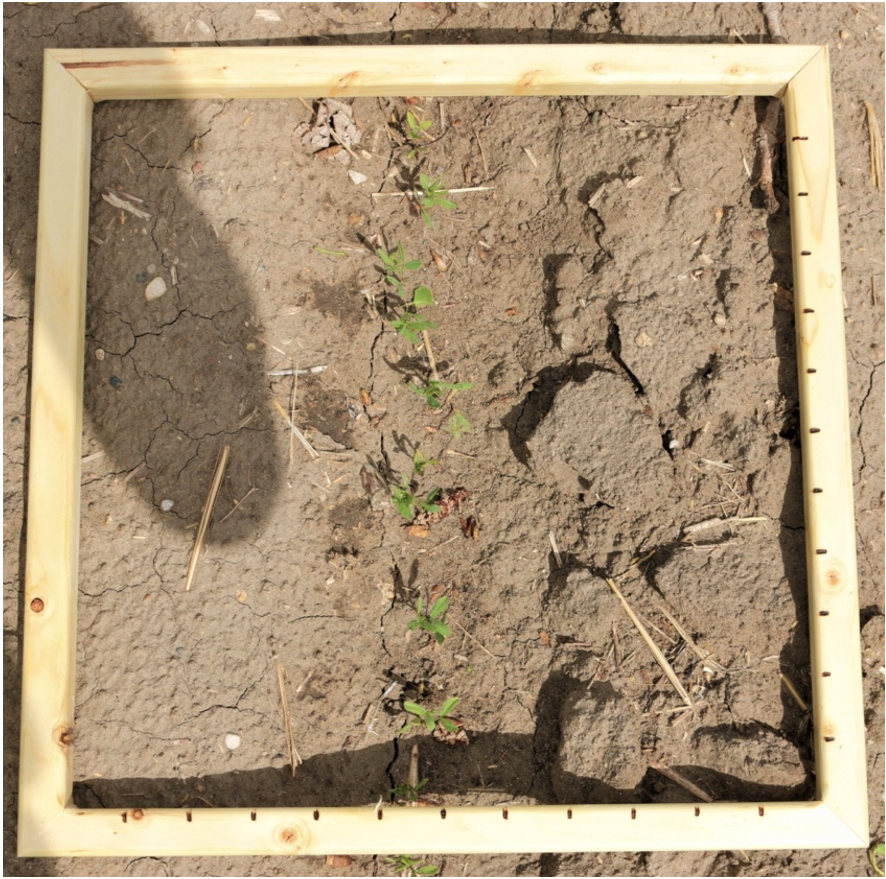
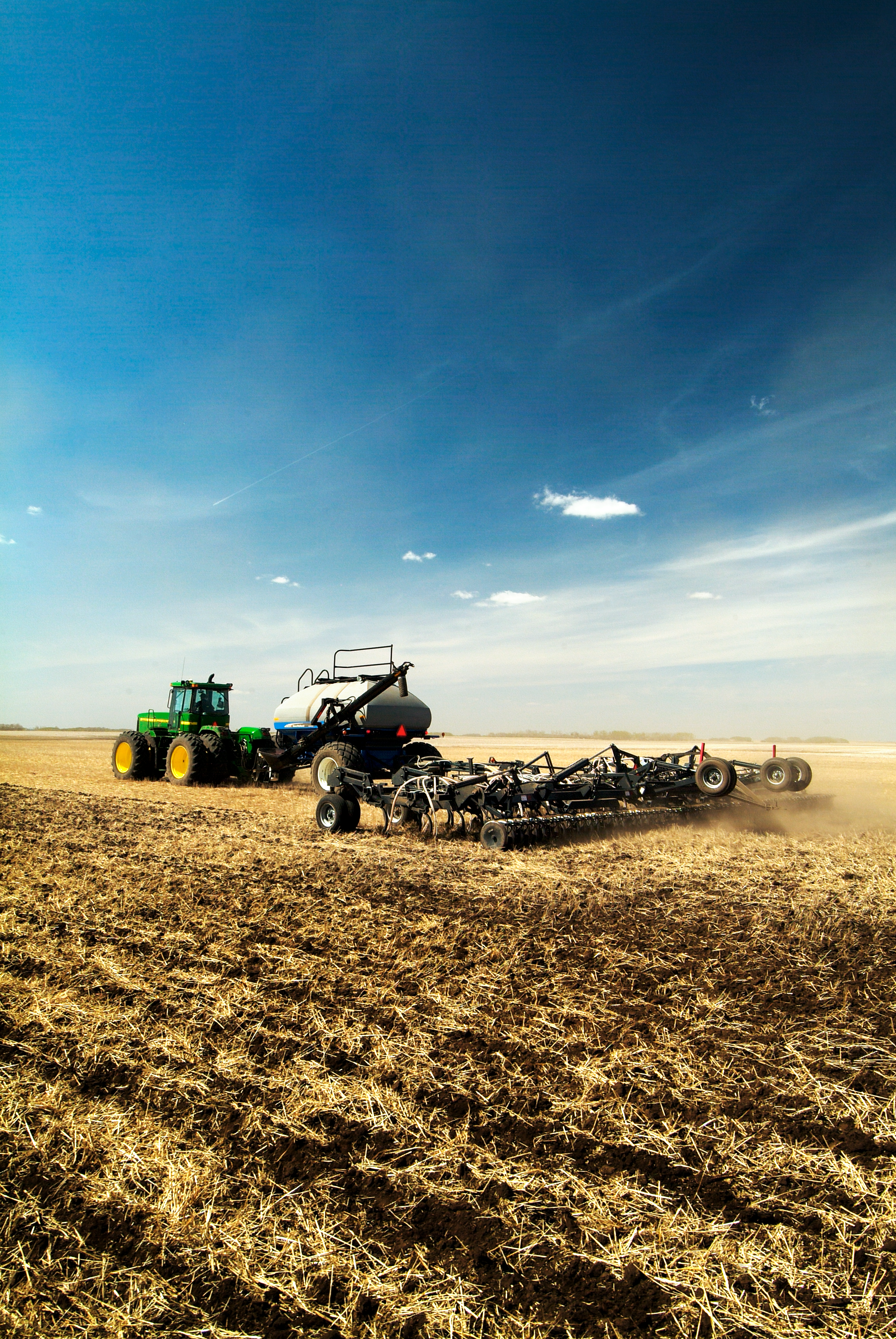
The preferred timing for rolling is pre-emergent to the crop as soon after seeding as possible, when the soil is slightly moist, but the surface is dry (Figure 1). This operation will function to flatten any ridges from seeding and press rocks into the soil.
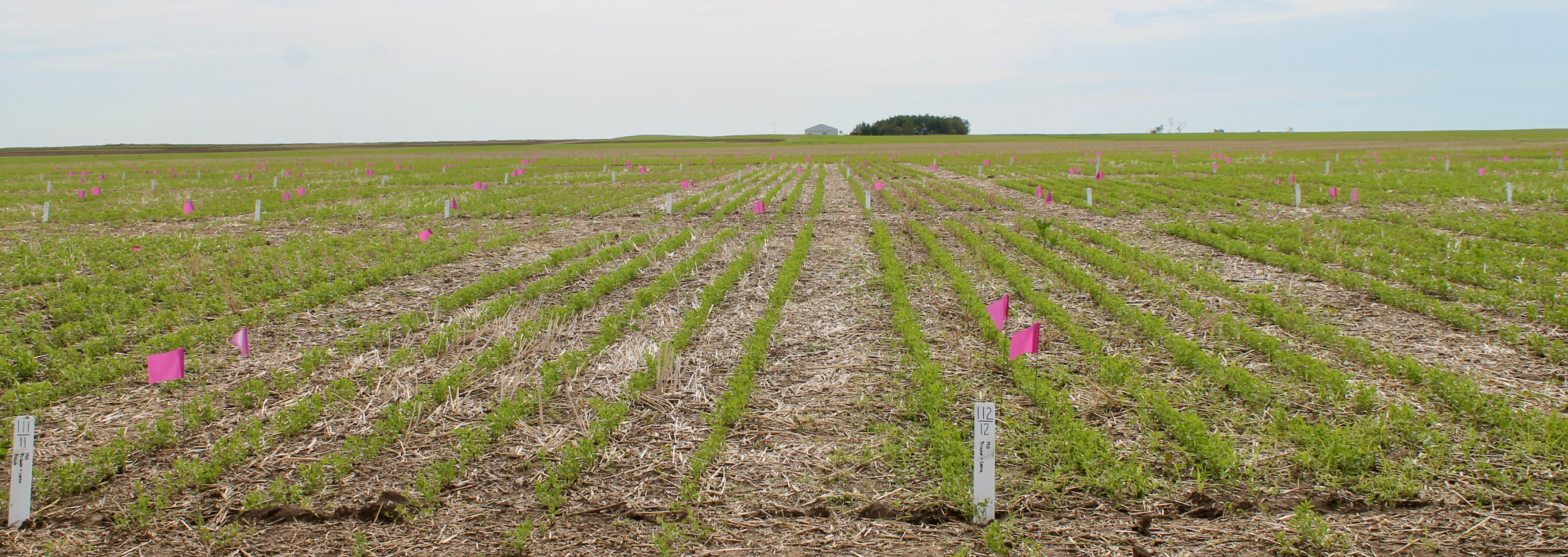
Consideration should be taken of the soil condition prior to rolling. If the soil is too wet (and prone to crusting), or too sandy or dry (and at risk of soil erosion), rolling the field may need to wait until after the crop emerges. Crusting of the field surface will make it difficult for the plants to emerge. Fields that are too wet can lead to soil compaction, which may increase the risk of root rot in peas and lentils. Rolling with an empty roller can reduce soil compaction. Try to reduce double rolling to minimize compaction and avoid rolling when fields are too wet (Figure 2).


It is important to note that rolling may increase soil erosion under sandy, dry conditions. Rolling can break down soil particle size and reduce the amount of stubble left on the soil surface, thereby reducing the protection the soil has from wind and water movement.
Be aware that if seedlings are just below the soil surface but not yet emerged, they may be more susceptible to mechanical or crushing damage from rolling.
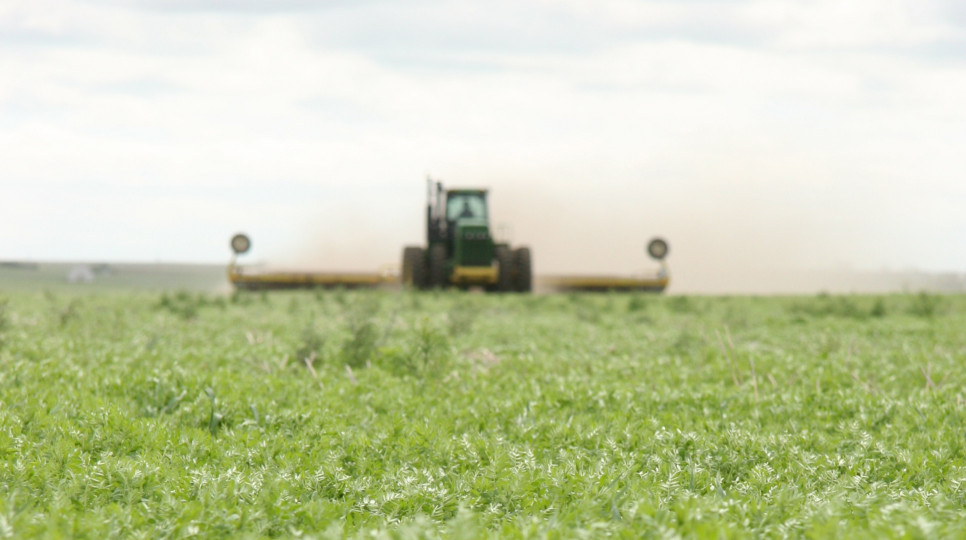
If you are rolling after the crop has emerged, follow the correct crop staging guidelines and roll in the afternoon on a warm day while the crop is limp or slightly wilted to minimize mechanical damage.
Rolling after the crop has emerged may increase the risk of spread of foliar disease, particularly if the foliage is damp. The risk of increased foliar disease in the crop is one reason pre-emergence rolling is preferred.
Rolling a crop after it has emerged will add additional stress to the crop. Wait at least 48 hours, preferably 3 to 4 days, before rolling to allow the crop to recover from stress such as a herbicide application, frost, or drought.
Rolling can result in dust or soil particles on the crop foliage. Rolling just prior to an herbicide application may reduce herbicide uptake if too much dust is present on the foliage. Wait at least three to four days after rolling before applying herbicides.
It is more important to ensure timely herbicide application than to roll. Yield loss in pulse and soybean crops has been shown to be higher if weeds are not removed than if the field is not rolled. Consider applying herbicide prior to rolling to ensure yields are protected.
Soil compaction best management practices for post-emergent rolling state that you should assess the first strip for the amount of mechanical crop damage. If there is a risk that the population may be reduced below the recommended plant population, consideration should be taken to avoid rolling the remainder of the field.
Crop Stage
Chickpeas
Land rollers are less beneficial in chickpea production than in pea and lentil production, since chickpeas do not usually lodge, and the stubble height is greater. Rolling of chickpea fields should only be done before crop emergence. Post-emergent land rolling is not recommended as it may spread disease, such as Ascochyta blight, and can cause mechanical injury because chickpea seedlings develop stiff stems early in their development.
If it is absolutely necessary to roll post-emergence, roll prior to the six-leaf stage on a warm day, when the crop is limp or slightly wilted.
Dry Beans
Roll dry beans prior to emergence. Dry beans have hypocotyl emergence, and the arch is very susceptible to mechanical damage. If it is absolutely necessary to roll dry beans post-emergence, wait until the arch has straightened out, more than five days after emergence.
Faba Beans
Faba beans are not usually rolled because the plants stand well, and the seed pods will usually develop well above ground level. If rolling is desired, it should be done prior to emergence, as the plants are stiffer-stemmed and can be damaged by rolling.
Lentils
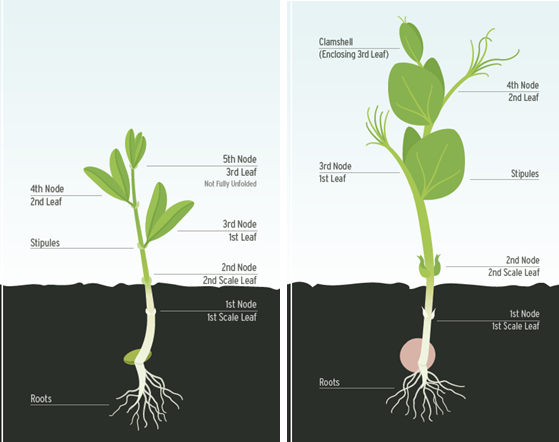
Roll lentils prior to emergence or after emergence up to the fifth true leaf stage or seventh node stage (see Figure 3 for staging guides). Avoid rolling lentils when the soil is very moist, as seedling lentils are susceptible to being uprooted under these conditions.
Peas
Roll peas prior to emergence or up to the third true leaf stage or fifth node stage. (Figure 3)
Soybeans
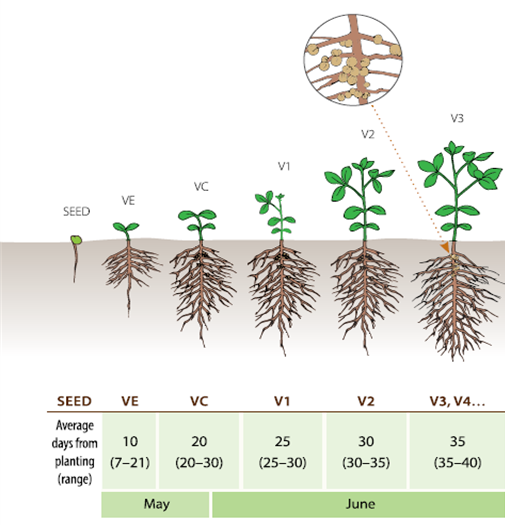
Roll soybeans prior to emergence. Rolling after emergence may occur from the V1 (first trifoliate) to the V3 (third trifoliate) stage (Figure 5). Soybeans exhibit hypocotyl emergence, and the arch is highly susceptible to mechanical damage (Figure 6). Rolling prior to the V1 stage may damage plants. When rolling post-emergence, it is recommended that the temperature be high and that the plants appear limp and wilted. Ideally, if rolling post-emergence, do so as close to the V1 stage as possible.


prior to rolling.