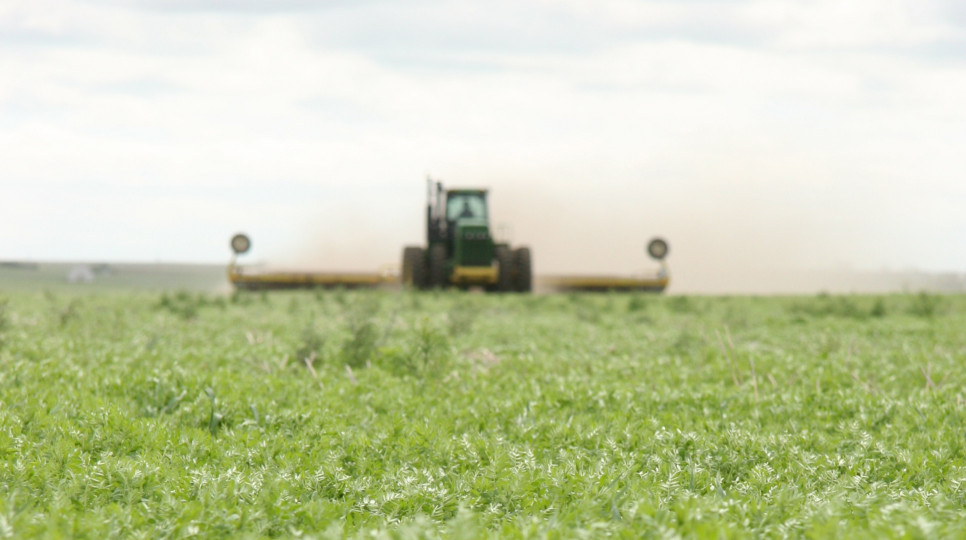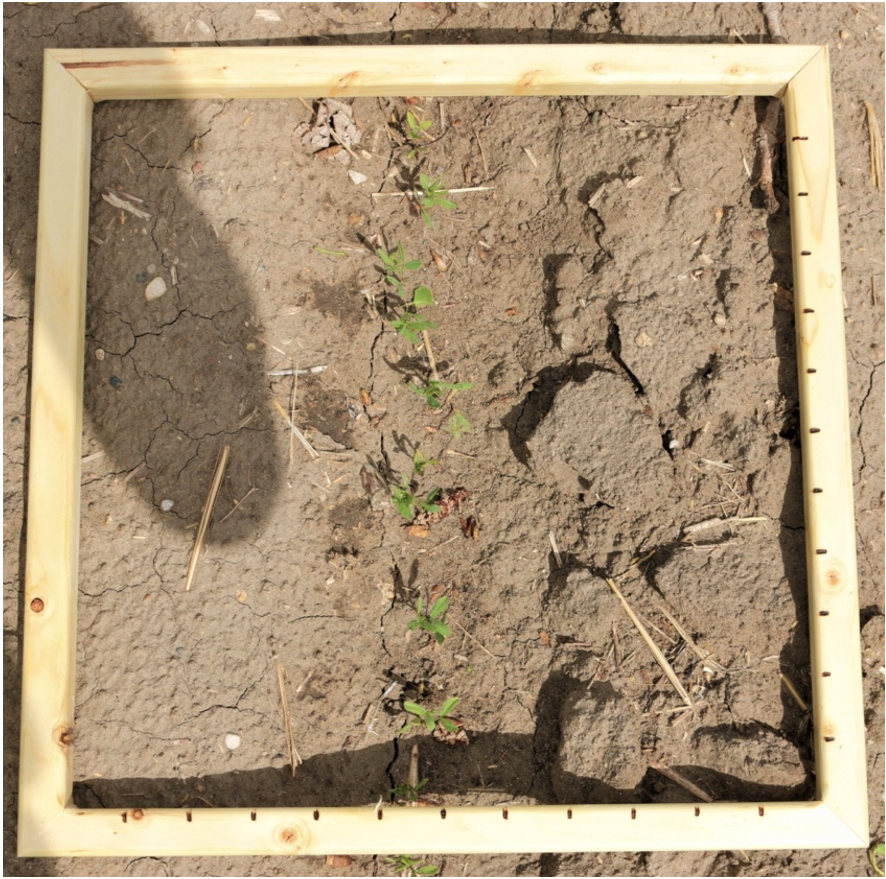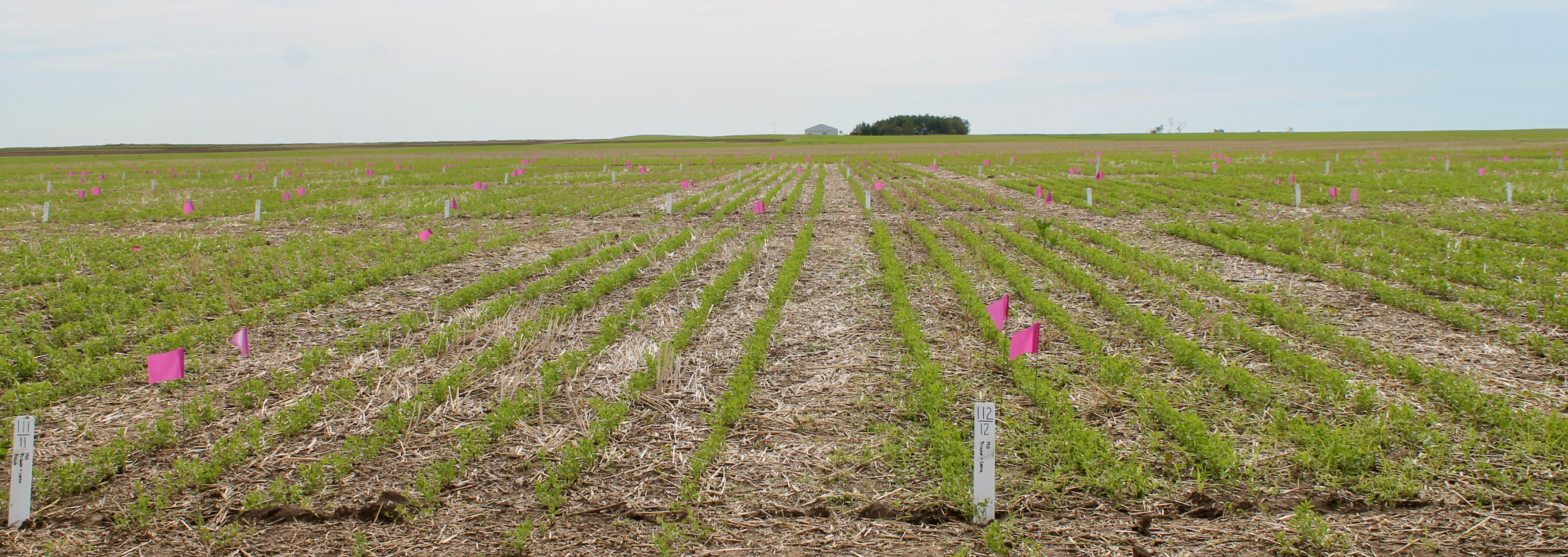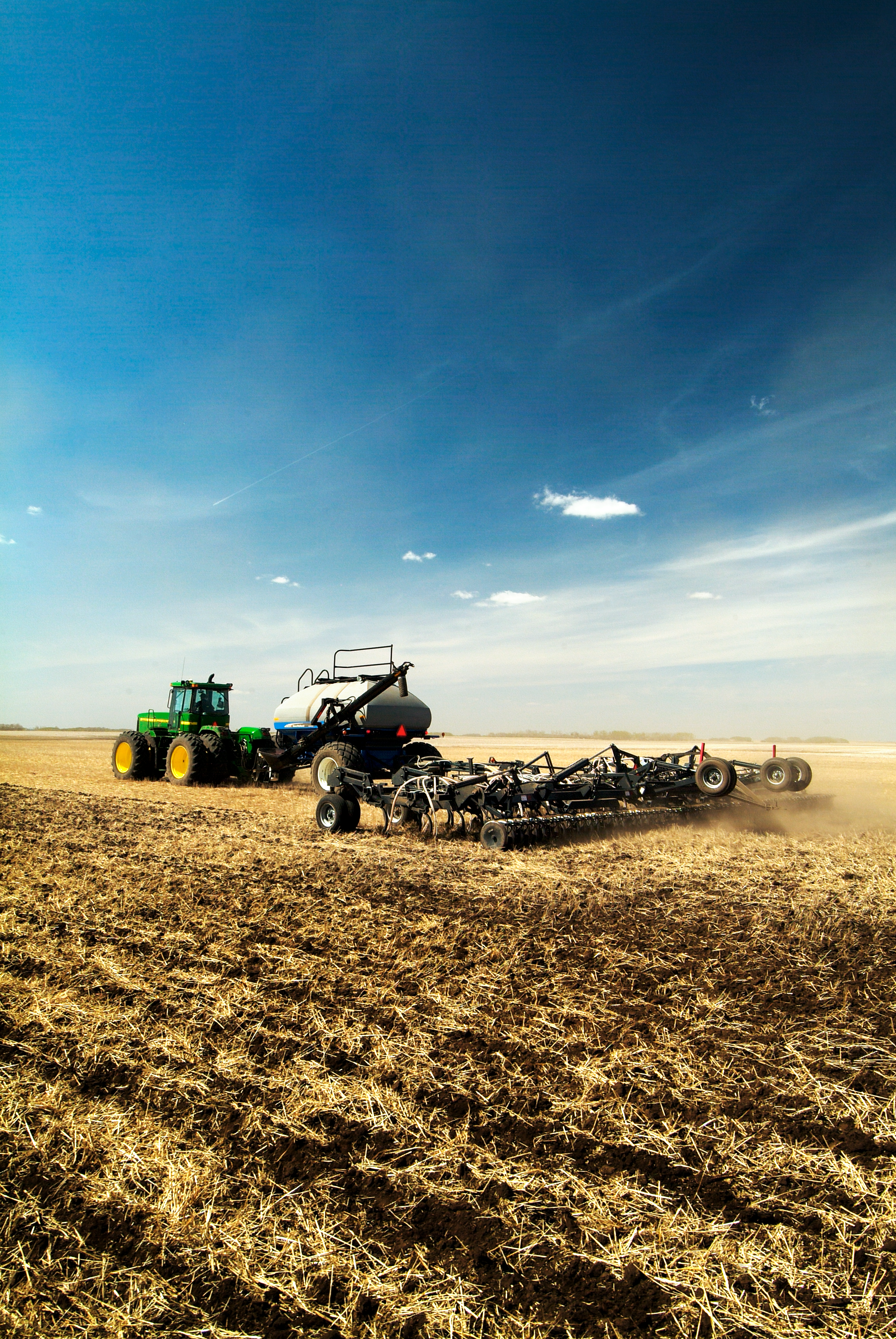
Pulses are not very competitive early in the season, and optimum plant populations have been determined for each crop. Targeting seeding rates based on the desired final plant population is the first step to successfully seeding pulses, and calibrating your seeder to the actual seed size is important. Consider factors that could reduce emergence and adjust seeding rates accordingly: soil temperature, seed quality, environmental conditions, moisture availability, and soil type.
Handle delicate seeds (i.e. pulses) with care as seed coats are susceptible to damage—run augers full and slow, and watch fan speeds on airseeders. Use a seed treatment if the seed has a high disease level, the seeds show signs of mechanical damage, or the forecast calls for wet, cool environmental conditions that may delay emergence. Kabuli chickpeas must have seed treatment, or reduced emergence will occur. Insecticidal seed treatments are important for peas in areas with high pea leaf weevil risk.
Seeding dates should target the recommended soil temperatures for optimal germination, as outlined in Table 1. Seeding depth is also important as larger pulses can typically be seeded deeper than smaller seed pulses. However, if soil moisture at seeding time is very good, there is no benefit to seeding deep.
Pulses are generally poor competitors with weeds, making good weed control prior to planting critical.
Table 1. Temperature Requirements for Seeding by Crop
| Crop | Recommended Minimum Average Soil Temperature at Seeding Depth (°C) | Estimated Seeding Dates for Saskatchewan | Target Plant Population | Recommended Seeding Depth in cm (inches) | Rolling Timing (if required) |
|---|---|---|---|---|---|
| Pea | 5 | Mid-April to Mid-May | 8 per ft2 | 3-8 cm (1.2- 3.2 inches) | Prior to emergence or up to 5th node stage |
| Lentil | 5 | Mid-April to Mid-May | 12-17per ft2 | 2.5-7.5 cm (1-3 inches) | Prior to emergence or up to 7th node stage |
| Chickpea | 7 (Desi); 10 (Kabuli) | Prior to May 25 | 3-4 per ft2 | 3.5-6 cm (1.5- 2.5 inches) | Prior to emergence |
| Faba Bean | 3-5 | Mid-April to Mid-May | 4 per ft2 | 5.1-7.6 cm (2- 3 inches) | Prior to emergence |
| Dry Bean | 12 | May 25 to June 5 | 87,000 (pinto- narrow row, dryland); 140,000 (black- narrow row, dryland); 100-120,000 per acre (wide row, irrigated) | 5-6 cm (2 – 2.5 inches) | Prior to emergence |
| Soybean | 10 | May 10 to May 25 | 150-200,000 per acre | 1.9-3.8 cm (0.75-1.5 inches) | Prior to emergence |
Source: Saskatchewan Ministry of Agriculture
Fertility is important with pulses. Phosphorus promotes the development of extensive root systems and vigorous seedlings. Encouraging vigorous root growth is an important step in promoting good nodule development and nitrogen fixation for all pulses. It also plays an important role in promoting earlier and more uniform maturity in all crops.
However, sensitivity to seed-placed fertilizer varies by crop, with the tolerances listed in Table 2. Crop sensitivity is based on monoammonium phosphate (11-52-0), which has a relatively low salt index, and the recommendations listed should not be used for other fertilizers. These rates are based on knife openers with a 1-inch spread, 9-inch row spacing, and good-to-excellent soil moisture. Wider row spacing and/or openers with narrower seed spread would reduce tolerance, and safe rates should be adjusted lower.
Table 2. Safe Rates of Seed-Placed Fertilizer
| Crop | Maximum Safe Rates of Seed-Placed (P2O5) Fertilizer (lb/ac P2O5) |
|---|---|
| Peas | 15 |
| Chickpeas | 20 |
| Lentils | 20 |
| Soybeans | 20 |
| Dry Beans | 30 |
| Faba Beans | 40 |
(11-51-0 based on knife openers with 1 inch spread, 9 inch row spacing and good to excellent soil moisture)
Source: Dr. Jeff Schoenau, Department of Plant Sciences, College of Agriculture and Bioresources, University of Saskatchewan, Guidelines for Safe Rates of Fertilizer, Saskatchewan Ministry of Agriculture
Crop-Specific Seeding Tips
Peas
- Peas are sensitive to mechanical damage, so handling them gently is important.
- Peas can tolerate deep seeding (up to 4 inches), but if moisture is near the soil surface, shallower seeding ensures quicker emergence
- Pea seedlings have good frost tolerance and have survived temperatures of -4°C to -6°C. Even if frost is severe enough to kill the main shoot, the pea plant can re-grow from one of the scale nodes at or below the soil surface
- Peas can be rolled immediately after seeding and up to the third true leaf stage or fifth node stage
Lentils
- Seed size on lentils can vary dramatically. Knowing the actual seed size of the lot being seeded is important to ensure targeted plant stands are achieved.
- Lentil seedlings do have good frost tolerance and have survived temperatures of -4 to -6°C. Even if frost is severe enough to kill the main shoot, the lentil plant can regrow from one of the scale nodes at or below the soil surface.
- Roll lentils prior to emergence or after emergence up to the fifth true leaf stage or seventh node stage. Avoid rolling lentils when the soil is very moist, as seedling lentils are susceptible to being uprooted under these conditions.
Chickpeas
- Kabuli chickpeas are low in tannins compared to Desi chickpeas, which makes them more susceptible to seed- and soil-borne diseases. Emergence can be dramatically reduced if seed treatments are not used with Kabuli chickpeas.
- Desi chickpeas can be seeded earlier than Kabulis because of differences in optimal germination temperatures.
- Chickpea rarely requires rolling, but if rolling is done, it should be completed prior to emergence to reduce the risk of disease spread and mechanical damage from stiff stems.
Soybeans
- Calculate soybean seeding rates based on the number of seeds per acre. Soybeans are sold by seed count.
- To achieve the desired plant stand, be aware that increased seed-coat damage can occur in soybeans when seeded with drills rather than planters. Higher seeding rates with drills can help reach target plant populations.
- Soybeans require warm soils (10°C) for optimum germination and emergence.
- Trash management can encourage some soil blackening and can be advantageous for accelerating soil warming.
- Delay seeding until at least May 10 or later if conditions remain cool. Soybeans are sensitive to cold water during germination. Seed when there is a warming trend in the forecast and a low risk of cold rainwater until after soybeans have germinated. Soybeans are sensitive to late-spring frosts once the growing point is above ground.
- Seeding delayed into June not only risks maturity dates but can also result in lower plant height, pod count, and reduced yields.
- Soybeans are prone to iron chlorosis, particularly when grown on saturated soils, soils high in calcium carbonates, or on soils with salinity problems. Choose your fields and soybean varieties accordingly.
- Roll soybeans prior to emergence. Rolling after emergence may occur from the V1 to V3 stage when conditions are hot, and plants appear limp and wilted.
Faba Beans
- Tannin and zero-tannin faba bean types should be separated by up to 500 metres to prevent cross-pollination.
- Seed as early as you can get in the field, as faba beans have good tolerance to spring frosts and are later maturing. This can be as early as April 15 in the Saskatoon region if conditions are favourable for fieldwork.
- Faba beans have growing points below the soil surface, which allows them to regrow if an above-ground frost occurs.
- Research in Saskatchewan and Alberta has shown that early seeding (as soon as field access was possible) gave a 32% yield advantage over those seeded two weeks later.
- Seed into moisture, as the large seeds require adequate moisture to germinate.
- Use a seed treatment with low-tannin types of faba beans.
- If rolling is needed, roll faba beans before emergence, as plants have stiffer stems and can be damaged after they emerge.
- Some varieties can have very large seeds that require very high seeding rates. To reach high seeding rates, consider metering from multiple tanks, changing augers/rollers, or consider seeding in two passes.
- Seeding large-seeded faba beans can be difficult due to plugging. A study conducted by the Prairie Agricultural Machinery Institute has identified the following tips and tricks for seeding large-seeded faba beans. To minimize plugging:
- Slow down.
- Increase clearance from the metering or rollers or augers to the metering housings.
- Ensure there are no tight radii or sags in the distribution hoses.
- Eliminate flow obstructions, such as screws, in the distribution hoses.
- Ensure hose clamps are not overtightened, which can restrict hoses.
- Use openers with large-diameter seed openings and minimal change in seed-flow direction or seed-tube shape.
- Avoid sharp turns with the drill.
Dry Beans
- Increase seeding rates by 25% if using an airseeder to compensate for possible mechanical damage to the seed.
- Baldhead is where mechanical damage occurs, and only the cotyledons and seedling stem emerge, with no leaf development occurring. To reduce baldhead consider the following:
- Reduce the airseeder fan and ground speed as much as possible.
- Utilize deflector pads in the seed delivery manifolds where available.
- Use belt conveyors.
- Use seed with 14% or higher moisture.
- Roll the field immediately after seeding or up to three days after, to push any stones into the soil and reduce the risk of earth tag. Do not roll after emergence.