The Partnership
- In July 2026, Saskatchewan Pulse Growers (SPG) launched a new breeding partnership with the University of Saskatchewan’s (USask) Crop Development Centre (CDC).
- CDC was established in 1971 with a mandate to improve economic returns for farmers and the agriculture industry in western Canada by improving existing crops, creating new uses for traditional crops, and the development of new crops. The CDC is a field crop research organization within the Department of Plant Sciences at USask. Focusing on plant breeding and pathology, CDC scientists deploy the latest scientific advances to improve the agronomic and end-use performances of many crops including pulses. Since inception the CDC has released over 500 commercial varieties of over 40 different crop types.
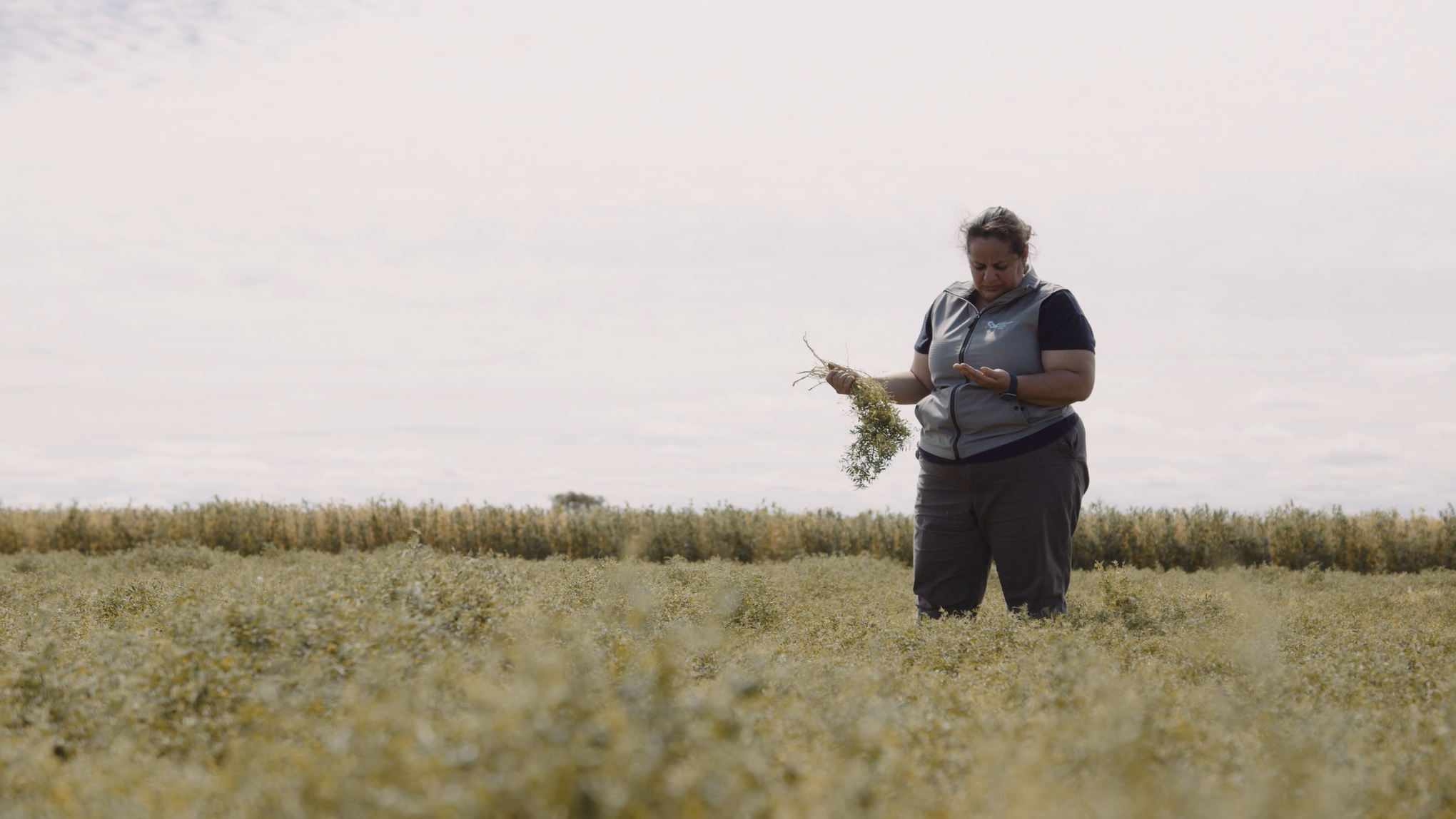
- This new partnership builds on a history of SPG and CDC working together, dating back over 30 years. The lentil and faba bean programs are currently led by CDC plant breeder, Dr. Ana Vargas.
- Dr. Vargas was appointed as the CDC lentil and faba bean breeder in December, 2023. She obtained a PhD in Plant Breeding and Genetics from USask in 2021, studying the genetics of nitrogen fixation and nodulation among lentil species.
The Focus
- Lentil and faba bean breeding.
- Based in Saskatoon, SK.
- Leveraging research and testing sites across Saskatchewan and Western Canada.
- Breeding priorities are focused on growers’ greatest priorities, identified by SPG and Alberta Pulse Growers (lentil) and the CDC, with speed and a commercial focus, including:
- Lentil:
- Improved yield
- Improved disease resistance
- Improved Aphanomyces and Fusarium root rot resistance
- Improved resistance to foliar diseases including anthracnose and Ascochyta blight
- Herbicide tolerance, focused on Groups 5 and 14
- Faba bean:
- Improved yield
- Earlier maturity
- Seed size and shape
- Improved architecture and resistance to lodging
- Improved disease resistance
A full-scale field program with lentils and faba beans is already underway.
The New Commercialization Process
- New varieties will be commercialized through seed companies.
- New varieties will be royalty-bearing.
- Farmers will purchase certified seed through seed companies
- The agreement reflects a commitment to commercialize varieties with value capture on all acres, including on farm-saved seed.
- Royalties flow back to breeders which encourages further breeding advancements in these crops, creating a merit-based system where royalties flow to those breeders who develop varieties farmers choose to grow.
- SPG and other funders, where applicable, will also receive a portion of royalties to reinvest in strategic program areas.
Timing & Expectations
- New varieties will continue to be released on a yearly basis from this program thanks to the CDC’s longstanding pipeline of germplasm and varieties under various stages of development.
- Breeding is a long-term process and it takes several years to move from the beginning of the breeding process to having new varieties ready for commercialization.