Research Objective
To test herbicide active ingredients used in lupin elsewhere for weed control in the suggested growth area of lupin in the Prairies; to test herbicide active ingredients used in lupin elsewhere on lupin for tolerance in the Prairies; to identify potential products that should be considered for future minor use registration on lupin.
Related Resources
Research Summary: Investigating Herbicide Options to Support the Adoption of Lupin in the Canadian Prairies
Introduction
As the world’s largest exporter of pulse crops, Canada has a vested financial interest in maintaining pulse crop health and sustainability, and organizations like Saskatchewan Pulse Growers (SPG) work to ensure sustainable pulses for profitable and renewable production. Most of all, pulse crop production in Canada is concentrated in the Prairies, where pulse crop inclusion provides diversification of production systems, break crops for pest management, soil nitrogen fixation, and improved soil and water quality parameters. Due to these benefits, the inclusion of pulse crops has become standard in the Prairie centers. However, with increased growth comes greater awareness of the limitations of pulse cropping and of production challenges.
One of the major challenges is related to Aphanomyces root rot (ARR), the bane of many pulse producers. Aphanomyces root rot is a highly destructive soilborne disease caused by the oomycete Aphanomyces euteiches, which primarily targets pulse and legume crops like field peas, chickpeas, lentils, and alfalfa (Figure 1). It is notoriously difficult to manage because its resilient resting spores can survive in the soil for a decade or more. While root rot can be caused by several species, including Fusarium, Rhizoctonia, and Pythium, ARR is specifically caused by Aphanomyces euteiches dreschler. It is this species that has recently been identified in the Prairies and has been linked to millions of dollars in yield losses during severe infection years.
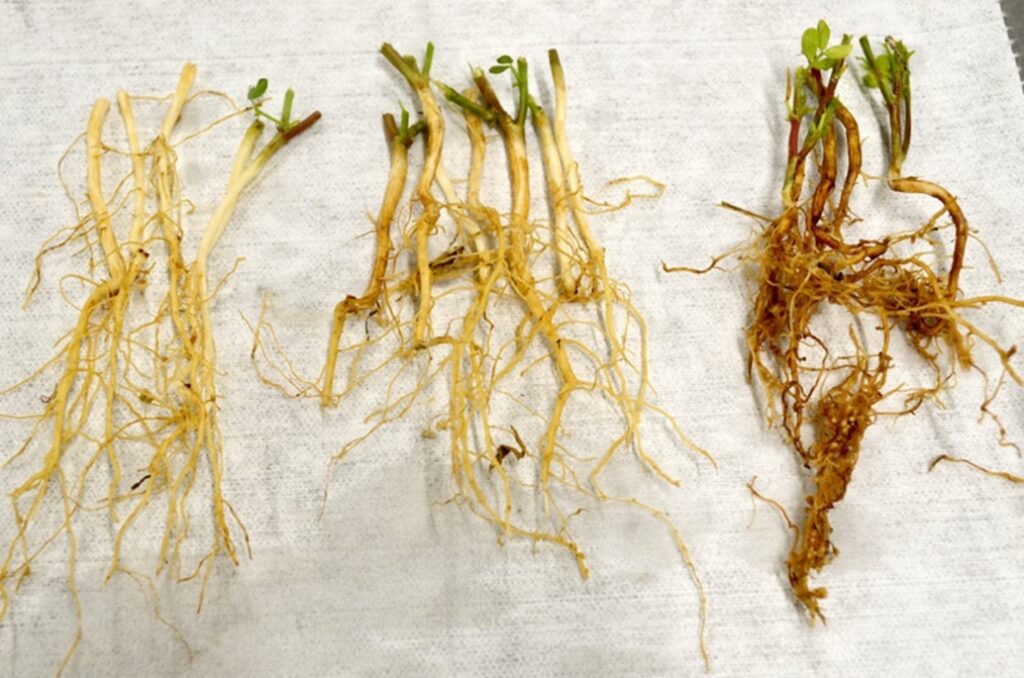
Figure 1. Progressing severity of Aphanomyces root rot in lentils.
Source: Syama Chatterton, Agriculture and Agri-Food Canada (AAFC)
The limited number of management options for ARR available to producers has led to a shift away from field pea and lentil in crop rotations on the Prairies. As a result, an emerging area of interest has been identifying alternative pulse crops that could provide similar system and soil benefits while also demonstrating ARR resistance.
Narrow-leaved blue lupin (Lupinus angustifolius) is a pulse crop of interest in Western Canada due to its ARR-resistant characteristics while also still providing the residual nitrogen and soil benefits associated with other pulse crops. However, some of the main identified challenges of using this lupin species include its poor competitive ability, compounded by a lack of available herbicides that are registered for use and crop-tested on lupin.
Objectives
Research conducted by Dr. Breanne Tildmann, Research Scientist with AAFC Lacombe, with support from AAFC Saskatoon and Lakeland College, aimed to address the need to develop narrow-leaved blue lupin as a viable pulse crop for Western Canada in response to increasing losses of traditional pulses (field pea, lentil) due to ARR. The main objective of this project was to test herbicide active ingredients used in lupin elsewhere, or used in other pulse crops, for weed control within the suggested growth area of lupin in the Prairies. Specifically, the aim was to identify which herbicide strategies provide effective weed control while maintaining lupin crop safety and yield across diverse Prairie environments.
Study Design
The study was designed as a multi-location, multi-year field trial to evaluate herbicide tolerance and weed management strategies in narrow-leaved blue lupin under Prairie growing conditions. Field experiments were conducted over three growing seasons (2022–2024) at Lacombe and Edmonton, Alta., and Saskatoon, Sask. These areas were chosen to represent contrasting soil zones, climatic conditions, and natural variation in weed communities. The experimental design was a randomized complete block design with four replicates per site-year, resulting in nine total site-years. Treatments included a broad suite of herbicide strategies reflecting potential pre-seeding (PRE), soil-incorporated, and post-emergence (POST) options relevant to pulse crop production systems, along with untreated and weed-free controls (Table 1). This structure allowed simultaneous evaluation of crop safety, weed control efficacy, and yield impacts across environments, while also capturing treatment-by-environment interactions critical for regional agronomic recommendations.
Table 1. Herbicides and controls evaluated in narrow-leaved blue lupin field trials (2022–2024)
Herbicide/Treatment |
Active ingredient(s) |
Application timing |
|---|---|---|
Pyroxasulfone |
pyroxasulfone |
PRE |
Sulfentrazone |
sulfentrazone |
PRE |
Flumioxazin |
flumioxazin |
PRE |
Flumioxazin + pyroxasulfone |
flumioxazin + pyroxasulfone |
PRE |
Pyroxasulfone + sulfentrazone |
pyroxasulfone + sulfentrazone |
PRE |
Dimethenamid-P |
dimethenamid-P |
PRE |
S-metolachlor |
S-metolachlor |
PRE |
Clomazone |
clomazone |
PRE |
Saflufenacil |
saflufenacil |
PRE |
Florasulam |
florasulam |
PRE |
Topramezone |
topramezone |
PRE |
Topramezone |
topramezone |
POST |
Fomesafen |
fomesafen |
PRE |
Fomesafen |
fomesafen |
POST |
Pyraflufen + bromoxynil |
pyraflufen-ethyl + bromoxynil |
PRE |
Metribuzin |
metribuzin |
POST |
Diflufenican |
diflufenican |
POST |
Clethodim |
clethodim |
POST |
Untreated control |
none |
control |
Weed-free control |
none (manual removal) |
control |
To ensure biologically realistic and standardized weed pressure, key weed species were either naturally occurring or uniformly established through targeted seeding at each site, including volunteer canola, wild oat, cleavers, lamb’s quarters, kochia, redroot pigweed, and wild mustard, depending on location. Lupin (‘Boregine‘) was seeded at a consistent density (125 seeds/m2) following standard agronomic practices, including seed treatment, inoculation, and site-specific fertility management. Herbicide applications were applied using site-appropriate field equipment, with pre-seeding burn-down applications used to establish uniform starting conditions. Comprehensive data collection included crop emergence, visual injury ratings, weed control assessments, crop and weed biomass, yield, seed weight, and dockage. Ratings for visual injury and weed control were measured for the pre-seeding and post-treatment applied herbicides at 1, 2, 4 and 8 weeks after emergence and treatment, respectively.
Results
Crop Emergence & Establishment
Crop tolerance is one of the key factors determining an herbicide’s suitability for use in a crop, and crop emergence density is an important indicator of crop tolerance to pre-seeding herbicide applications. Across the nine site-years, emergence density differed among herbicide treatments (p = 0.0196) but did not differ among locations (p = 0.1156). Despite the significant treatment effect, few treatments differed from the untreated or weed-free controls. Crop emergence density was greater in the pre-seeding fomesafen treatment than in the weed-free check (Figure 2), whereas no treatment resulted in lower emergence than either control. These results suggest that most herbicide treatments evaluated did not adversely affect stand establishment under Prairie growing conditions. However, emergence counts did not capture all crop injury responses. Although severe visual injury events were observed at a single site-year (Saskatoon 2022, saflufenacil treatment), this was not reflected in emergence counts, suggesting that early lupin stand establishment was generally resilient to most pre-seeding herbicide applications under the conditions tested.

Figure 2: Crop emergence density of narrow-leaf blue lupin (Lupinus angustifolius) across locations.
Source: Breanne Tidemann, Research and Development Centre, Agriculture and Agri-Food Canada, Lacombe, AB, Canada.
Crop Biomass & Injury Responses
Crop biomass differed among herbicide treatments, and the response varied across locations, as indicated by a significant treatment-by-location interaction (p < 0.0001). In Edmonton, no herbicide treatment increased biomass relative to the untreated control. In contrast, pyroxasulfone, flumioxazin + pyroxasulfone, and the weed-free treatment produced greater biomass than the untreated control at Lacombe. At Saskatoon, pyroxasulfone + sulfentrazone, clethodim, and the weed-free treatment also produced greater biomass than the untreated control (Figure 3).
Several treatments demonstrated evidence of crop injury. Compared with the weed-free control, biomass was consistently reduced following topramezone and post-emergence fomesafen applications across all locations. These reductions corresponded with visual injury ratings exceeding acceptable thresholds during the season. Florasulam and saflufenacil occasionally produced unacceptable visual injury in individual site-years, although these effects were not consistently reflected in biomass at maturity.
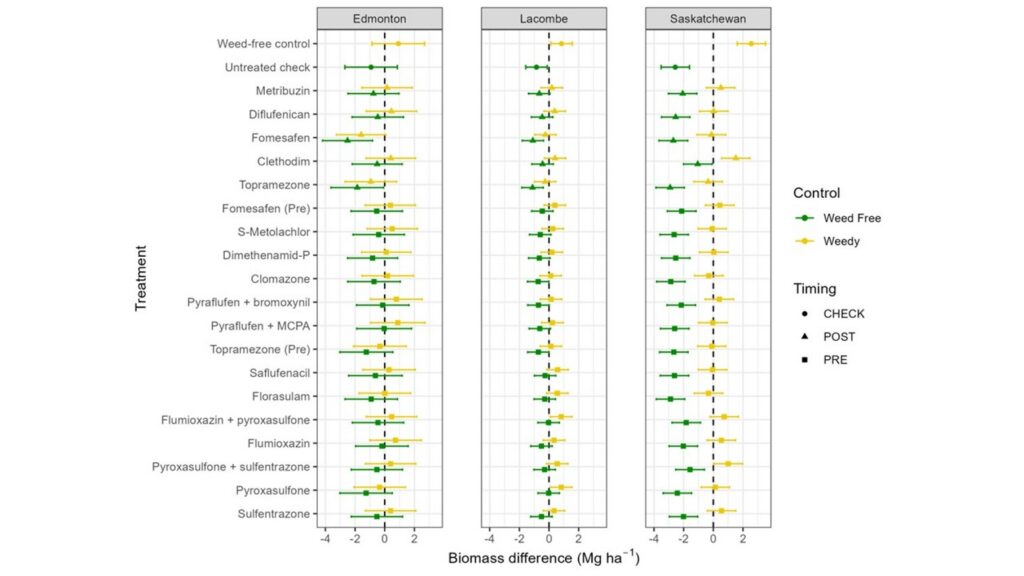
Figure 3. Herbicide treatment effect on narrow-leaved blue lupin (Lupin angustifolius) biomass difference in comparisons to untreated (weedy) (yellow) and weed-free check (green), at each location.
Source: Breanne Tidemann, Research and Development Centre, Agriculture and Agri-Food Canada, Lacombe, AB, Canada.
Yield Performance
Grain yield differed significantly among herbicide treatments (p < 0.0001), while location effects were not significant (p = 0.2217). The greatest yield improvements relative to the untreated control occurred with sulfentrazone, pyroxasulfone + sulfentrazone, flumioxazin + pyroxasulfone, and the weed-free treatment. These treatments provide the strongest evidence that effective weed management can improve lupin productivity (Figure 4).
However, when compared with the weed-free control, most treatments yielded less. This is suggestive of a yield penalty associated with incomplete weed control and, in some cases, herbicide injury. Notably, sulfentrazone, pyroxasulfone + sulfentrazone, flumioxazin, flumioxazin + pyroxasulfone, clomazone, and clethodim produced yields comparable to the weed-free treatment, suggesting good crop tolerance and agronomic potential. Overall, yield responses closely mirrored biomass trends and visual injury ratings, indicating that yield losses were driven by a combination of weed competition and herbicide-induced crop stress rather than a single dominant factor.
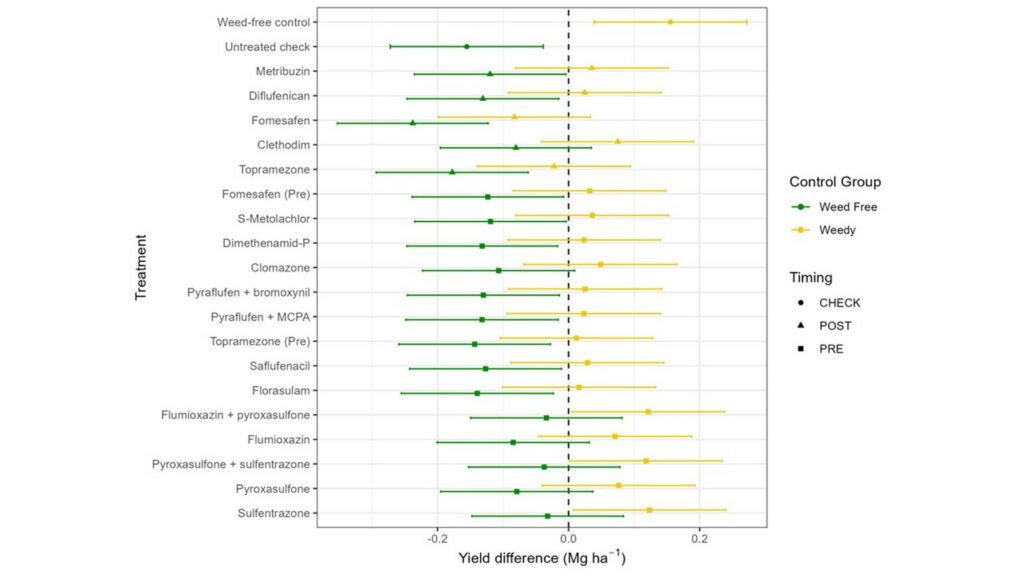
Figure 4. Herbicide treatment effect on narrow-leaved blue lupin (Lupin angustifolius) yield difference in comparisons to the untreated (weedy) check (yellow) and the weed-free check (green), across site-years.
Source: Breanne Tidemann, Research and Development Centre, Agriculture and Agri-Food Canada, Lacombe, AB, Canada.
Lupin Seed Weight (1000 kernel weight)
Lupin thousand-seed weight differed among herbicide treatments (p < 0.0001) and locations (p = 0.0428). Compared with the untreated control, only the post-emergence topramezone treatment and the weed-free treatment increased seed weight (Figure 5a). Relative to the weed-free control, seed weight was reduced by saflufenacil, pyraflufen + bromoxynil, clomazone, dimethenamid-P, S-metolachlor, and the untreated control. These findings suggest that both weed competition and herbicide stress can influence seed development, even when effects on total yield are less apparent, and imply that seed weight is a sensitive integrative indicator of both crop stress and competitive pressure in lupin systems. However, while seed weight was not equal across locations, a comparison of means using a Tukey adjustment indicated no locations which differed from one another (Figure 5b)
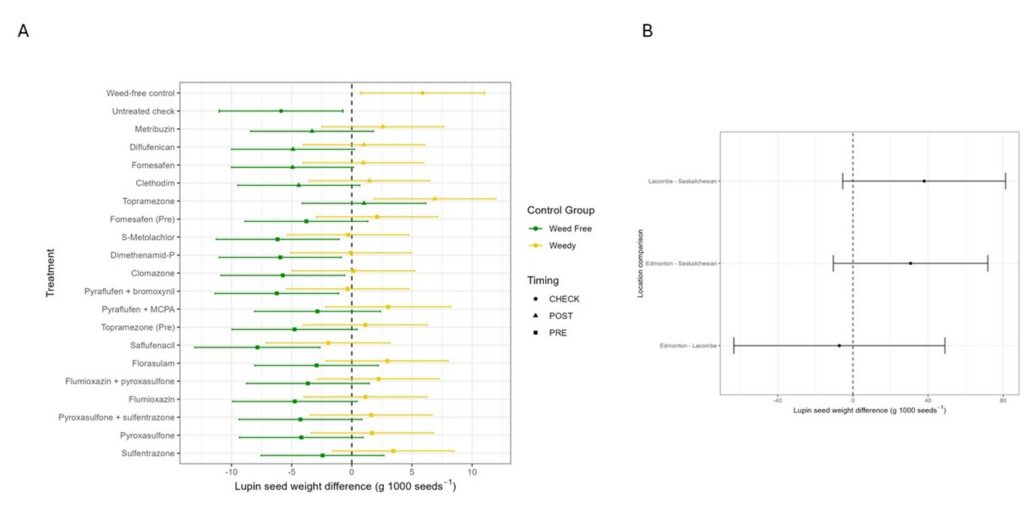
Figure 5. Herbicide treatment effect on narrow-leaved blue lupin (Lupin angustifolius) 1000 seed weight differences, a) by treatment averaged across locations, and b) showing location comparisons averaged across treatments.
Source: Breanne Tidemann, Research and Development Centre, Agriculture and Agri-Food Canada, Lacombe, AB, Canada.
Dockage & Harvest Quality
Dockage was highly variable and required site-specific analysis due to model constraints. Across locations, the weed-free treatment consistently produced the lowest dockage levels (Figure 6). Treatments providing improved weed suppression generally reduced dockage relative to the untreated control. Pyroxasulfone, pyroxasulfone + sulfentrazone, flumioxazin, flumioxazin + pyroxasulfone, saflufenacil, dimethenamid-P, S-metolachlor, clethodim, and diflufenican reduced dockage at Lacombe, while flumioxazin + pyroxasulfone reduced dockage at Saskatoon (Figure 6c). In contrast, post-emergence fomesafen consistently increased dockage and often performed worse than the untreated control, reflecting both crop injury and poor overall weed management outcomes.
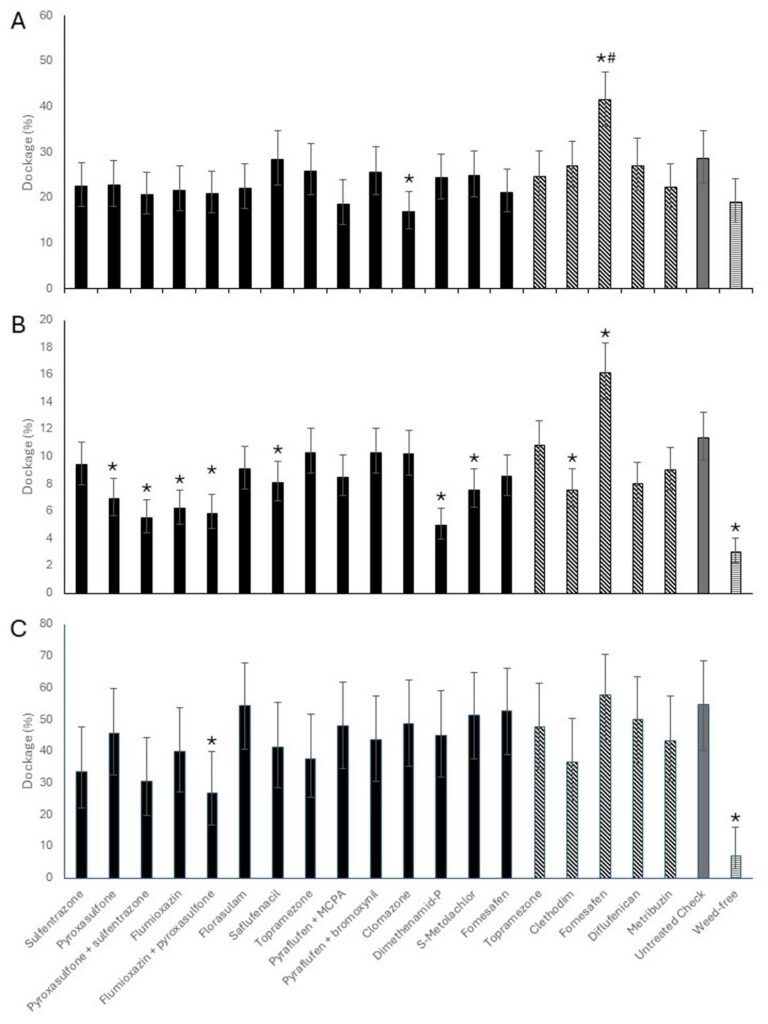
Figure 6. Effect of herbicide treatment on narrow-leaved blue lupin (Lupin angustifolius) dockage values determined after cleaning of harvested samples at A) Edmonton, B) Lacombe and C) Saskatoon.
Source: Breanne Tidemann, Research and Development Centre, Agriculture and Agri-Food Canada, Lacombe, AB, Canada.
Weed Biomass & Species-Specific Control
Weed control responses varied considerably among weed species and environments, highlighting the challenges of developing a single herbicide program for lupin production across the Canadian Prairies. Significant treatment effects were observed for some species, while others were influenced more strongly by environmental conditions and site-year variability than by herbicide selection.
Wild oat was the most consistently controlled weed species evaluated in the study (Figure 7). Biomass was significantly reduced by pyroxasulfone, pyroxasulfone + sulfentrazone, flumioxazin + pyroxasulfone, and clethodim compared with the untreated control. These results demonstrate that both residual herbicide systems and targeted post-emergence grass control can be effective tools for managing grassy weeds in lupin production. Clethodim was particularly effective as a post-emergence option and is among the most promising tools identified for wild oat management.
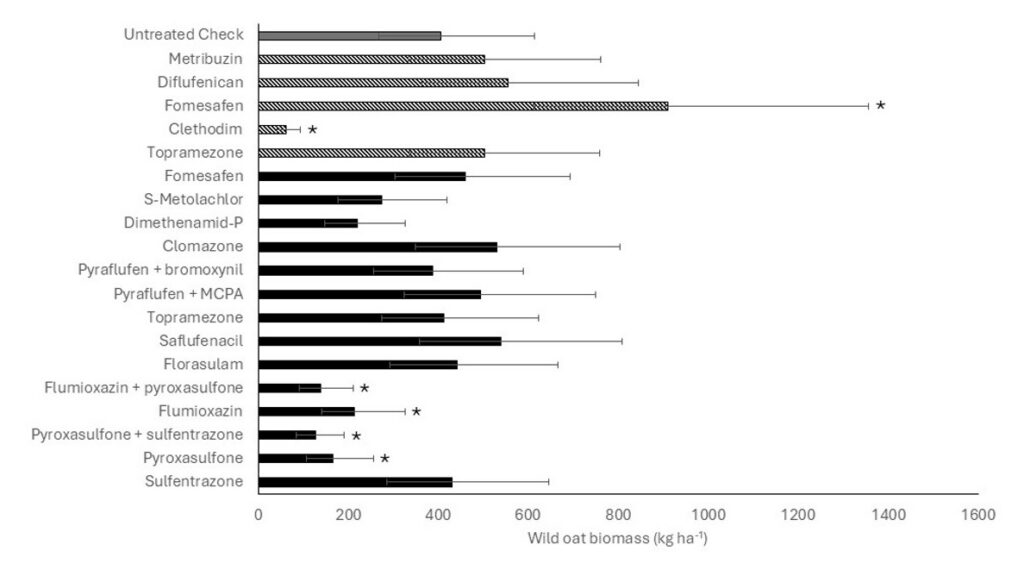
Figure 7. Effect of herbicide treatment on wild oat (Avena fatua L.) biomass across the 5 site-years.
Source: Breanne Tidemann, Research and Development Centre, Agriculture and Agri-Food Canada, Lacombe, AB, Canada.
Volunteer canola control was more variable and depended strongly on site-year conditions (Figure 8). Several herbicides, including clomazone, saflufenacil, flumioxazin + pyroxasulfone, diflufenican, metribuzin, post-emergence fomesafen, and post-emergence topramezone, reduced volunteer canola biomass under specific environmental conditions. However, no treatment consistently provided control across all site-years, suggesting that environmental conditions, weed emergence timing, and herbicide persistence strongly influenced treatment performance.
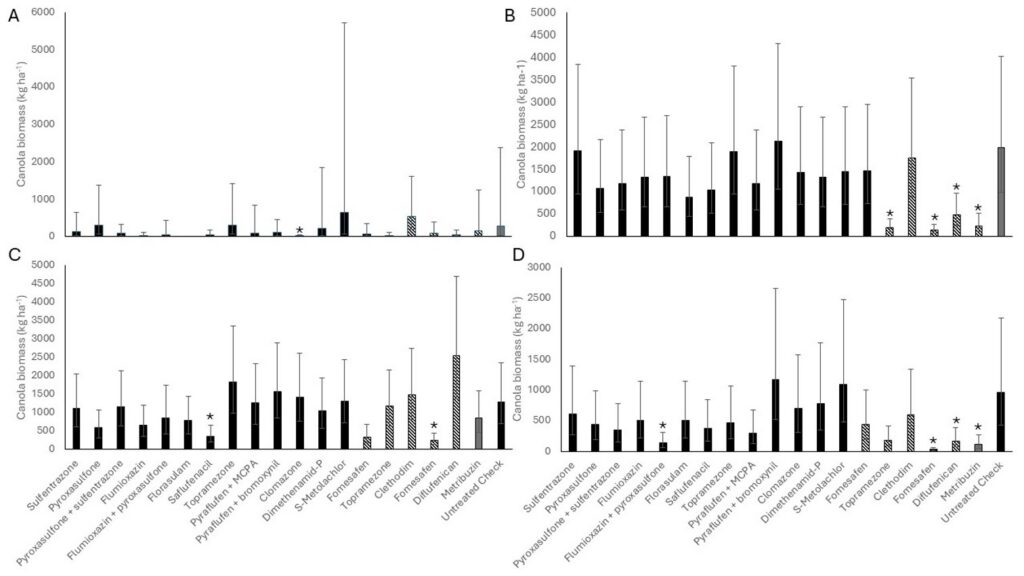
Figure 8. Effect of herbicide treatment on volunteer canola (Brassica napus L.) biomass at A) Edmonton 2022, B) Lacombe 2022, C) Lacombe 2023, D) Lacombe 2024.
Source: Breanne Tidemann, Research and Development Centre, Agriculture and Agri-Food Canada, Lacombe, AB, Canada.
Broadleaf weed management proved particularly challenging. No treatments significantly reduced lambsquarters, kochia, or wild mustard biomass across years, despite some treatments showing activity in individual site-years. No treatment reduced cleavers’ biomass, and it was actually greater in the post-emergence fomesafen treatment than in the untreated control (Figure 9). Similarly, redroot pigweed biomass was greater in the clethodim and post-emergence fomesafen treatments. These responses likely reflect reduced crop competitiveness following herbicide injury rather than direct stimulation of weed growth.
Figure 9. Effect of herbicide treatment on A) cleavers biomass, B) redroot pigweed biomass, C) kochia biomass and D) wild mustard biomass.
Source: Breanne Tidemann, Research and Development Centre, Agriculture and Agri-Food Canada, Lacombe, AB, Canada.
Overall, the weed biomass results demonstrate that herbicide efficacy in lupin is highly species-specific. Pyroxasulfone-based residual herbicide programs and clethodim provided the most reliable weed suppression, particularly for wild oat, while several treatments provided partial control of volunteer canola under certain conditions. However, effective and consistent broadleaf weed control remains a significant challenge for lupin production in Western Canada. The lack of reliable control of species such as kochia, lambsquarters, cleavers, and wild mustard highlights an important limitation to lupin adoption and emphasizes the need for integrated weed management strategies that combine herbicides with cultural and agronomic practices to improve crop competitiveness.
Integrated Interpretation of System Performance
Across nine site-years, herbicide performance in narrow-leaved blue lupin was strongly influenced by weed species, environmental conditions, and herbicide mode of action. The most promising treatments were sulfentrazone, pyroxasulfone + sulfentrazone, and flumioxazin + pyroxasulfone, which consistently balanced crop safety, weed suppression, improved harvest quality, and yield maintenance or improvement. These treatments produced some of the highest biomass and yield responses observed in the study and showed minimal evidence of unacceptable crop injury. Among post-emergence options, clethodim was the only treatment that consistently provided agronomic value, primarily through effective wild oat control and maintenance of crop productivity. In contrast, broadleaf post-emergence herbicides such as fomesafen and topramezone frequently caused unacceptable crop injury, reduced biomass, increased dockage, and failed to provide reliable broad-spectrum weed control.
Findings of this study show that broadleaf weed management remains a significant challenge in narrow-leaved blue lupin. While several herbicides provided partial suppression of specific weed species, no treatment consistently controlled the diverse broadleaf weed communities encountered across Prairie environments. Consequently, successful lupin production will likely require integrated weed management strategies that combine effective residual herbicides with cultural practices aimed at improving crop competitiveness. Overall, the results identify pyroxasulfone + sulfentrazone and flumioxazin + pyroxasulfone as some promising herbicide systems for lupin production in Western Canada. These treatments provided the most consistent balance of crop safety and weed suppression while maintaining yield, making them strong candidates for future registration and adoption. Testing crop tolerance with compatible post-emergence products will be necessary for satisfactory weed control.