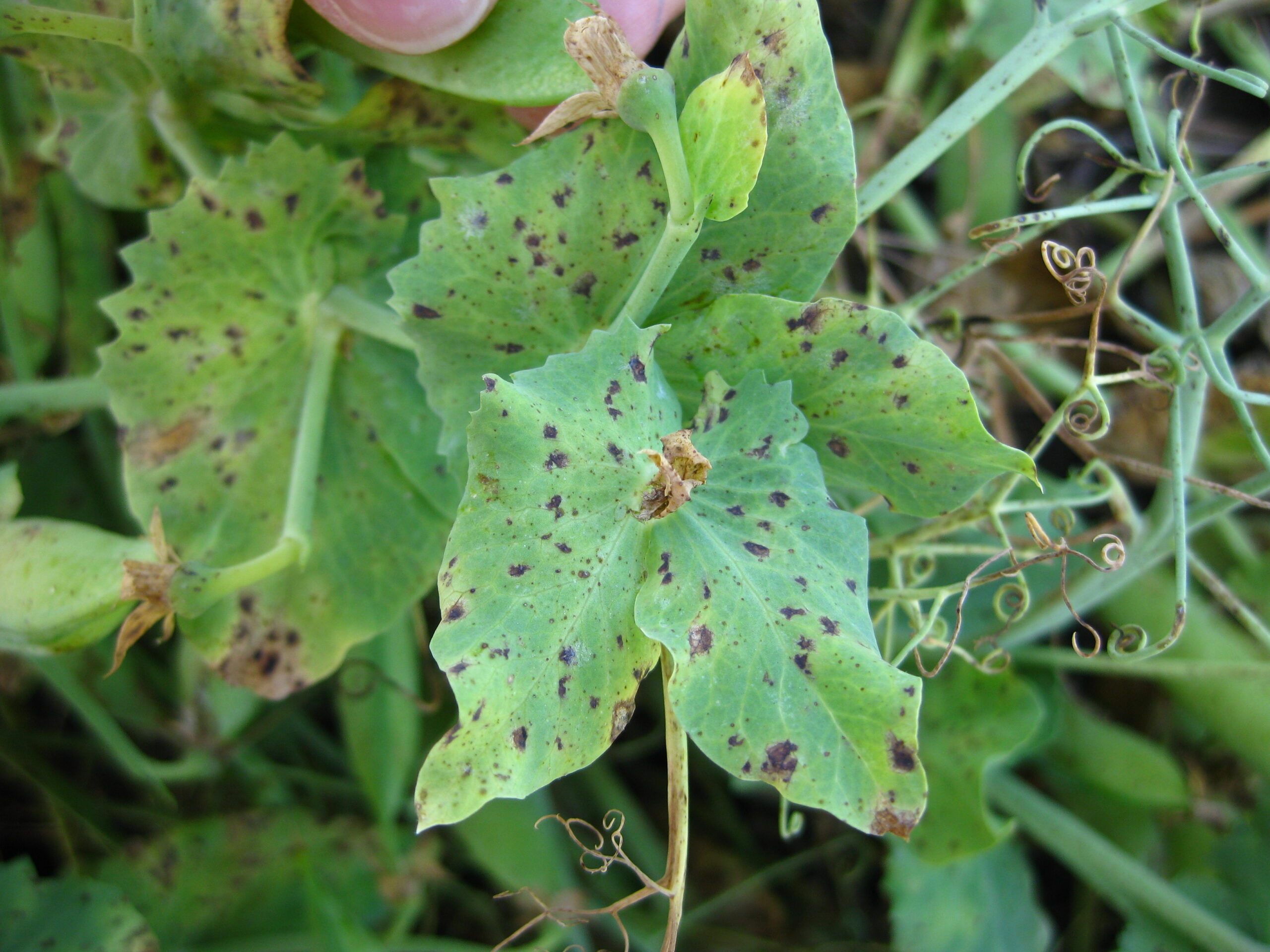
Welcome to our comprehensive quick reference guide for insecticide options and pest management strategies. In this document, we provide a concise overview of key insecticide options, and threshold guidelines to optimize crop protection and enhance yields. While this quick factsheet offers valuable insights, we encourage you to delve deeper into the latest updates and specific recommendations available in the current Guide to Crop Protection for the most up-to-date information and tailored strategies for your agricultural practices.
Key Pests & Thresholds
It is important that growers and agronomists diligently scout for insect pests that impact their crops as rapid outbreaks can occur that may severely impact crop yield or quality (Table 1). However, presence of a pest insect alone does not automatically warrant an insecticide application as it is important to consider crop stage, environmental conditions, threshold information, and presence of beneficial insects.
Economic Injury Level describes the lowest amount of crop injury or smallest number of insect pests that cause damage at a value equivalent to the economic costs of management.
Economic Threshold describes the level of damage or density of insects at which control measures are economically warranted. Under these conditions, the cost of control is less than the value of the crop damage due to pest pressure. Intervening at this timing is intended to prevent an increasing pest population from reaching the economic injury level.
Nominal Threshold describes a decision guideline only. This educated estimate is based on experience or from extrapolating economic threshold information from pests that impact similar crop hosts. Research has not been conducted to quantify the impact of the insects on the specific crop.
Table 1. Summary of key pests and crop hosts including damage and intervention guidelines.
| Crop(s) | Intervention Guidelines |
|---|---|
| Cutworm: Scout for cutworms from emergence to early July. Look for notched, wilted, dead, or cut-off plants with plants missing from rows or bare patches appearing in field. Often, cutworms will be close to damaged plants and on the edges of bare patches and can be most abundant in patches or a specific area of a field. Hilltops, south facing slopes and drier parts of the field are most susceptible but they can be located anywhere in field. If damage is observed but no cutworms are seen, search through the top 2-6 cm of soil to confirm cutworms are the cause as larvae feed primarily at night and burrow underground during heat of day. | |
| Chickpea, Dry bean, Faba bean, Soybean | A nominal threshold of one or more larvae per metre of row, when larvae are small (less than 2 cm), or 20 per cent of plants cut. |
| Lentil, Pea | Two to three cutworms per square metre. Sometimes it is most economical to just treat infested patches, and not whole fields. |
| Lygus Bug: Adults and nymphs pierce plant tissue to suck plant sap and inject digestive enzymes. Lygus at the third instar or larger can damage buds, flowers, and seeds. Feeding on seeds leads to discolouration (chalk spot) or darkening and shriveling which can be particularly concerning for downgrading in faba bean marketed for human consumption. | |
| Faba bean, Chickpea | Research is ongoing to develop economic threshold. Preliminary information recommends no action when there is two adults or later instar nymphs per sweep. |
| Pea, Lentil, Dry bean | 10 or more lygus per 25 sweeps. If seven to 10 lygus per 25 sweeps are found, continue monitoring. If less than seven lygus per 25 sweeps are found, no treatment is necessary. A single insecticide application at late flowering to early pod should be sufficient for control. |
| Dry bean, Soybean | 20-30 lygus per 10 sweeps. Nymphs and adults produce similar crop injury. A single insecticide application at late flowering to early pod should be sufficient for control. |
| Aphids: Crop damage is caused by sucking plant sap. Yield loss, due to reduced seed formation and size, results from feeding on the flowers and early pods. As such, the key scouting and intervention timing is during flowering to early pod development. Regular scouting is key as aphid populations can both be regulated by beneficial insects but also increase rapidly to their ability to produce multiple generations per year. | |
| Chickpea, Dry bean | No thresholds established. Aphids typically not an insect of concern. |
| Faba Bean | Economic threshold of 34-50 aphids per main branch provides an approximate seven-day lead time before populations reach economic injury level (96 to 142 per main branch). |
| Lentil | Economic threshold of 29-43 aphids per sweep provides an approximate seven-day lead time before populations reach economic injury level (64 to 92 per sweep). |
| Pea | Economic threshold of two to three aphids per eight-inch plant tip, or nine to 12 aphids per sweep when approximately 25 per cent has begun to flower. |
| Soybean | Economic threshold of 250 aphids per plant to allow time for control measures to be implemented before economic damage occurs (670 aphids per plant). |
| Spider Mites: Crop damage is caused by mites feeding on plant cells, resulting in yellowing that progresses to browning and a mottled or “sandblasted” appearance. Damage often begins along field edges and may be noticed before mites are visible. Fine webbing and tiny moving specks may be seen on leaf undersides. Severe infestations can reduce yield and lead to plant stress or death. | |
| Soybean | Economic threshold of 25% of leaves show discolouration before seed set, or 10% of leaves after pod set. |
| Dry bean | Economic threshold of four or more mites per leaflet or one severley damaged leaf prior to pod fill. |
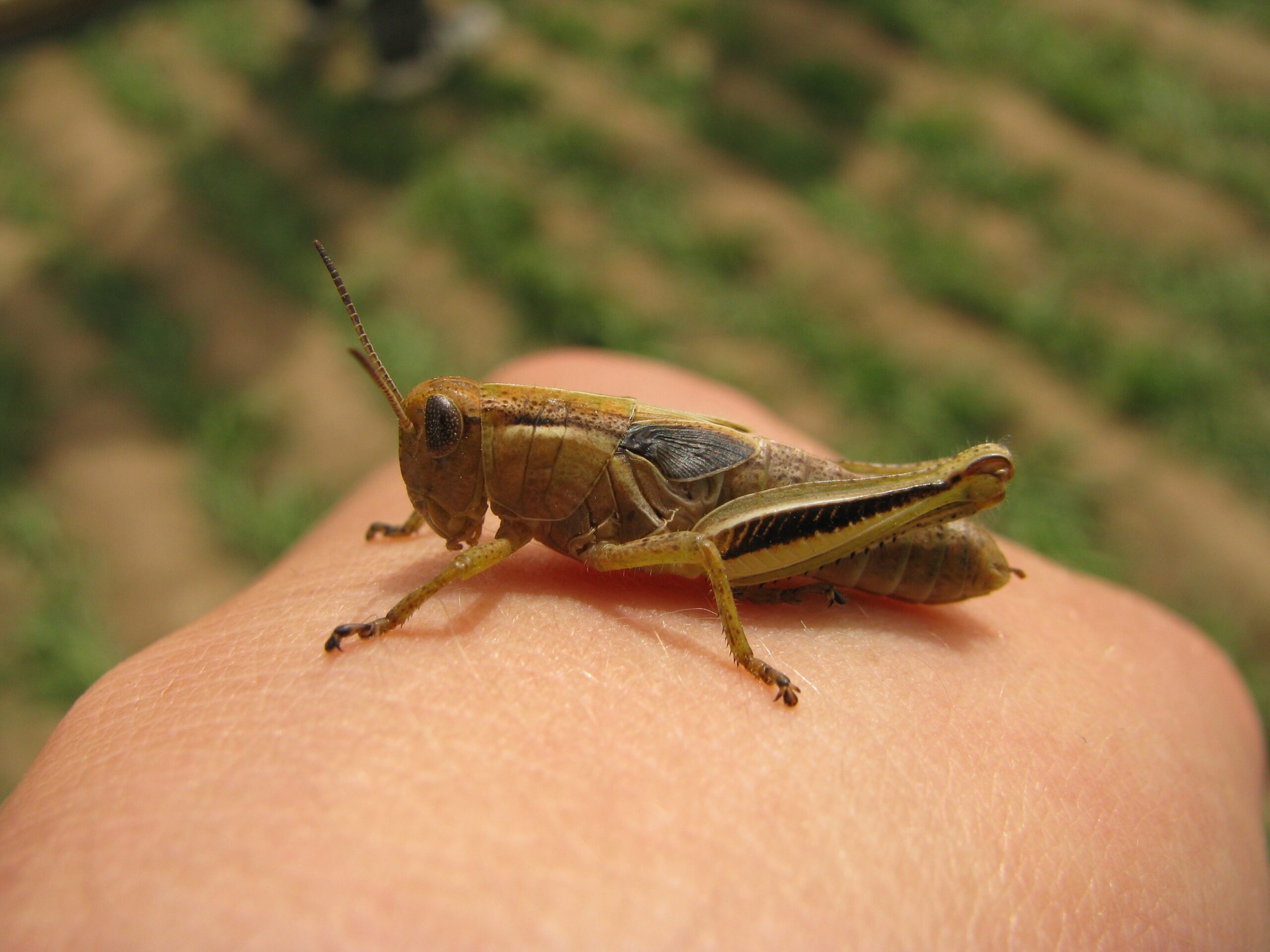
| Grasshoppers: Crop damage through defoliation of leaves or clipping of pods and flowers. Most problematic in dry areas (receiving less than 750 mm per year via rain or snow). The most serious economic damage due to grasshoppers begins when they are in the third to fifth nymphal stages (wing buds begin to show). Lentils are particularly sensitive to grasshopper damage and can sustain direct yield loss through the clipping of flowers or pods therefore monitoring is crucial from the early bud stage through pod development. | |
| Chickpea, Soybean | Generally, not a preferred host for grasshopper unless other food sources are low. May notice grasshoppers feeding on weeds in field preferentially to crops. |
| Dry Bean | Substantial yield loss does not occur until up to 35 per cent defoliation occurs before bloom and 15 per cent after bloom. |
| Faba bean | Economic thresholds have not been established, but faba bean is a better host than some other legumes to two-striped grasshopper. |
| Lentil | Two grasshoppers per square metre during the flowering and podding stages. Damage accumulates on flowers. |
| Pea | Typically, counts of less than 10 grasshoppers per square metre will not cause economic losses. Peas are not a preferred host of some grasshopper species. |
| Pea Leaf Weevil: Pea leaf weevils cause the most serious damage during the larval stage, when they feed on nitrogen-fixing root nodules of pulse crops, most notably pea and faba bean. Adult weevils feed on seedlings, leaving scalloped or notched leaf margins. | |
| Pea | Economic threshold of 30% of seedlings showing leaf notches on the clam leaf prior to the sixth node stage. |
| Faba bean | Economic threshold of 15% of seedlings showing leaf notches on the clam leaf at the second to third node stage. |
| Lentil, Dry bean, Chickpea | Economic threshold of 30% of seedlings showing leaf notches on the clam leaf at the second to fifth node stage. |
Foliar Options
Various foliar insecticide products exist that provide solutions for several pest and crop combinations (Tables 2 and 3). Beware, product options will differ in their efficacy, toxicity for user, cost, and market availability. Where options are available, rotating modes-of-action is an important resistance management strategy. Take into consideration the number of applications that can be made in a growing season with each insecticide and start to plan accordingly. Furthermore, applying registered product options according to label guidelines, within the targeted preharvest interval (PHI), and according to application strategies that promote the most efficacious result are all important considerations for successful pest management.
Preharvest Interval (PHI) is the minimum number of days between the last application of a pesticide and when the crop can be harvested. Harvest is the cutting of the crop or removal of the produce from the plant. It includes direct-combining, cutting (swathing) or grazing; it does not include swath-combining or baling for hay. Following PHI guidelines on pesticide labels is important to ensure that the maximum residue limit (MRL) for a crop is not exceeded.
Maximum Residue Limit (MRL) is the maximum amount of pesticide residues that are tolerated on or in a food product; Actual amounts should be lower than these values when the pesticide is used according to label directions. This value is legally established in accordance with Health Canada’s scientific assessments that determine the consumption of the treated food products will not be a concern for human health.
Table 2. Foliar insecticide options for key pulse crop pests including preharvest intervals (PHI).
| Active Ingredient | Insecticide Group | Product(s) | PHI (days) | Peas | Lentils | Faba Beans | Chickpeas | Soybeans | Dry Beans |
|---|---|---|---|---|---|---|---|---|---|
| Cutworm | |||||||||
| Chlorantraniliprole | 28 | Coragen MaX, Shenzi, Maxunitech Chlorantraniliprole 200SC, Cosayr, Vermis, Viking Rorvik | 1 | X | X | X | X | X | X |
| Tetraniliprole | 28 | Vayego 200 SC | 14 | X | |||||
| Lambda-cyhalothrin | 3A | Matador, Silencer, Labamba, Zivata | 14 (peas, lentils, chickpeas, dry beans) 21 (soybeans) | X | X | X | X | X | |
| Deltamethrin | 3A | Decis 100 EC, Poleci 2.5 EC, Advantage Deltamethrin 5 EC | 7 (Decis 100 EC) 30 (Poleci 2.5 EC/ Advantage Deltamethrin 5 EC) | X | X | X | X | X | |
| Permethrin | 3A | Pounce 384 EC, Perm-UP, IPCO Syncro, Ambush 500 EC | 7 | X | X | ||||
| Lygus bug | |||||||||
| Flonicamid | 29 | Carbine, Beleaf 50SG | 7 | X | X | X | |||
| Lambda-cyhalothrin | 3A | Matador, Silencer, Labamba, Zivata | 14 (lentils, faba beans, dry beans) 21 (soybeans) | X | X | X | X | X | X |
| Lambda-cyhalothrin + chlorantraniliprole | 3A + 28 | Voliam Xpress | 14 (lentils, faba beans, dry beans) 21 (soybeans) | X | X | X | X | X | X |
| Deltamethrin | 3A | Decis 100 EC, Poleci 2.5 EC, Advantage Deltamethrin 5 EC | 7 | X | X | X | X | X | |
| Carbaryl | 1A | Sevin XLR | 5 | X | |||||
| Dimethoate | 1B | Cygon 480-AG, Cygon 400EC, Lagon 480E, Diamante 4 | 7 (dry beans) 30 (soybeans) | X | X | ||||
| Aphids | |||||||||
| Flonicamid | 29 | Carbine, Beleaf 50SG | 7 | X* | X* | X* | X* | X* | |
| Spirotetramat | 23 | Movento 240 SC | 7 (peas, lentils, chickpeas, dry beans) 21 (soybeans) | X | X | X | X | X | |
| Flupyradifurone | 4D | Sivanto Prime | 7 (peas, lentils, chickpeas, dry beans) 21 (soybeans) | X | X | X | X | X | X |
| Lambda-cyhalothrin | 3A | Matador, Silencer, Labamba, Zivata | 14 (peas, lentils, chickpeas, dry beans) 21 (soybeans) | X | X | X | X | X | |
| Lambda-cyhalothrin + chlorantraniliprole | 3A + 28 | Voliam Xpress | 14 (pea, lentil, faba beans, chickpeas, dry beans) 21 (soybean) | X | X | X | X | X | X |
| Lambda-cyhalothrin + chlorantraniliprole | 3A + 28 | Silencer Duo | 21 | X | X | X | X | X | |
| Malathion | 1B | Malathion 85E | 3 | X | X | ||||
| Dimethoate | 1B | Cygon 480-AG, Cygon 400EC, Lagon 480E, Diamante 4 | 3 (peas) 7 (dry beans) | X | X | ||||
| Afidopyropen | 9D | Sefina | 7 | X | |||||
| Spider Mites | |||||||||
| Spiromesifen | 23 | Oberon | 10 | X | |||||
| Dimethoate | 1B | Cygon 480-AG, Cygon 400EC, Lagon 480E, Diamante 4 | 7 (dry beans) 30 (soybeans) | X | X | ||||
| Malathion | 1B | Malathion 85E | 3 | X | X | ||||
| Grasshoppers | |||||||||
| Carbaryl | 1A | Eco Bran | 5 | X | |||||
| Chlorantraniliprole | 28 | Coragen MaX, Shenzi, Maxunitech Chlorantraniliprole 200SC, Cosayr, Vermis, Viking Rorvik | 1 | X | X | X | X | X | X |
| Deltamethrin | 3A | Decis 100 EC, Poleci 2.5 EC, Advantage Deltamethrin 5 EC | 7 (Decis 100 EC) 30 (Poleci 2.5 EC/ Advantage Deltamethrin 5 EC) | X | X | X | X | X | |
| Lambda-cyhalothrin | 3A | Matador, Silencer, Labamba, Zivata | 14 (peas, lentils, chickpeas, dry beans) 21 (soybeans) | X | X | X | X | ||
| Lambda-cyhalothrin + chlorantraniliprole | 3A + 28 | Voliam Xpress | 14 (pea, lentil, faba beans, chickpeas, dry beans) 21 (soybean) | X | X | X | X | X | X |
| Lambda-cyhalothrin + chlorantraniliprole | 3A + 28 | Silencer Duo | 21 | X | X | X | X | X | |
| Malathion | 1B | Malathion 85E | 14 | X | |||||
| Pea Leaf Weevil | |||||||||
| Lambda-cyhalothrin | 3A | Matador, Silencer, Labamba, Zivata | 14 | X | |||||
| Lambda-cyhalothrin + chlorantraniliprole | 3A + 28 | Voliam Xpress | 14 | X | X | ||||
| Lambda-cyhalothrin + chlorantraniliprole | 3A + 28 | Silencer Duo | 21 | X | X | X | X | X | |
| Deltamethrin | 3A | Decis 100 EC | 7 | X* | X* | X* | X* | X* | |
*Product registered for suppression only.
Information adapted from Saskatchewan Guide to Crop Protection. Consult label or manufacturer for more detail. Always read and follow label directions. This information is only a guide, if label information differs, follow label instructions.
Table 3. Description of mode of action based on chemical group and active ingredient.
| Active Ingredient | Product(s) | How it Works & Application Considerations* |
|---|---|---|
| Carbamates (1A) | ||
| Carbaryl | Sevin XLR, Eco Bran | Non-systemic insecticide that works by contact and ingestion. Provides broad-spectrum control but can impact beneficial insects, so applications should be timed carefully. Use sufficient water for good coverage, especially under dense canopy conditions, and ensure thorough spray penetration. |
| Organophosphates (1B) | ||
| Dimethoate | Cygon 480-AG, Cygon 400EC, Lagon 480E, Diamante 4 | Systemic and contact insecticide that is absorbed into plant tissues and controls pests through ingestion and contact. Provides good activity on sap-feeding insects. Apply with adequate water for uniform coverage and avoid spraying during high temperatures or when rain is imminent. |
| Malathion | Malathion 85E | Contact insecticide that provides broad-spectrum control of many insect pests. Works best when applied with thorough coverage and when pests are actively feeding. Apply under calm conditions to reduce drift and avoid applications during bloom to minimize risk to pollinators. |
| Pyrethroids (3A) | ||
| Deltamethrin | Decis 100 EC, Poleci 2.5 EC, Advantage Deltamethrin 5 EC | Non-systemic active that works by contact and ingestion. Use sufficient water for good coverage and higher rates for severe infestations, on dense foliage or when several insect growth stages are present. Spraying under a strong temperature inversion, when temperature exceeds 25°C, or within one hour of rain will result in a reduction in control. Best control achieved when deltamethrin is applied during cooler periods of the day. |
| Lambda-cyhalothrin | Matador, Silencer, Labamba, Zivata | Non-systemic insecticide that controls pests by contact and ingestion with rapid knockdown activity. Provides effective control when applied with good coverage; use higher labelled rates under heavy infestations or dense foliage. For best results, apply under calm conditions and avoid high temperatures or temperature inversions that may reduce efficacy or increase drift risk. Resistant populations can develop with repeated use, so rotation with other modes of action is recommended. |
| Permethrin | Pounce 384 EC, Perm-UP, IPCO Syncro, Ambush 500 EC | Works as a contact and stomach poison with no systemic or fumigant properties. Use sufficient water for good coverage and higher label rates for severe infestations, adult insects, and dense foliage. For cutworm control, application should be made under warm, moist conditions in the evening or at night. Use high rates if larvae are near maturity or soil conditions are dry. Do not disturb soil surface for five days after treatment. |
| Lambda-cyhalothrin + chlorantraniliprole (3A+28) | Voliam Xpress, Silencer Duo | Combination insecticide providing both rapid knockdown and extended residual control through contact and ingestion. Lambda-cyhalothrin delivers quick control of exposed insects, while chlorantraniliprole provides longer-lasting suppression of chewing pests by disrupting muscle function and causing feeding cessation. Apply with sufficient water to ensure thorough coverage, particularly under dense canopy conditions. |
| Butenolides (4D) | ||
| Flupyradifurone | Sivanto Prime | Broad spectrum systemic activity that works by contact and ingestion. Do not apply within one hour of rain. Apply in a minimum water volume of 40L per acre. |
| Pyropenes (9D) | ||
| Afidopyropen | Sefina | Contact insecticide primarily active on sucking insects such as aphids. Disrupts feeding behaviour, leading to rapid cessation of crop damage. Apply when pest populations are increasing but before economic thresholds are exceeded. Ensure thorough coverage of plant surfaces for effective control, and monitor fields regularly as activity is primarily through direct exposure. |
| Tetronic and tetramic acid derivatives (23) | ||
| Spiromesifen | Oberon | Contact insecticide targets immature stages and reduces population growth by interfering with development. Apply when populations begin to build for best results and ensure thorough coverage, especially on leaf undersides where mites are commonly found. May require follow-up monitoring as activity on adult stages is limited. |
| Spirotetramat | Movento 240 SC | Systemic movement to all plant tissues including new shoot, leaf, and root growth. Apply in minimum of 120L per acre. Mode of action is primarily by ingestion by immature insect life stages. Insect death occurs due to the inability to progress to the next development stage. Adults produce less offspring following exposure. For best results apply when insect populations begin to build and before a damaging population becomes established. |
| Diamides (28) | ||
| Chlorantraniliprole | Coragen MaX, Shenzi, Maxunitech Chlorantraniliprole 200SC, Cosayr, Vermis, Viking Rorvik | Primarily ingestion-active insecticide with good residual control of chewing insects. Works by affecting muscle function, resulting in rapid feeding cessation. Apply early when larvae are small for optimal control. Provides selective activity with relatively low impact on beneficial insects, but rotation with other modes of action is recommended to prevent resistance development. |
| Tetraniliprole | Vayego 200 SC | Contact and ingestion insecticide that provides control of chewing pests with strong residual activity. Best performance is achieved when applied at early larval stages. Ensure adequate coverage and avoid repeated use of Group 28 products in a single season to reduce resistance risk. Timing applications when pests are actively feeding will improve effectiveness. |
| Flonicamid (29) | ||
| Flonicamid | Carbine, Beleaf 50SG | Systemic and contact insecticide that disrupts feeding in sucking insects, resulting in rapid cessation of damage. Effective on aphids and similar pests when applied at the onset of population buildup. Provides selective control with minimal impact on beneficial insects when used according to label directions. Ensure proper coverage and monitor populations after application to assess control. |
*Information adapted from the Saskatchewan Guide to Crop Protection. Consult label or manufacturer for more detail. Always read and follow label directions. This information is only a guide, if label information differs, follow label instructions.
Seed Treatment Choices
Insecticidal seed treatments are not effective against later season pests, but they do offer protection against damage from early-season feeding of cutworm, soybean aphid and wireworms. Seed treatments are also recommended for protection against pea leaf weevil in pea and faba bean crops as the most critical damage comes from the larvae feeding on the nodules and research indicates that foliar insecticide does not prevent yield loss. Insecticidal seed treatments protect the crop from insect pests below the surface. For more information on additional insect pests and insecticidal seed treatment options, consult the Guide to Crop Protection.
Formulated as seed treatments the active ingredients that target cutworm, soybean aphid, wireworm and pea leaf weevil, work via ingestion and fall into two chemical groups: Neonicotinoids (imidacloprid, thiamethoxam) and Diamides (chlorantraniliprole, cyantraniliprole) (Table 4).
Table 4: Seed treatment insecticide options for pulse crops and target pests.
| Active Ingredient | Insecticide Group | Product(s) | Peas | Lentils | Faba Beans | Chickpeas | Soybeans | Dry Beans |
|---|---|---|---|---|---|---|---|---|
| Cutworm | ||||||||
| Chlorantraniliprole | 28 | Lumivia CPL | X | X | X | X | X | |
| Cyantraniliprole | 28 | Fortenza, Lumiderm | X | |||||
| Soybean Aphid | ||||||||
| Cyantraniliprole | 28 | Lumiderm | X | |||||
| Imidacloprid | 4A | Sombrero 600 FS, Stress Shield 600 | X | |||||
| Pea Leaf Weevil | ||||||||
| Chlorantraniliprole | 28 | Lumivia CPL | X | X | X | X | X | |
| Thiamethoxam | 4A | Cruiser 5FS | X | X | ||||
| Imidacloprid | 4A | Stress Shield 600 | X | X | ||||
| Imidacloprid | 4A | Trilex EverGol SHIELD* | X | X | ||||
| Wireworm | ||||||||
| Thiamethoxam | 4A | Cruiser 5FS | X | X | X | X | X | X |
| Cyantraniliprole | 28 | Fortenza, Lumiderm | X | |||||
| Imidacloprid | 4A | Sombrero 600 FS, Stress Shield 600 | X | X | X | X | X | X |
| Imidacloprid | 4A | Trilex EverGol SHIELD* | X | X | X | X | X | |
*Includes additional fungicide active ingredients.
Consult label or manufacturer for more detail. Always read and follow label directions. This information is only a guide, if label information differs, follow label instructions. Check inoculant compatibility when applying seed treatment with a liquid or peat inoculant on pulse crops.
Grasshopper Bait Products
Spreadable wheat bran bait products offer additional solutions for grasshopper control and use as part of an integrated pest management protocol. Registered use varies by product, but Eco Bran is registered for use in dry bean fields. Bran products need to be spread over the soil surface using a specialized mechanical applicator or valmar and often require repeat applications.
Eco Bran works via ingestion and requires that the grasshoppers consume the product. Following consumption of the bait, grasshoppers typically die in 18 hours to three days. Applications should be made when grasshoppers are small (in the third instar stage) with higher rates needed for larger grasshoppers or denser populations.
Eco Bran contains carbaryl as the insecticide active ingredient and is formulated to not breakdown under UV light for up to 21 days when applied in fields. However, if applied Eco Bran has disintegrated due to rain and is no longer visible in treated areas it will need to be reapplied.
Integrated Pest Management
This publication covers insecticide options to manage insect pests. Insecticides are one part of an integrated pest management plan. Planning and including practices that reduce or discourage insect pests is cost-effective management. More information on integrated pest management is available in the references and additional resources at the end of this publication.
An important component of integrated pest management is pest monitoring. Pest monitoring programs are underway each year in Saskatchewan. They are used to create forecast maps, inform research decisions, and monitor for emerging pest issues, as well as guide management and field specific monitoring activities.
Pest monitoring surveys are now permission based. Consider signing up online with the Saskatchewan Ministry of Agriculture’s pest monitoring program.
Version June 2026