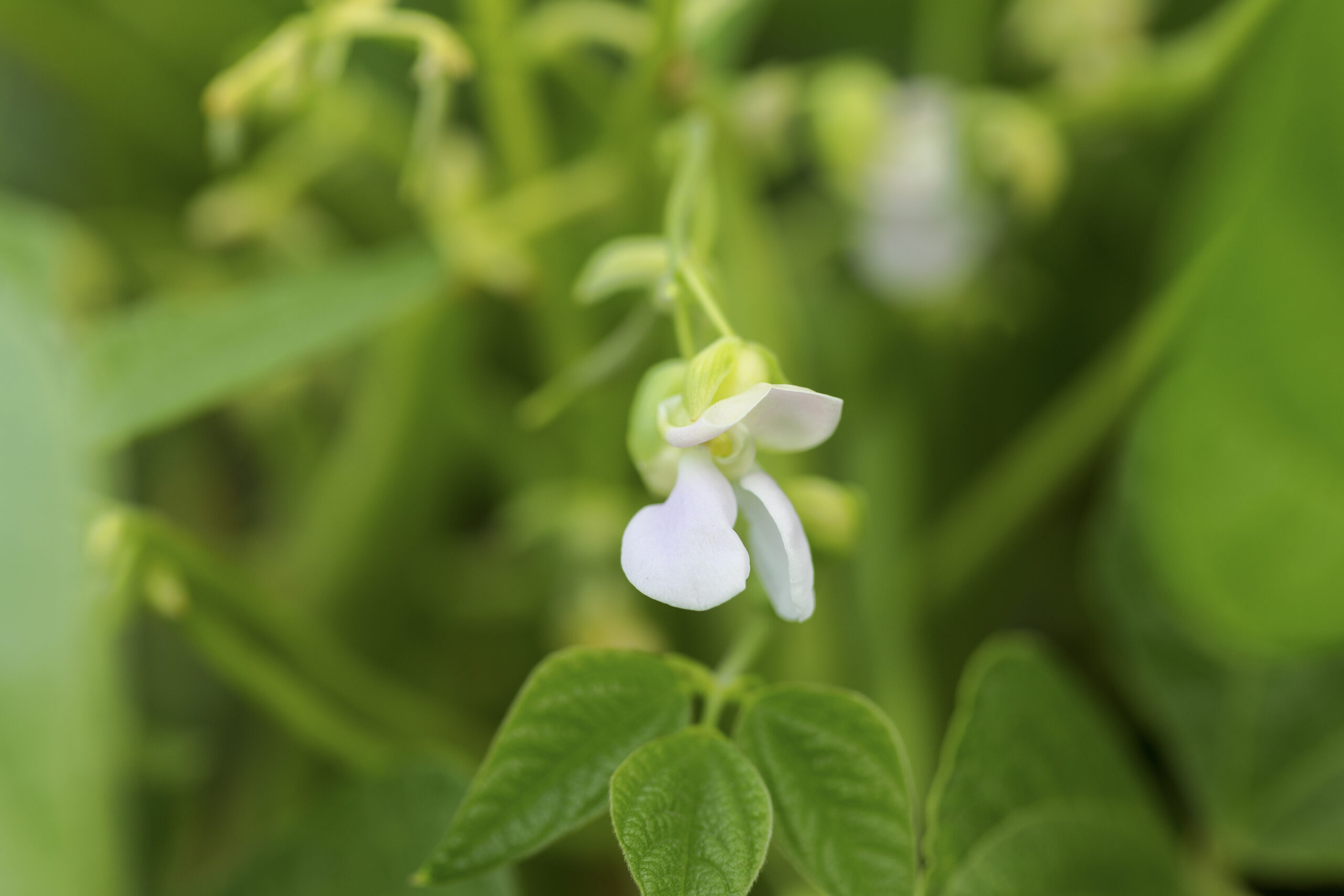


Over the past 30 years, pulse crops have become a cornerstone of Canadian agriculture. Pulse crops fix their own nitrogen and do not require nitrogen fertilizer, which saves growers money and reduces the impact of cropping on greenhouse gas emissions. However, root rot, primarily caused by the pathogens Aphanomyces and Fusarium, continues to be one of the most significant obstacles to growing pulses. Effectively addressing root rot could protect pulse production and further reduce nitrogen fertilizer requirements across crop rotations, benefiting both growers and the environment. Recognizing the importance of this challenge, four Pulse Cluster research projects are addressing root rot as part of their objectives.
Improving Root Rot Resistance in Peas
Dr. Tom Warkentin, Chair of the Saskatchewan Ministry of Agriculture Strategic Research Program (SRP) in Pulse Crop Breeding and Genetics at the University of Saskatchewan, is a recognized leader in pulse research, having received the Canadian Pulse and Special Crops Trade Association Industry Appreciation Award in 2025. Currently, Dr. Warkentin is the lead researcher on the Development of Improved Pea Cultivars to Enhance Canada’s Leading Role in International Pea Markets research project.
As part of this initiative, a panel of 100 diverse field pea accessions—selected through cluster analysis from the Crop Development Centre (CDC) pea diversity panel—were cultivated at three locations with distinct soil types: Sutherland (Dark Brown Chernozem), Rosthern (Orthic Black Chernozem), and Lucky Lake (Orthic Dark Brown Chernozem). Phenotypic evaluations were conducted to assess disease resistance.
To measure root rot severity, experiments were conducted in three field-based root rot nurseries at the CDC in Saskatoon, Sask., and at Agriculture and Agri-Food Canada (AAFC) in Lethbridge, Alta. and Morden, Man., in 2025. The Root Rot Disease Severity Indicator (DSI) varied widely across sites, ranging from 40 to 70% in Saskatoon, 71 to 89% in Morden, and 79 to 100% in Lethbridge, with significant differences observed among the tested lines at all sites. These trials provided valuable insights into the resistance of various breeding lines and are already showing promising results.
“Of the 18 CDC co-op lines tested, we have already identified six pea breeding lines that exhibit the greatest resistance to root rot,” states Dr. Warkentin. He adds the pea varieties are being tested annually in root rot nurseries and those with lowest root rot scores will be sent for variety registration within the next decade.
Imaging Techniques
AAFC Research Scientist Dr. Syama Chatterton, lead researcher for the Accelerating Solutions to Root Rot of Pea and Lentil Using a Multifaceted and Integrative Approach research project, is using technologies such as spectral and spatial imaging techniques and artificial intelligence models to detect pea root disease. Her research project aims to predict stress metrics in peas to identify early disease occurrence and genotypes with better root rot resistance.
“The developed machine learning models can be translated to field-level analysis and validation,” explains Dr. Chatterton. “In the long term, this will benefit all industry stakeholders by facilitating rapid screening of pea lines in disease nurseries, with potential for early detection of root rot symptoms in the field.”
Examining Beneficial Root Systems
Some varieties of pea and lentil have much larger root systems than others. Characterizing root systems is difficult and time-consuming, so identifying genes associated with beneficial root systems could make selecting for them much easier. The University of Saskatchewan’s Maryse Bourgault is leading the research project, the Large Root Systems in Pulses for Drought Tolerance, Carbon Sequestration and Root Rot Resistance. Through a combination of controlled-environment and field studies, Bourgault and her team are working to characterize root system traits. In collaboration with Dr. Warkentin’s research team, this phenotypic information is being combined with genetic data to identify genes or genetic markers associated with root characteristics that may confer greater resistance to root rots in pulses.
Another avenue the researchers are exploring is examining differences among pulse species.
“Interestingly, chickpea is not (as) susceptible to Aphanomyces and may exhibit characteristics in its root anatomy that may point to beneficial root traits,” states Bourgault, adding that this resistance could be used to reduce the length of crop rotations.
Preventing and Detecting Disease in Dry Beans
AAFC Research Scientist Dr. Owen Wally, the research lead for the Towards a Better Understanding of Dry Bean Root Rot and Soybean Cyst Nematode Management research project, is working to determine the impact of root diseases on dry bean health in association with nitrogen fertilization. He is also evaluating the use of selective breeding for root rot resistance. Root rot diseases are present to varying degrees in nearly all fields, and their management is complicated by interactions with soil fertility, especially nitrogen inputs, which can influence plant growth and mask the true extent of root damage. Early nitrogen trials showed variable yield responses across sites and market classes, with no apparent effect on root rot severity. Using hyperspectral imaging tools to detect disease symptoms non-destructively, he has identified dry bean cultivars exhibiting the greatest resistance to root rot.
“Crosses using root rot-resistant germplasm have been completed, forming the basis for a recurrent selection program aimed at improving resistance within Canadian-adapted dry bean germplasm,” explains Dr. Wally.
Conclusion
Continued, coordinated research is essential to maintaining Canada’s leadership in global pulse production and innovation as move into the future. Since 2023, the CDC pea breeding program at the University of Saskatchewan has released three new high-yielding pea cultivars, along with three specialty varieties—marrowfat, maple, and forage types—tailored to emerging market and production needs, integrating cutting-edge research in plant pathology, plant physiology, and crop chemistry and utilization.
At AAFC, by determining the yield threat from root rot and the root structure of pulse crops it’s helping them to develop more tolerant cultivars within the next decade. These Pulse Cluster research projects are driving the development of exceptional pulse crop varieties for the next decade, with improved resistance to root rot, thereby strengthening the productivity, sustainability, and competitiveness of Canadian agriculture.
Research Projects
- Accelerating Solutions to Root Rot of Pea and Lentil Using a Multifaceted and Integrative Approach
- Principal investigator: Dr. Syama Chatterton
- Cost: $2,360,346
- Development of Improved Pea Cultivars to Enhance Canada’s Leading Role in International Pea Markets
- Principal investigator: Dr. Tom Warkentin
- Cost: $4,239,829
- Large Root Systems in Pulses for Drought Tolerance, Carbon Sequestration and Root Rot Resistance
- Principal investigator: Maryse Bourgault
- Cost: $1,613,690
- Towards a Better Understanding of Dry Bean Root Rot and Soybean Cyst Nematode Management
- Principal investigator: Dr. Owen Wally
- Cost: $592,496