Description & Adaptation
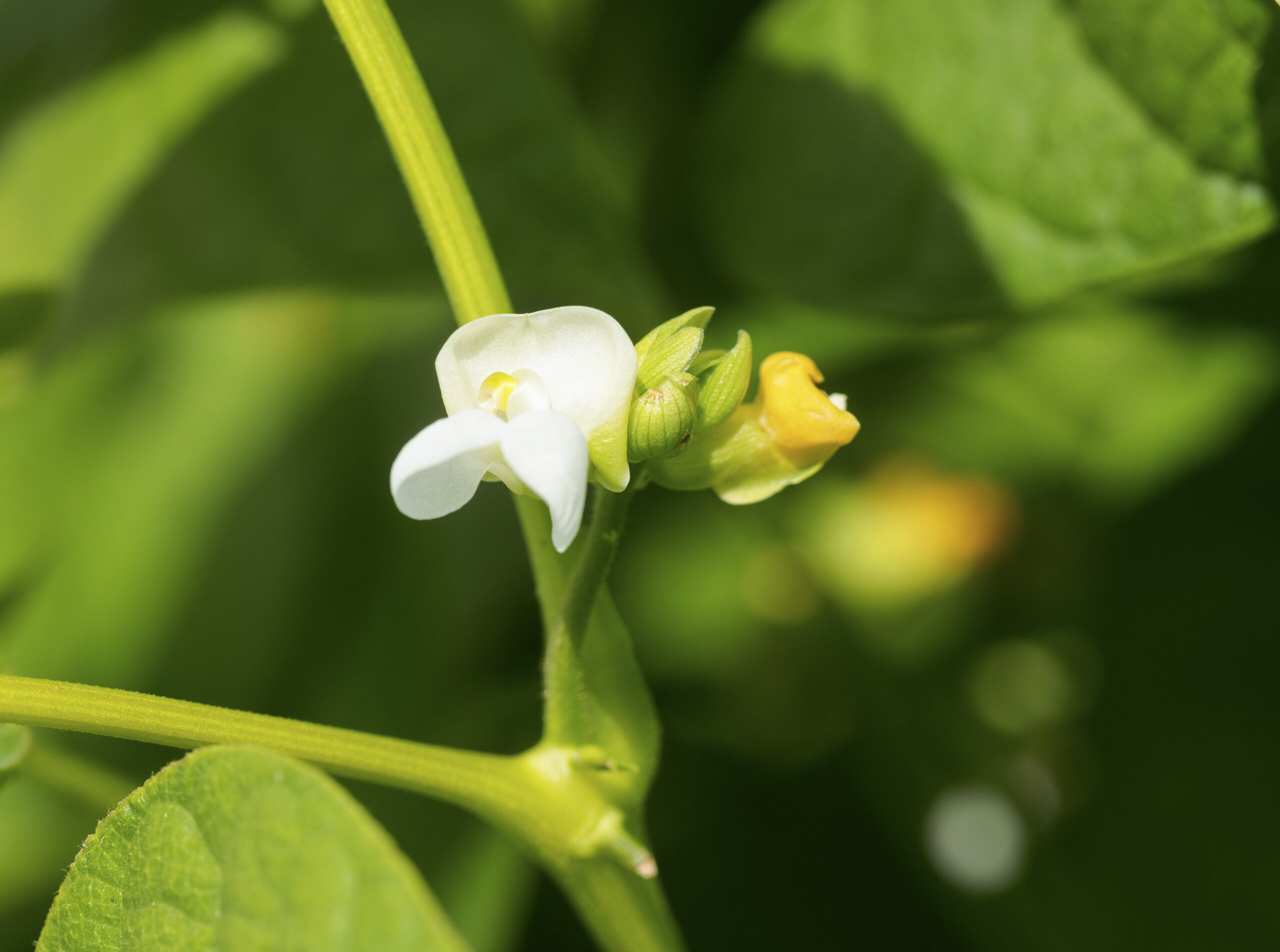
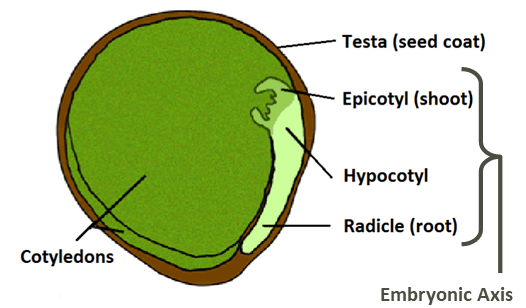
Dry beans (Phaseolus vulgaris) are a dicot crop with epigeal emergence, meaning that the cotyledons and the growing point push up above ground. The first true leaves are single and opposite, with all following leaves being trifoliate and arranged on alternate sides of the stem. Depending on the market class, flowers can be white, purple, or pink. Flowers are self-pollinated and can be susceptible to heat and moisture stress.
Two basic plant growth habits are found in dry edible beans: determinate (bush) or indeterminate (vining or trailing). With determinate growth, stem elongation stops when the terminal flowers on the main stem develop. In indeterminate varieties, flowering and pod fill continue as long as temperature and moisture availability permit.
In addition to the distinction between determinate and indeterminate, there are three distinct plant growth types cultivated in Saskatchewan as field crops:
- Type I: determinate bush with five to nine nodes on the main stem.
- Type II: indeterminate bush-type with 10 to 12 nodes on the main stem and three to four branches.
- Type III: indeterminate, prostrate vine with 10 to 12 nodes on the main stem and several branches.
Depending on whether narrow rows (6 to 12 inches) or wide rows (28 to 36 inches) are used, different growth types are better suited. Narrow-row production should focus on bush-type varieties to improve harvest ease, and on Type II varieties with pods held higher off the ground.
Two of the most significant factors in the adaptation of dry beans in Saskatchewan are temperature and moisture. Dry beans are susceptible to temperature changes and can be easily killed or damaged by frost. For this reason, areas with a lower risk of late-spring or early-fall frosts are better suited to dry bean production. Yields are also limited if they experience moisture stress during flowering and pod formation, making them better suited for areas with irrigation. They prefer medium-textured loam soils and high residual fertility. Without irrigation, the Thin Black soil zone is best suited for dryland production. Later summer rainfall is beneficial for flowering and pod fill, and the risk of frost in late spring or early fall is lower in the Thin Black soil zone.
When choosing a field for dry bean production, producers should carefully consider field history and soil type, focusing on drainage and erosion resistance. Dry beans can be susceptible to herbicide residues, so it is essential to ensure that the herbicides used the prior year are compatible with dry bean growth. Dry beans, like other pulse crops, can be susceptible to clopyralid, ethametsulfuron, and atrazine, among others. Crop rotation can also play a significant role in reducing disease. Avoid growing beans within 4 years of each other and increase the time between other crops that are white mould hosts, such as canola, potatoes, sunflowers, peas, and lentils. Dry beans do not tolerate salinity and can be severely damaged by ponding water. Dry bean crops leave minimal residue on the soil surface, so plans should be put in place to prevent erosion following harvest.
Varieties
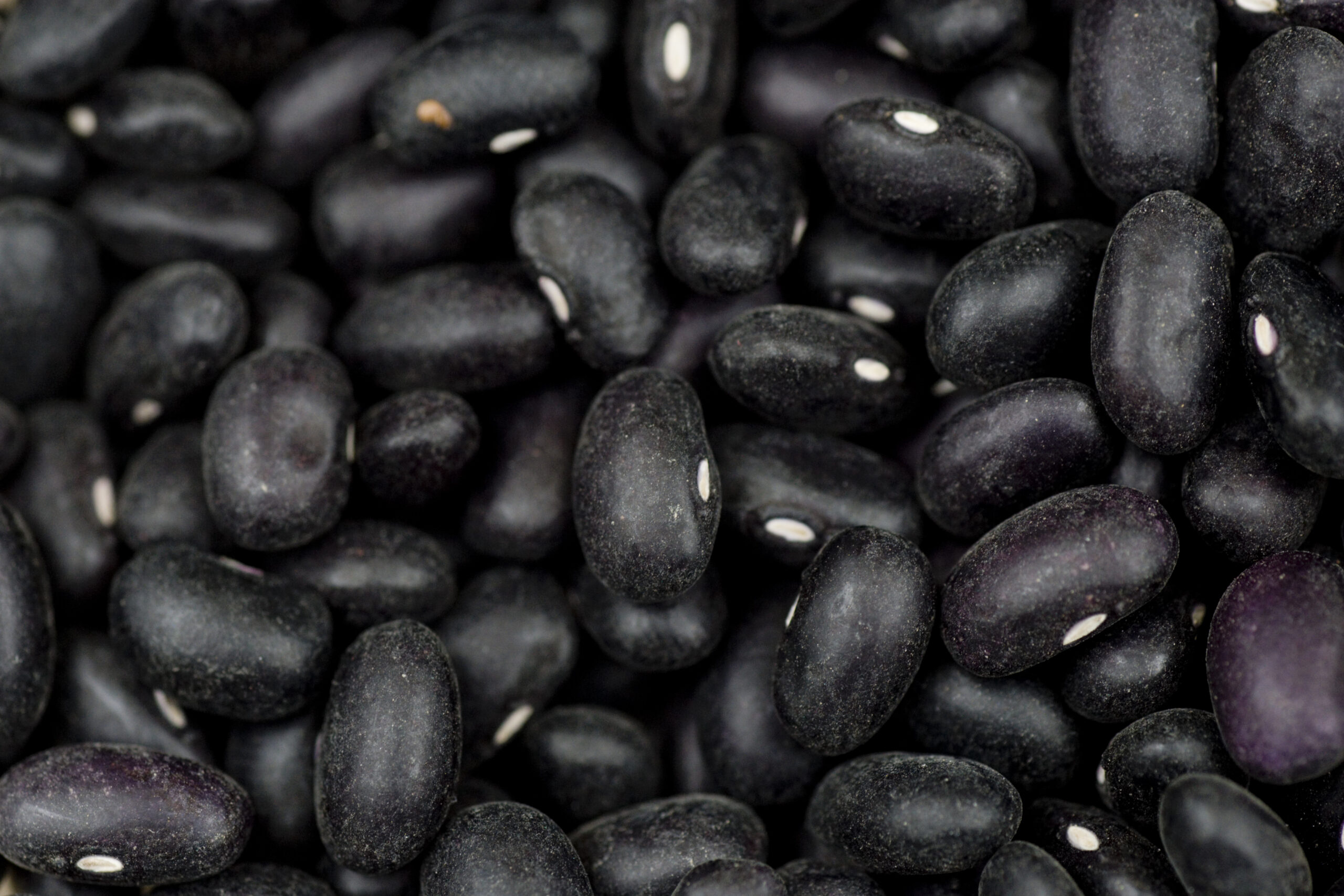
Dry beans are described by their seed coat colour and size, which together constitute the bean type. Within each bean type, there are several different varieties with different growth habits. Bean types grown in Saskatchewan include pinto, navy, great northern, small red, black, shiny black, and yellow. Of those bean types, most of the acres are planted to pinto, navy, and black beans, with some great northerns and small reds.
Producers should keep the bean growth habit in mind when choosing varieties, as it will affect production techniques. While all growth habits can be grown in row-type production, the determinate bush-type is best suited for narrower rows. Taking note of the height of bottom pods is also essential if they are going to be swathed or straight-cut, as the lower pods can contribute to significant harvest losses if cutter-bars cannot get underneath them during harvest operations.
Want to see how different varieties compare?
Visit the Interactive SaskSeed Guide for information on all dry bean varieties available to Saskatchewan producers.
Related Resources
Seeding
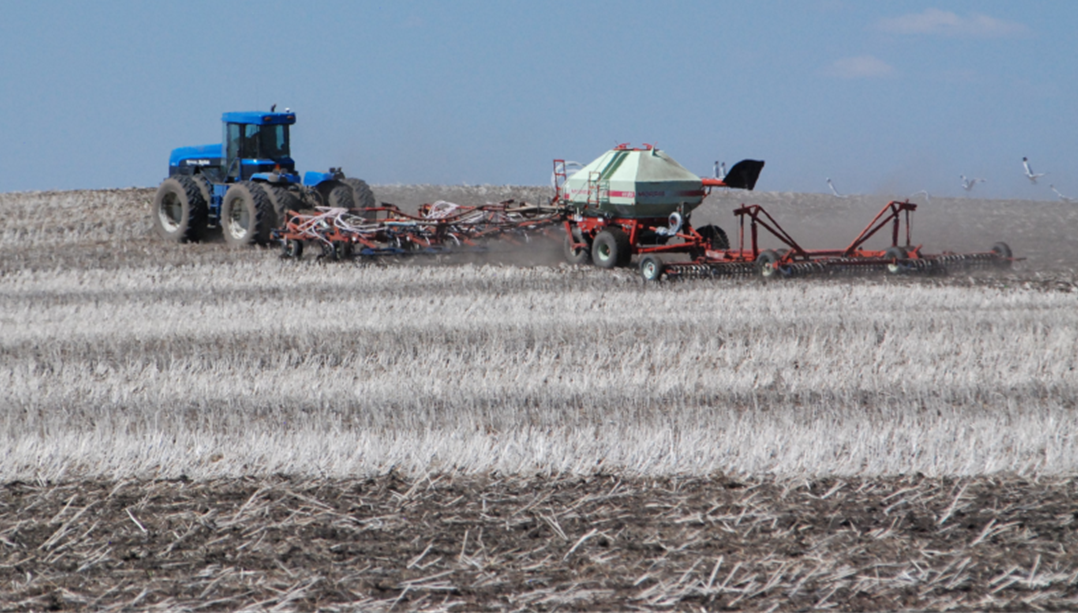
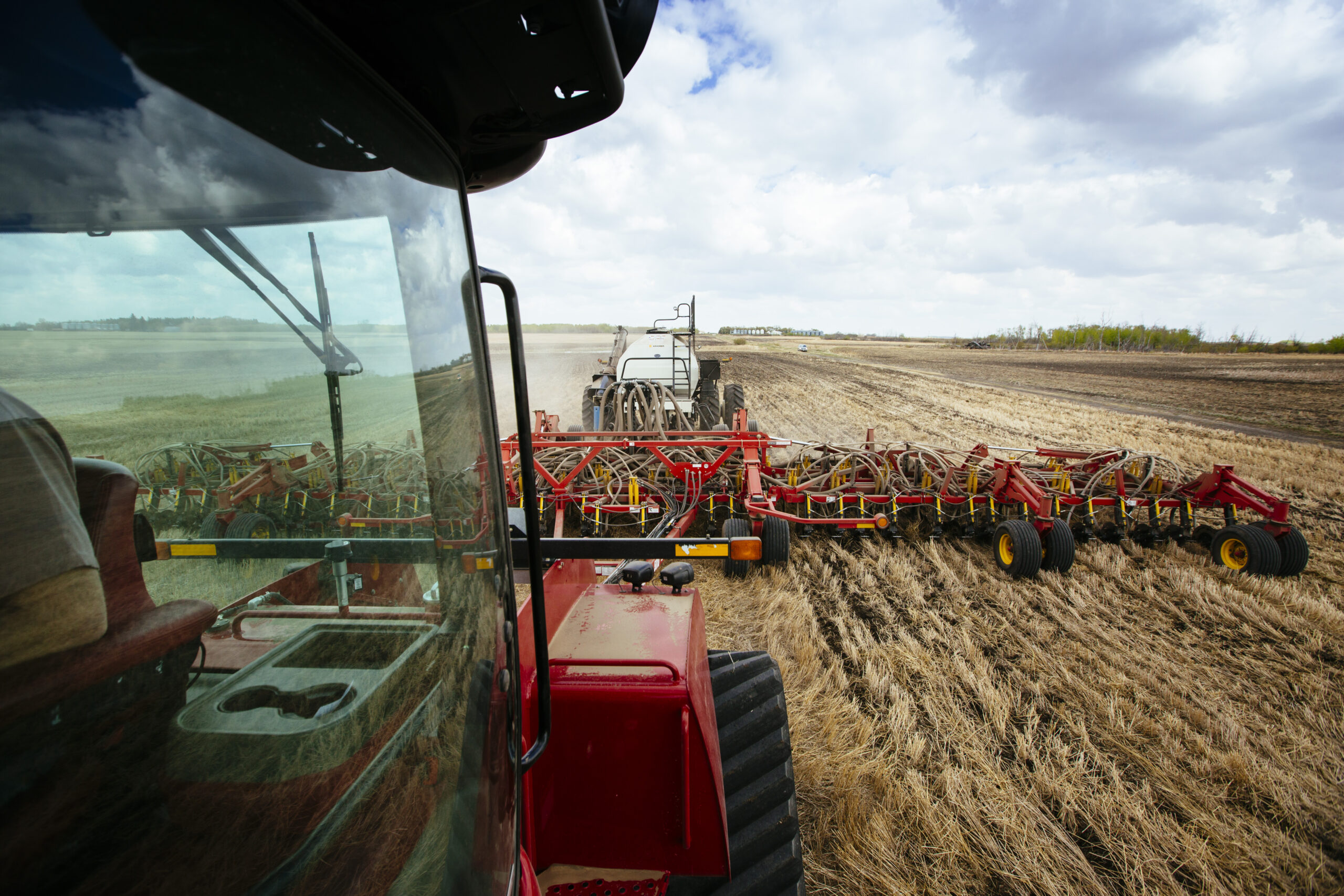
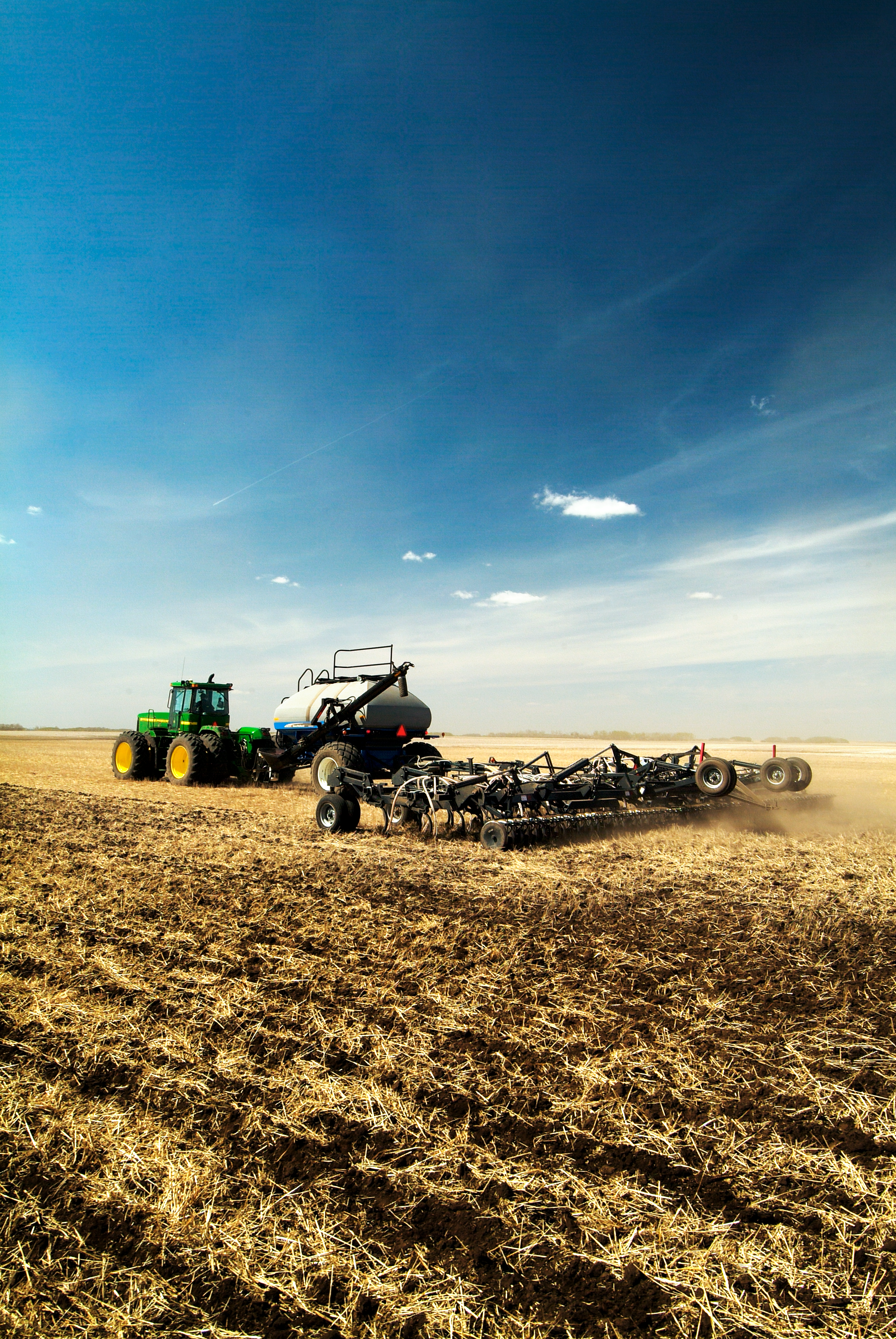
Traditionally, dry beans are planted in 70–90 centimetre (cm) or 28–36 inch rows. However, dry beans can be successfully grown when planted with air drills and seeders at narrower row spacing (6–12 in) and are referred to as solid-seeded when grown this way. Given the significant difference in row spacing between these two systems, different management practices are used.
Specialized row crop equipment is used to plant beans in rows 70–90 cm (28–36 in) apart. Sugar beet seeders can also be modified to grow beans in 56 cm (22 in) rows. Given the precise placement and metering of row crop seeders, dry bean seeding rates are set to achieve a specific number of viable seeds per acre. While ideal plant stand densities vary by bean type, most target 100,000 plants per acre, or 18 seeds per metre of row. This works out to about 40–50 pounds of seed per acre (lb/ac), depending on seed size.
When beans are seeded using air seeders and air drills on narrower row spacing, several adjustments are made to the row cropping system:
- Populations are adjusted to take advantage of the more even distribution of plants across the ground.
- Determinate bush-type varieties are chosen that resist lodging better and have higher pod set for harvest.
- Extra care to reduce seed damage when being handled and put through the seeders and drills.
- Tramlines should be considered to avoid damage when spraying, which can result in delayed beans, complicating harvest timing.
When grown in narrower rows, bean plants are less crowded within the row and are more evenly distributed across the field. Seeding rates can be adjusted to take advantage of the reduced in-row competition. In solid seeding systems, seeding rates tend to be higher compared to row crop seeding. Growth habits will also affect seeding rates. Indeterminate vine-type beans require lower seeding rates than determinate bush-type beans, as the plants cover the ground more quickly. Some air through the canopy is essential to reduce disease, so a seeding rate that is too heavy is discouraged.
Seeding rates should be calculated for the specific seed lot, based on the seed size. Generally, targeting 45 plants per square metre (4 plants per square foot) for solid-seeded dry beans is optimal. The following formula can be used to calculate the seeding rate:

To convert to pounds per acre, multiply by 0.89.
A primary consideration when sowing beans is maintaining seed quality. Beans are very susceptible to mechanical damage, and damaged beans can develop a condition called baldhead, in which only the cotyledons and stem emerge, but no leaves develop.
To reduce damage, seeders should operate at as low a fan and air speed as possible, while still ensuring even distribution across the air drill. Some drills can be modified with seed deflection pads in manifolds to reduce cracking. Using conveyors rather than augers, when possible, will also help.
Controlling seed moisture can also reduce mechanical damage. Seed with a moisture content of at least 14% is less prone to cracking. Some growers will soak beans by suspending a mini-bulk bag of seed and running a hose into it until water comes out the bottom, letting it drain, and then repeating for eight hours. Allow the beans to temper for 24 hours before being put in the seed tank. This should also be done before applying seed treatments or inoculants.
To reduce the risk of rock damage to harvesting equipment and earth tags on beans, solid-seeded beans should be rolled after seeding and before emergence. It is best to roll as close to seeding as possible, and up to three days after, to avoid damaging the seedlings. Pressure on the soil can snap off the growing and emerging stem, killing the plant. Unlike peas and lentils, dry beans cannot regenerate from scale nodes if the stem is broken off.
Whether solid seeding or row seeding, seeding depth should be 5–6 cm (2–2.5 in) to ensure sufficient soil moisture around the bean to initiate germination and uniform emergence. If planted too deeply, plants struggle to emerge and are more prone to seedling diseases. Bean plants crowded in rows can help break through heavier soils by emerging together. Even germination makes the timing of all operations easier throughout the growing season and harvest.
Dry beans are typically seeded in Saskatchewan between May 25 and June 5. Having epigeal germination means the growing point and cotyledons are above ground, making them particularly vulnerable to late-spring frosts. Seeding after June 5 puts dry beans at risk of early fall frosts.
Ideally, soil temperatures should be at least 12°C to promote rapid germination and growth. At cooler temperatures, these processes will be delayed, increasing the risk of seedling diseases.
Related Resources
 Technical
Dry Bean Seed Treatment Options
 Technical
Calculating Seeding Rates
 Article
Seeding Tips For Pulse Crops
 Article
Tips for Rolling Your Pulse and Soybean Crops
Inoculation & Fertility
Like other pulse crops, dry beans can fix some of their own nitrogen when inoculated; however, they are less efficient than peas, lentils, faba beans, or chickpeas. Dry beans can generally fix about half of their nitrogen requirements. Depending on environmental conditions, they may fix between 5 and 70 lb/ac of nitrogen.
Dry beans require the bacteria Rhizobium phaseoli to form nodules and fix nitrogen for the plant. Granular, dry, and liquid inoculants are available for growers. When choosing an inoculant, compatibility with other seed treatments should be considered. Seed treatments can affect bacteria’s survival rates. Using sequential applications, where the seed treatment is applied and dried before the inoculant, will help reduce negative interactions. Simultaneous applications are possible with some seed treatments and inoculant formulations, but they are riskier, and the seed should be sown immediately. Using a granular inoculant applied in a row with the seed will help avoid compatibility issues.
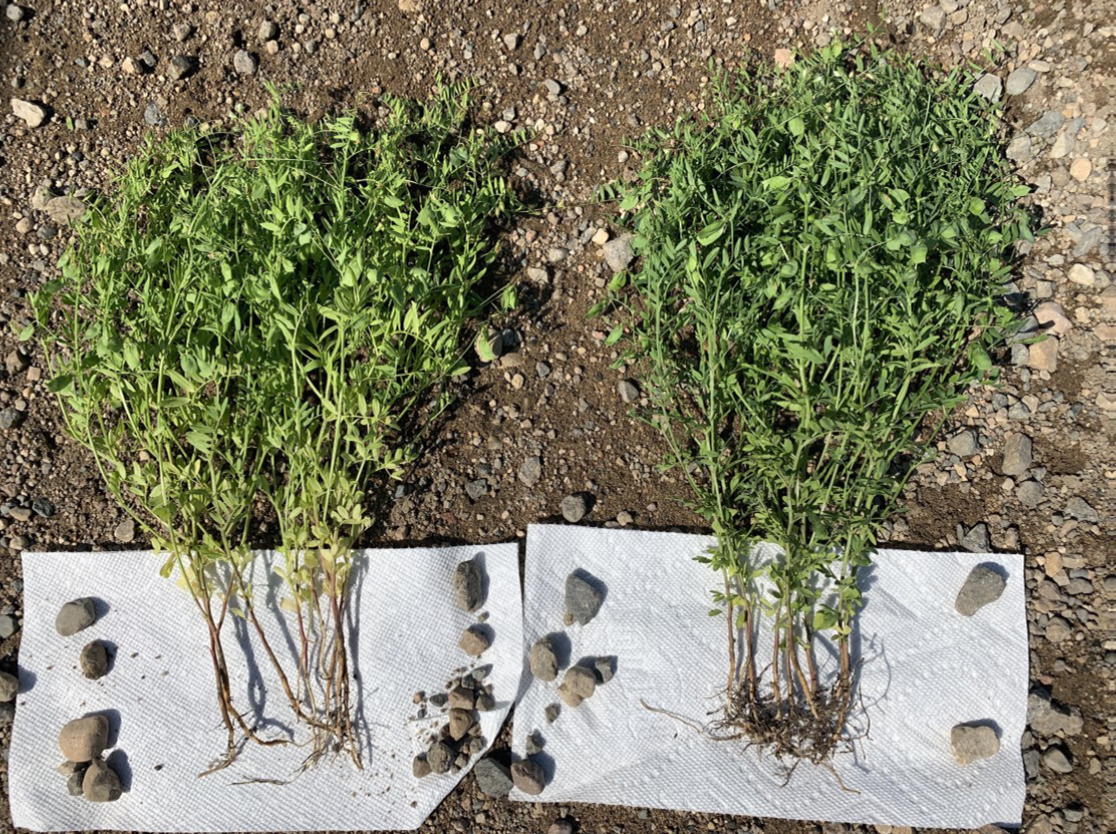
The effectiveness of nodulation should be evaluated by digging up plants and inspecting the roots for nodules about a month after emergence. Nodules should be sliced open to ensure they are active and fixing nitrogen. Active nodules will be dark red in the centre.
Dry beans do best when grown in fertile soil, and soil sampling to determine available background fertility is a good practice. Dry beans are susceptible to seed-placed fertilizer, and most should be either broadcast before seeding or applied in a sideband if the planter is capable of doing so.
While dry beans fix some of their nitrogen requirements, it is recommended to apply starter nitrogen to feed the plant until nodules form. Studies have shown significant differences among dry bean types and varieties in their nitrogen-fixing ability. Therefore, clear guidelines for specific varieties are not available, so starter nitrogen is recommended for all dry beans.
Work done in Alberta with irrigated dry beans suggests that soil nitrogen levels in the top 30 cm (12 in), plus that provided by applied fertilizer, should total 80–100 lb/ac of nitrogen when growing dry beans in row production systems, and as high as 100 to 120 lb/ac when growing in solid seeded systems. Wide-row production often involves tillage for weed control, which can increase organic matter mineralization and contribute more nitrogen to the crop during the growing season, which is why nitrogen rates are slightly lower in wide-row production.
Phosphorus is essential for dry bean nodule formation, flowering, seed formation, and accelerating maturity. Dry beans respond best to soils that are high in residual phosphorus, compared to phosphorus applied the year of planting. Proper rotation planning can help ensure that dry beans have sufficient phosphorus available at seeding. If soil test levels are low (less than 28 kg/ha or 25 lb/ac), an additional 17 kg/ha (15 lb/ac) can be applied safely with the seed if it is solid-seeded on 15–17 cm (6–7 in) rows in good moisture. If higher rates are required or beans are grown on wider rows, phosphorus should be side-banded or broadcast before seeding to limit seed damage.
Generally, Saskatchewan soils have adequate amounts of potassium and sulphur. Both are important for healthy bean growth and development, and a soil test to confirm nutrient levels is a good practice. If beans are grown on sandier textured soils, it is more likely that potassium and sulphur will be needed. Both nutrients should be either side-banded or broadcast and not applied in the seed row. Since sulphur is often highly variable across a field, growers may choose to apply low levels of sulphur to ensure no deficiencies, even though composite soil tests may show adequate levels.
Micronutrient deficiencies are not widespread in Saskatchewan, and they are not typically an issue in dry bean production. However, dry beans are sensitive to low zinc levels and may exhibit symptoms of zinc deficiency when soil test levels are marginal. Zinc deficiencies may appear early in the season when soils are cooler, and root development is limited, and then symptoms may later grow out of control. If symptoms are observed, tissue sampling and soil testing can be used together to diagnose the cause. Dry beans experiencing zinc deficiencies will show interveinal chlorosis (yellowing) in the new leaves and may appear stunted. The top leaves may start to curl under and have a slight bronzed appearance.